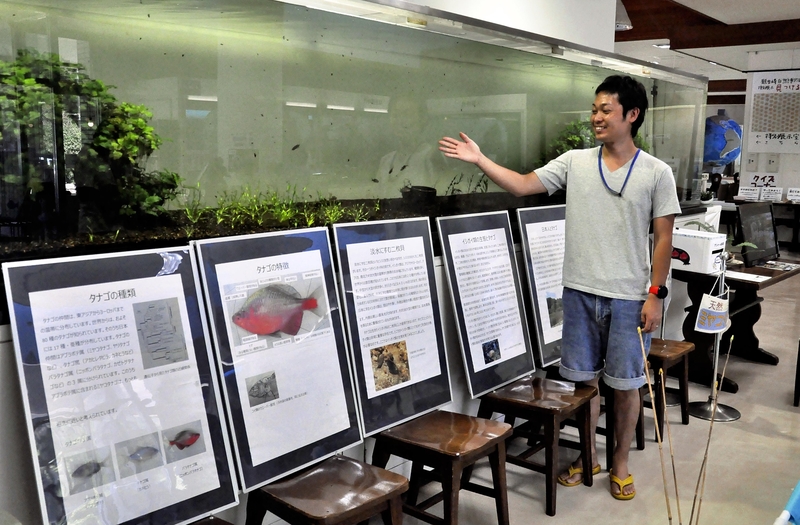
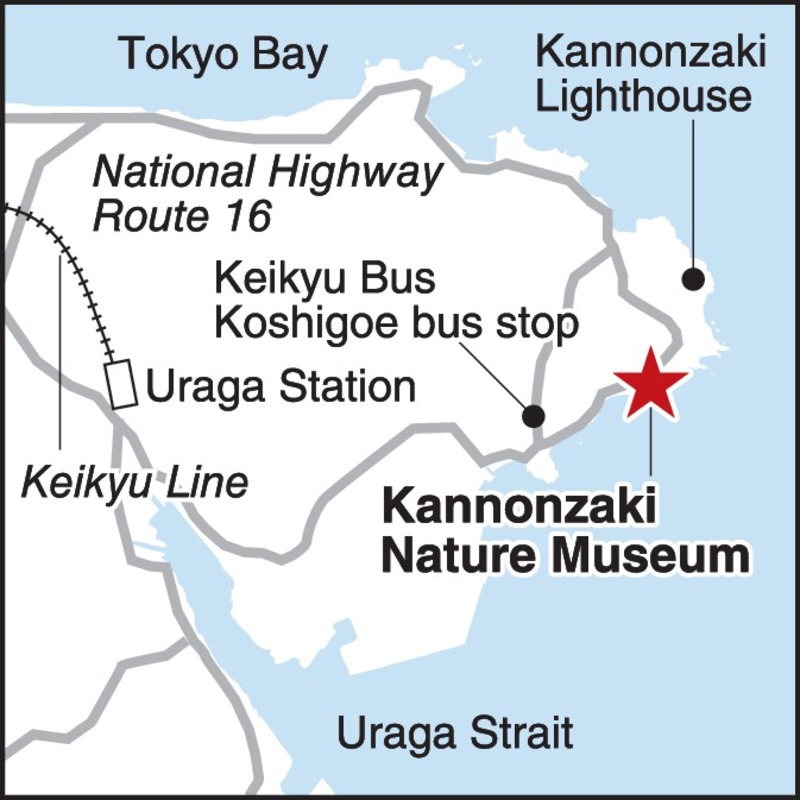
YOKOSUKA, Kanagawa -- With the Tatarahama shoreline spreading out in front of it, the Kannonzaki Nature Museum, located within Kannonzaki Park, offers an up-close experience of nature and ecology.
Here on the easternmost tip of the Miura Peninsula in Yokosuka, Kanagawa Prefecture, the Kuroshio current delivers waters rich in sea creatures. The museum has such fish as red lionfish and threespot dascyllus swimming in aquariums. At the rocky Tatarahama shore, nutritious seawater flows from the depth of the sea, making the shore area an ideal location for various sea creatures to settle in.
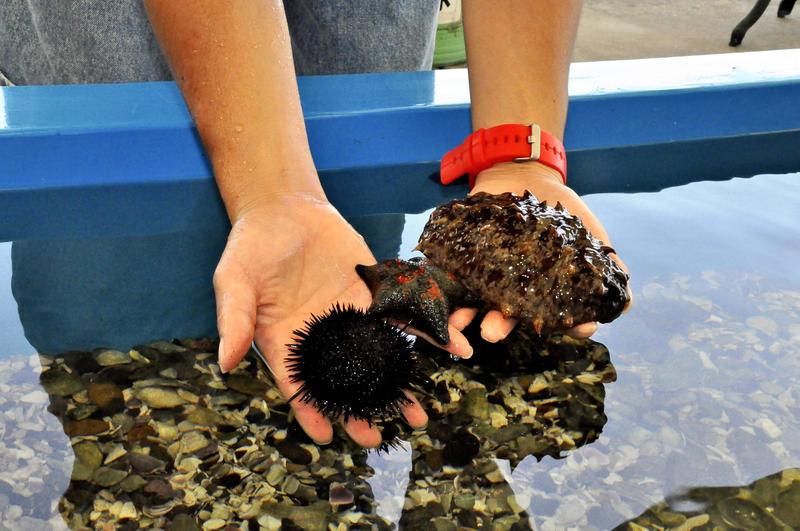
Visitors are allowed to touch such marine animals as sea slugs, sea cucumbers and sea urchins at the pools in the yard of the museum. The pools are a popular family attraction on weekends.
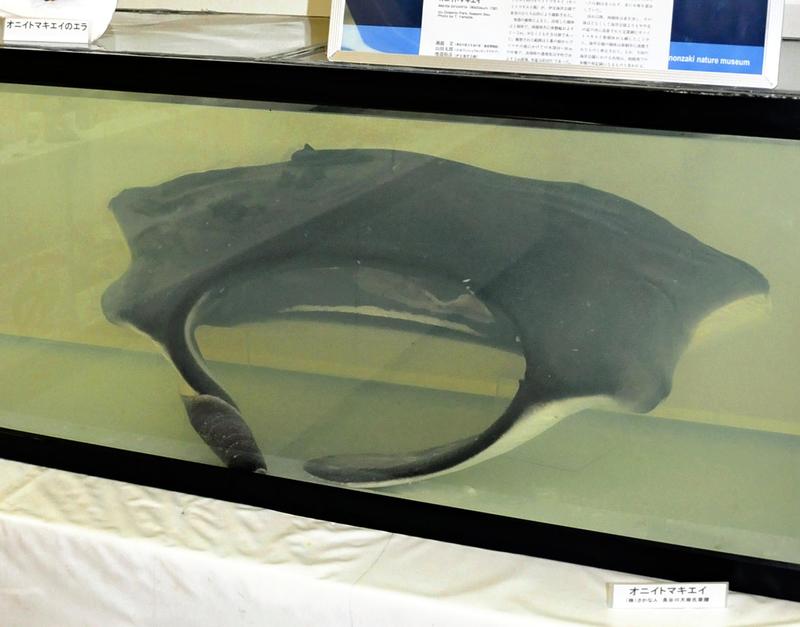
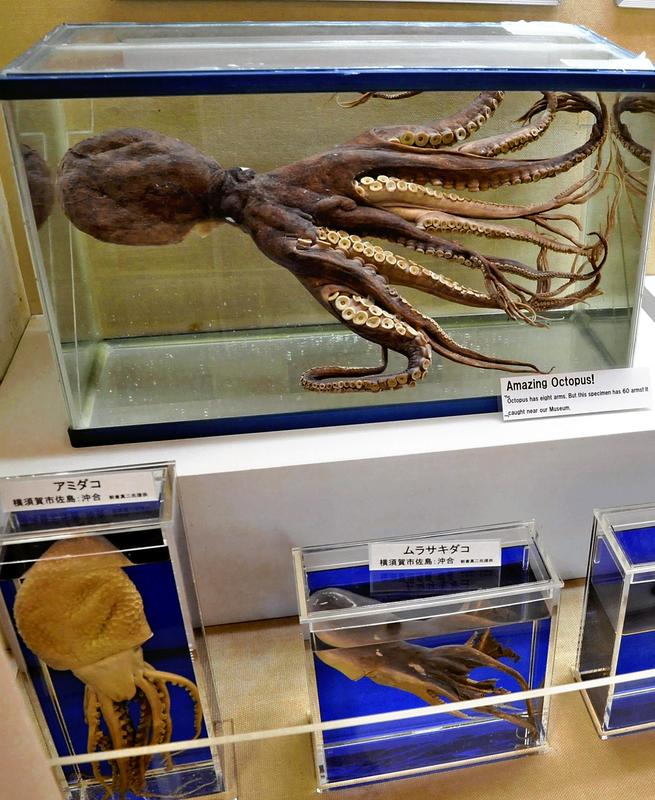
In addition to living fish, specimens of sharks, sea turtles and other animals are displayed. Among them, the head of a giant manta caught in Sagami Bay in January is a powerful display. An octopus with 60 legs caught by a fisherman in 2014 is a unique sight. Records of successful fry farming of red sea breams at the museum in 1962 are also exhibited.
In addition to marine life, the museum places importance on the preservation and breeding of rare species. They include Tokyo bitterlings, designated as a national natural treasure and endangered due to environmental changes in woodlands and alien species such as red swamp crayfish and water lilies. Cybister limbatus, a type of diving beetle, is also the subject of efforts championed by the museum.
The museum's exhibits further depict how living creatures were revived along rivers in the Miura Peninsula and Yokohama. The rivers became polluted during the high-growth period of the Showa era after World War II, but the water quality was improved through environmental preservation activities and the advancement of sewage treatment technologies.
The museum is also active in promoting public participation programs. With its children outreach team, consisting of 26 children from Kanagawa Prefecture and Tokyo, the museum has been carrying out preservation activities for Tokyo salamanders inhabiting the Miura Peninsula. Also, a report will be compiled on the hunting of stag beetles with local elementary school students.
"We keep in mind the importance of displays that will inspire visitors to catch them later, after seeing and touching creatures here," said curator Shingo Sano, 33. "I hope visitors don't hesitate to talk to the curators here so that they will increase their interest in nature and living creatures."
Kannonzaki Nature Museum: 4-1120 Kamoi, Yokosuka, Kanagawa Prefecture
Read more from The Japan News at https://japannews.yomiuri.co.jp/