
The story of Kaiser Permanente’s chronically inadequate mental health care services has become a nearly 15-year saga, replete with multiple governmental disciplinary actions and almost a quarter-billion dollars paid in settlements and fines.
Still, the California-based health giant appears further than ever from addressing the gaps in its coverage — the mental health care upon which patients rely. And thousands of Kaiser therapists in Northern California are now planning a strike to call attention to what they see as fresh steps in the wrong direction.
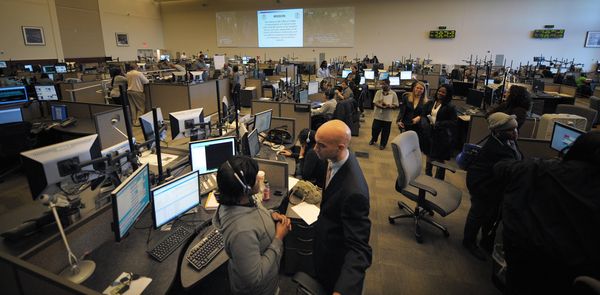
The one-day strike is set for March 18 at Kaiser facilities in the Bay Area, Central Valley and Sacramento. It’s being organized by the National Union of Healthcare Workers, which represents roughly 2,400 therapists, social workers and psychologists who provide mental health care to the 4.6 million Kaiser patients in Northern California.
“Being penalized hundreds of millions of dollars for underfunding and understaffing its behavioral health services should have been a wake-up call for Kaiser, but its executives seem determined to further diminish patient care,” Sophia Mendoza, president of the NUHW, said via email. (Disclosure: The union is a financial supporter of Capital & Main.)
The union has been locked in fruitless negotiations with Kaiser on a new contract, with therapists working without a deal since last September. The NUHW says Kaiser is attempting to employ technology, including artificial intelligence, rather than therapists to perform critical functions like determining whether or how quickly a patient needs treatment.
“Kaiser’s overhauling of its mental health triage system shows that it is moving away from human-centered care,” Mendoza said. “Patients seeking care through Kaiser’s website are asked to fill out questionnaires, so artificial intelligence — not human therapists — can determine whether patients need urgent appointments or should be sent outside Kaiser for therapy.”
Through a spokesperson, Kaiser officials flatly denied that assertion, saying the union was pushing a “false narrative” about replacing its mental health clinicians with A.I. Instead, the officials said, Kaiser’s objective in the labor negotiation is a contract that “allows space for the potential of technology” to support the health care workers and their patients.
“At Kaiser Permanente, A.I. does not replace human assessment, and it does not make care decisions,” the organization said in response to questions from Capital & Main. “Our care teams are always at the center of decision-making with our patients.”
Kaiser’s position is undercut by its dismal history when it comes to providing mental health care services in California.
Beginning with an agreement in 2013, Kaiser has paid out hundreds of millions of dollars in settlements and fines for its inadequate provision of mental health care. A large part of that was a $200 million settlement with the state in 2023 that included a $50 million fine, the largest of its kind in California history, for repeatedly failing to build or maintain the kind of mental health care services that Kaiser’s patients need.
As a result of those inadequacies, the state found, Kaiser members — there are more than 9.5 million in California — often are unable to schedule mental health appointments, get referred to therapists who have too many patients to take them, or have to leave the Kaiser system altogether and pay out of pocket to get the care they need.
Last month, Kaiser reached yet another settlement on the issue — this time with the federal government. Its agreement with the U.S. Department of Labor requires Kaiser to repay more than $28 million to its own patients who had to go out of network to get mental health care between 2021 and 2024.
Inadequate mental health care isn’t a problem exclusive to Kaiser. Industry experts have long maintained that for huge health systems, it can be cheaper to keep paying state or federal fines for deficient services than to build out the kind of large-scale programs and hire the employees it would take to address their patients’ ongoing mental health care needs.
But everything Kaiser does in California, or doesn’t do, matters tremendously. The organization, which claims nonprofit status for its foundation and hospitals but funds the hugely profitable Permanente Medical Groups of physicians, is by far the largest health care provider in the state.
It’s also sitting on roughly $67 billion in unrestricted cash reserves, money that can be used for almost any purpose that Kaiser deems important. Yet the Department of Labor said in its settlement announcement that Kaiser “did not maintain adequate provider networks for mental health and substance use disorder care, and used patient responses to questionnaires to improperly prevent patients from receiving care” — precisely the kind of issues that could be addressed by seriously investing in mental health care services.
“I don’t believe any other California [health] insurance company has been so heavily penalized in recent years,” said Fred Seavey, the NUHW’s research director. “Unfortunately, rather than working constructively with its therapists to solve these problems, Kaiser is lowering the standard of care by assigning care duties to unlicensed staff and A.I. bots.”
The vote to strike on March 18 was prompted in part by the ongoing stalemate in contract talks, but also by therapists’ increasing worry that some of their most critical roles are under threat by Kaiser’s advancing use of A.I.
In a 2025 contract agreement with Southern California mental health professionals, Kaiser agreed to language saying the new technologies were not to replace therapists, but support them. Northern California negotiators say Kaiser officials have refused to include such seemingly protective wording in a deal for therapists in that part of the state.
Kaiser officials say that A.I. tools “have the potential to help our clinicians spend more time focused on serving our members and patients.” Further, the organization said it has made great strides in its mental health care services, but “there is still work to be done.”
Nearly $250 million in fines and settlements later, that much remains clear. One question now, especially for the Northern California therapists who’ve gone more than six months without a contract, is whether Kaiser will put action behind its public declarations that human-centered care still comes first.