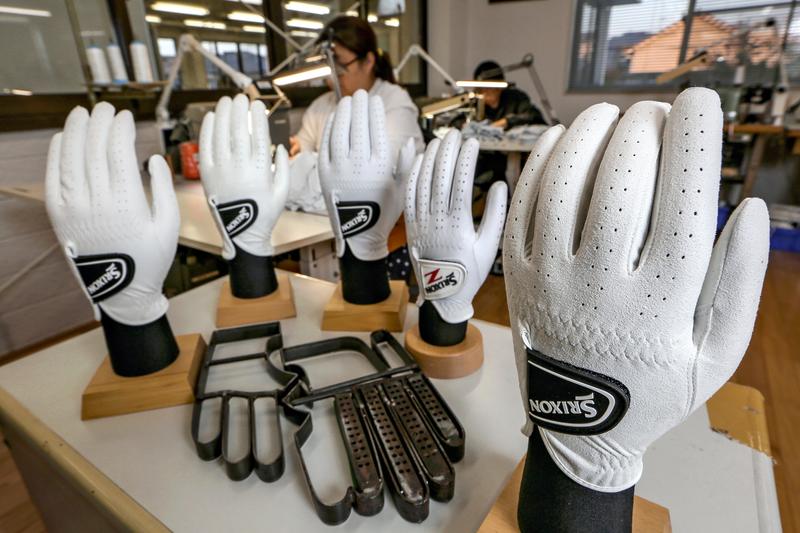
HIGASHI-KAGAWA, Kagawa -- A pair of gloves is a must during a cold winter. Surprisingly, it is not well-known that the eastern part of Kagawa Prefecture is the largest glove-producing area in the nation, with a history going back 130 years.
Glove-making in this area is centered in the city of Higashi-Kagawa. Ever since it took root here as a local industry, glove-making has continued to evolve in response to the changing times, with Higashi-Kagawa becoming a "glove city" that manufactures products used even by top athletes.
Masashi Ohara, 68, secretary general of the Japan Gloves Industrial Association based in Higashi-Kagawa, presented his business card at the association's office. The address reads "Tebukuro City, Udon Prefecture (city of gloves, udon noodle prefecture)." Kagawa Prefecture has declared itself Udon Prefecture to promote the noodles.
According to Ohara, 90% of the gloves produced by domestic manufacturers for cold weather, fashion and sports are made by members of the association. Higashi-Kagawa was established in 2003 by the merger of three towns.
"We argued about collecting signatures to name the newborn city 'Tebukuro City,'" he said jokingly.
20 or more patents
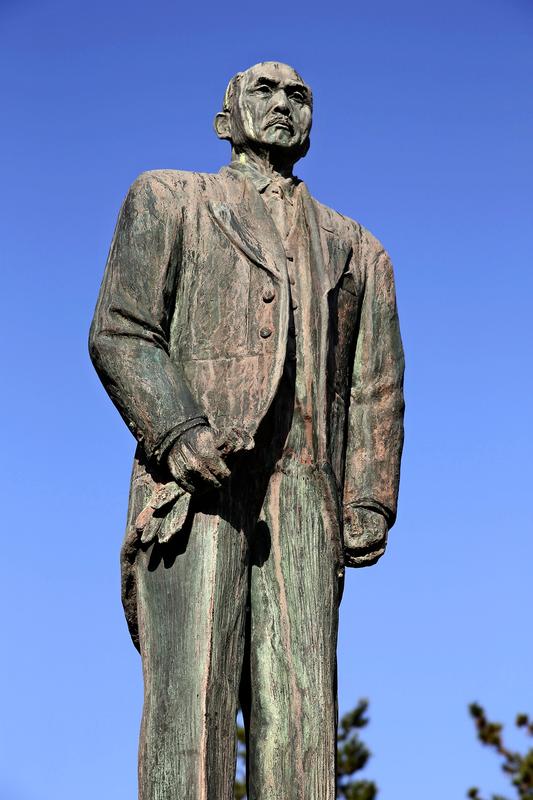
It is rather complicated to explain why the area produces the most gloves in Japan. Shunrei Futago, who hailed from the area, started making gloves in 1888, but he was in Osaka Prefecture at the time.
Futago was the vice chief priest of a temple, and he eloped in 1886, at the age of 34, with a 19-year-old woman who would later become his wife. He had to make gloves to earn his living in Osaka Prefecture.
Shunrei died suddenly at the age of 39. His cousin Tatsukichi Tanatsugu, who had helped Shunrei make gloves, took over the business and put it on track.
At that time, the local salt and sugar industries in the eastern Kagawa area were on the decline. When Tanatsugu returned to his hometown in 1899, he established a factory at the request of the local community. He obtained at least 20 patents, including one for a sewing machine for making gloves based on overseas gloves. He moved technological innovation forward and built the foundation of a local production base.
World War I broke out in the Taisho era (1912-1926). Britain and Germany, which had been leaders of the glove industry, were at war with each other. A rush of orders to Japan led to the creation of a series of glove factories in the area.
Sports gloves give boost
Sports gloves have changed the established wisdom that winter is the best sales season for gloves. Companies began manufacturing and selling golf gloves in the 1960s.
The use of gloves has expanded to include baseball, motorcycle racing and fishing. The latter half of the 1980s saw the ski boom, with gloves for skiing selling like hotcakes.
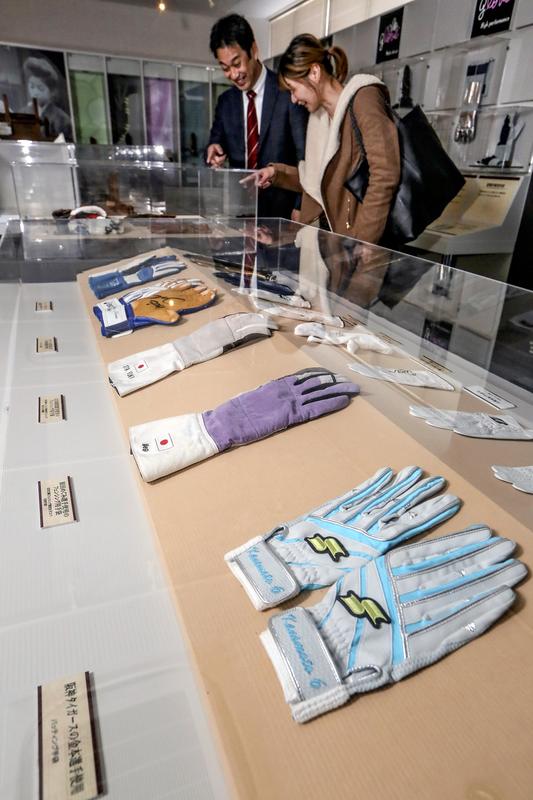
The Glove Museum in Higashi-Kagawa displays models used by former Japan national soccer team goalkeeper Yoshikatsu Kawaguchi and Yuki Ota, a silver medalist at the 2008 Beijing Olympics in fencing.
"Almost all sports gloves made by domestic manufacturers are made by members of the association," Ohara said.
However, the area is not well-known as a production base because they are original equipment manufacturers (OEMs) and many have production bases overseas.
Hashisen Co. is an OEM producer of gloves for top golf pros such as Lee Bo Mee of South Korea and Hideki Matsuyama. Matsuyama's gloves are carefully sewn by a veteran craftsman with more than 50 years of experience.
"If the sewing deviates even by 1 millimeter, the fingers can't fit in," said Shoichi Hashimoto, 63, president of the company and representative director of the association. "It's delicate work. If you can sew gloves, it's easy to do a bag or anything."
Confidence in development
In recent years, inexpensive overseas products have increased. The number of member companies now stands at about 70, or less than 30% the level 50 years ago. Nevertheless, the member companies have developed a series of high-performance products, such as gloves that are compatible with touch screens and those that block ultraviolet rays.
"We want to differentiate our products from those made overseas by emphasizing our advanced technological capabilities," Ohara said.
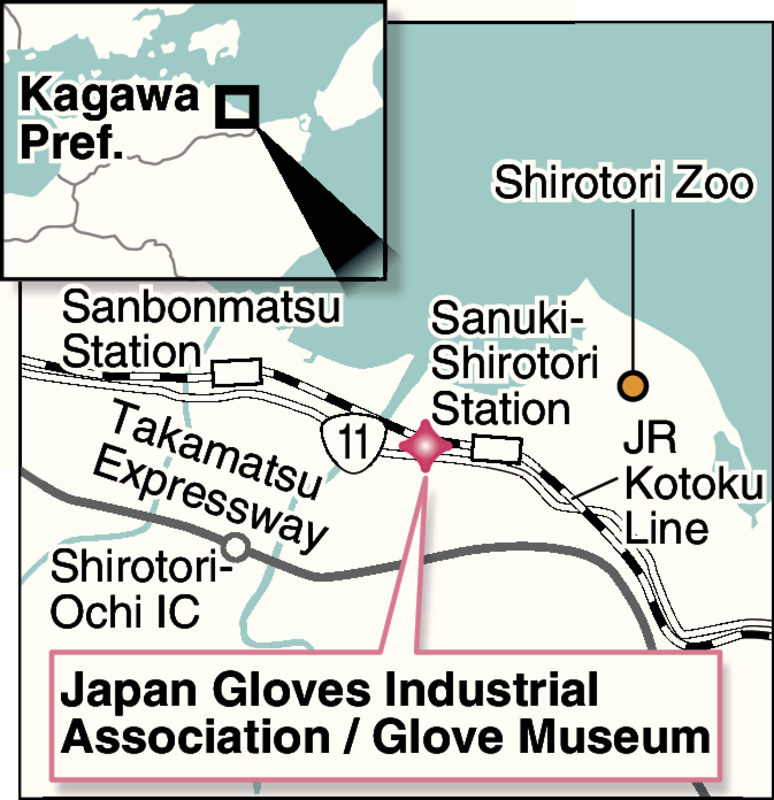
-- How to get there
The Glove Museum opened in 2008 to commemorate 120 years of the glove industry. The adjacent outlet store sells inexpensively priced gloves and bags made by member companies of the Japan Gloves Industrial Association. The outlet facility is open from 10 a.m. to 6 p.m. For further information, call the association at (0879) 25-3208.
-- Extend your trip!
Shirotori Zoo
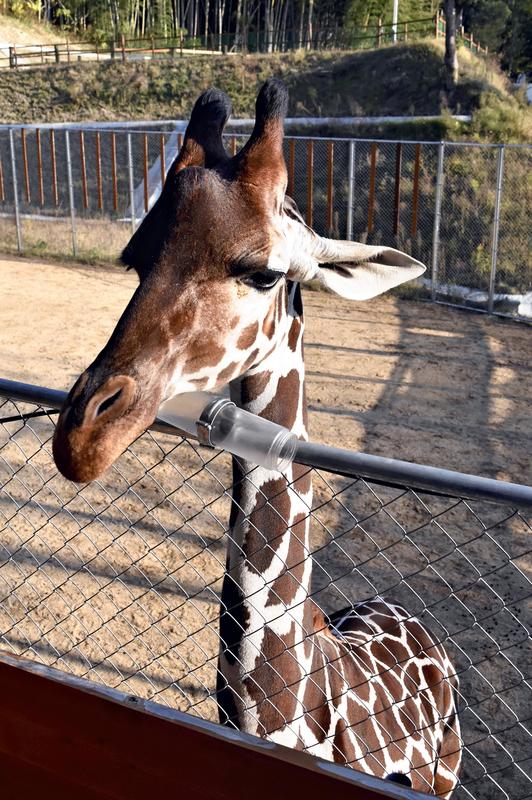
This facility contains about 300 animals from about 70 species. Rabbits and peacocks roam free, and you can have close contact with these animals. Various events are held, such as feeding giraffes and taking photos with tigers.
It is open throughout the year. Admission is 1,300 yen for junior high school students and older, 600 yen for children from 3 years old to elementary school. It is 10 minutes by taxi from Sanuki-Shirotori Station on the JR Kotoku Line. For more information, call the zoo at (0879) 25-0998.
Read more from The Japan News at https://japannews.yomiuri.co.jp/