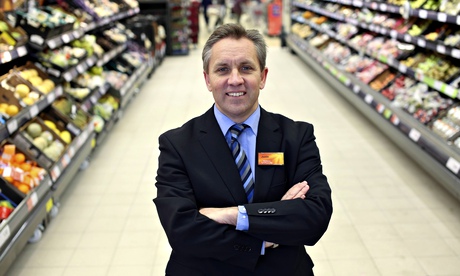
Consumer power is more effective than government action in forcing change at businesses that don’t behave like good citizens, former Sainsbury’s chief executive Justin King has claimed.
Speaking at a public accounts committee conference, King said paying tax was on a par in consumers’ minds with taking care of the environment and having good employment practices. “If we wish to have permission to act in society we must be good citizens,” he said. “By far the most powerful vote is not the one we make every five years at the ballot box but the one shoppers make day in day out.”
Challenged over the strong growth at companies such as Amazon and Starbucks, both widely criticised over their low tax payments in the UK, and Sports Direct, which has been targeted over the use of zero-hours contract staff, King insisted businesses that didn’t behave well were eventually punished by consumers.
“There are many businesses that detach themselves from normal rules for periods of time but eventually the consumer catches up and they are forced to change,” he said. He pointed to the example of Starbucks, which promised to pay an additional £20m in tax over two years in the UK after a string of high-profile consumer campaigns.
King said businesses needed to engage with the debate and should not allow themselves to be in a position where politicians were able to win points for highlighting a poor record on tax, as the public accounts committee has done. “The fact that politicians are laying blows on us [in relation to tax] is a failure on our part,” he said.
King said paying tax was a competitive issue not only because consumers noticed which businesses did not behave well but also because the way it was levied gave some businesses, such as online retailers, a competitive advantage.
“The tax system has accelerated the move from physical to online retail,” he said, suggesting a “train crash” was coming where the government would need to come up with a different way of taxing businesses not related to buildings. “The system is begetting its own demise,” he said.
He called for a move away from corporation tax and business rates based on the buildings that a business operates from, towards a system based on sales. “I believe the state should have no role in giving competitive advantage to one business over another.”


.png?w=600)