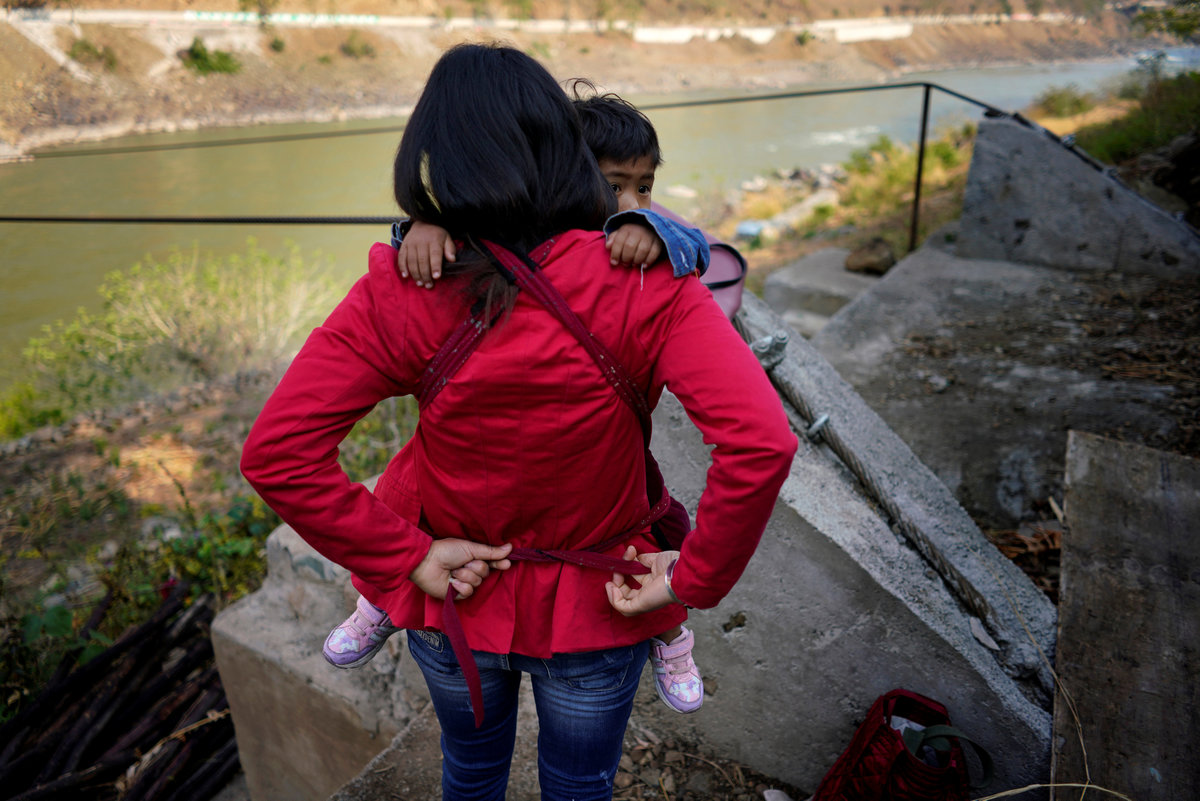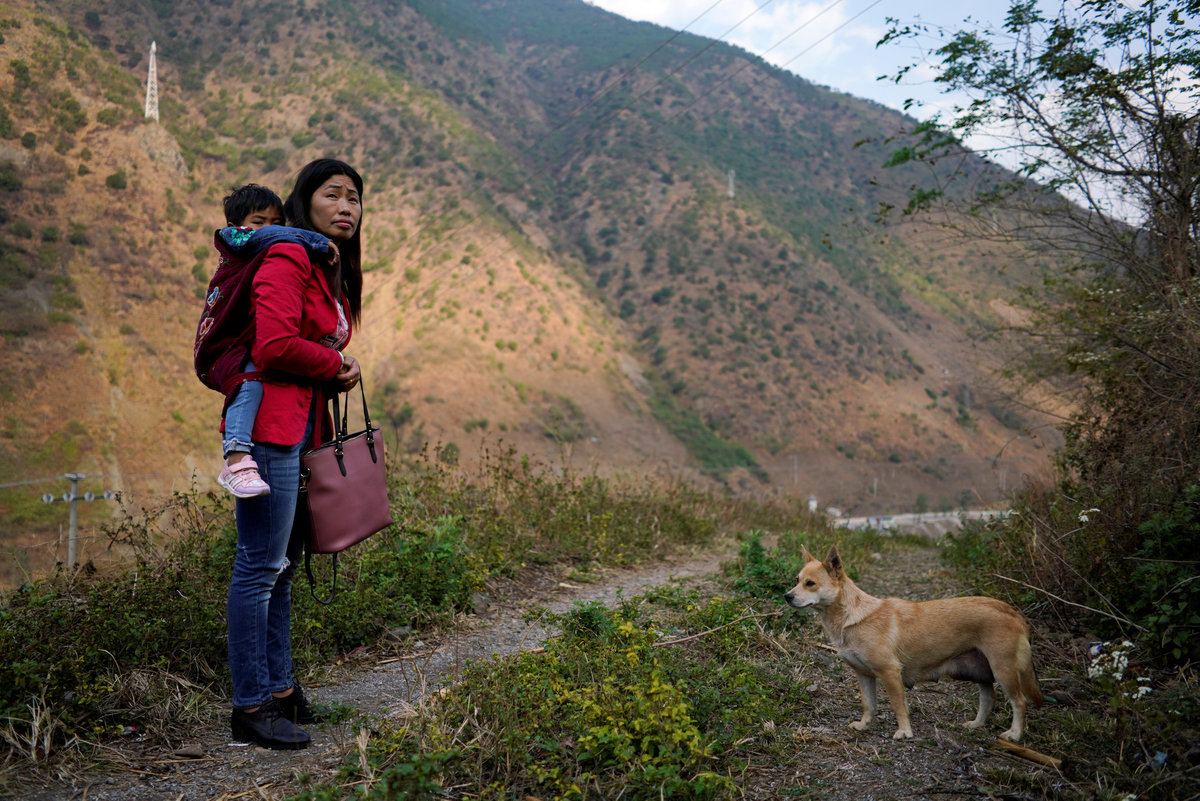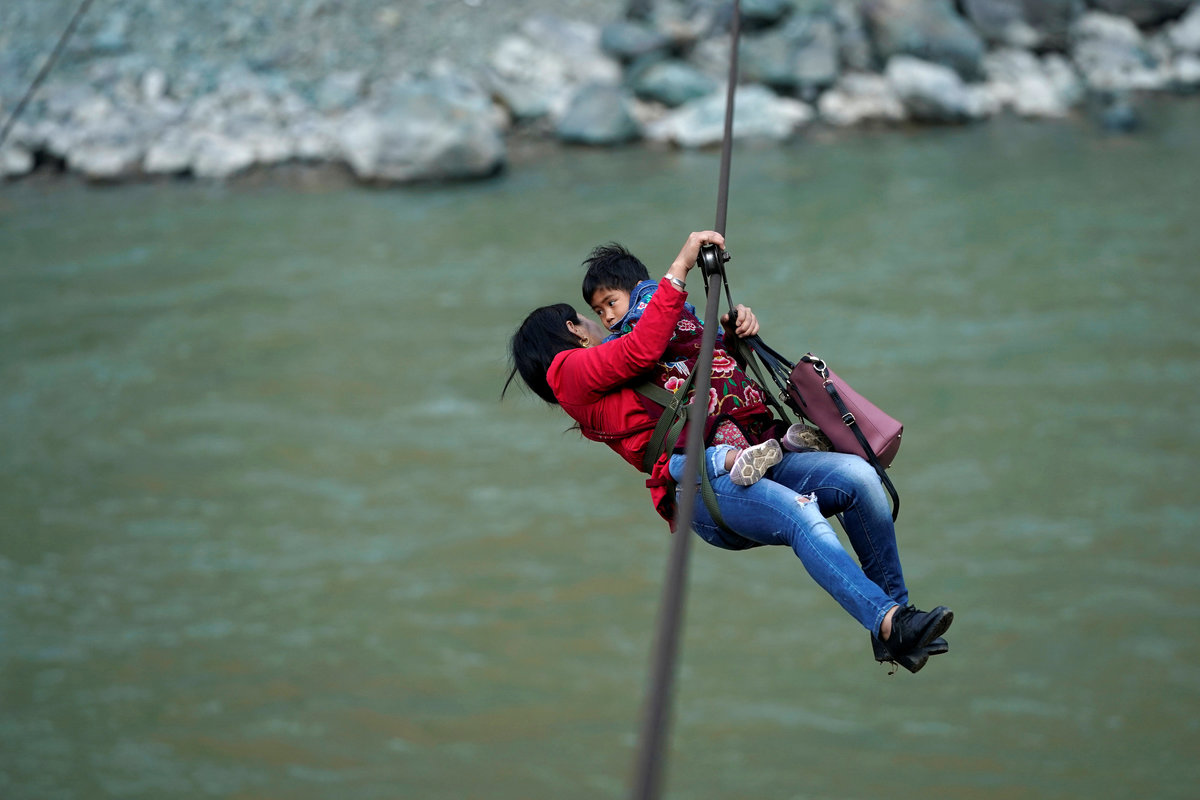
NUJIANG, China (Reuters) - Cha Huilan, a mother of two living in a Chinese mountain village cut off by a raging river, dangles from a harness hooked to a zipline every time she crosses its violent rapids and jagged rocks on frequent trips to buy medicine for her mother.
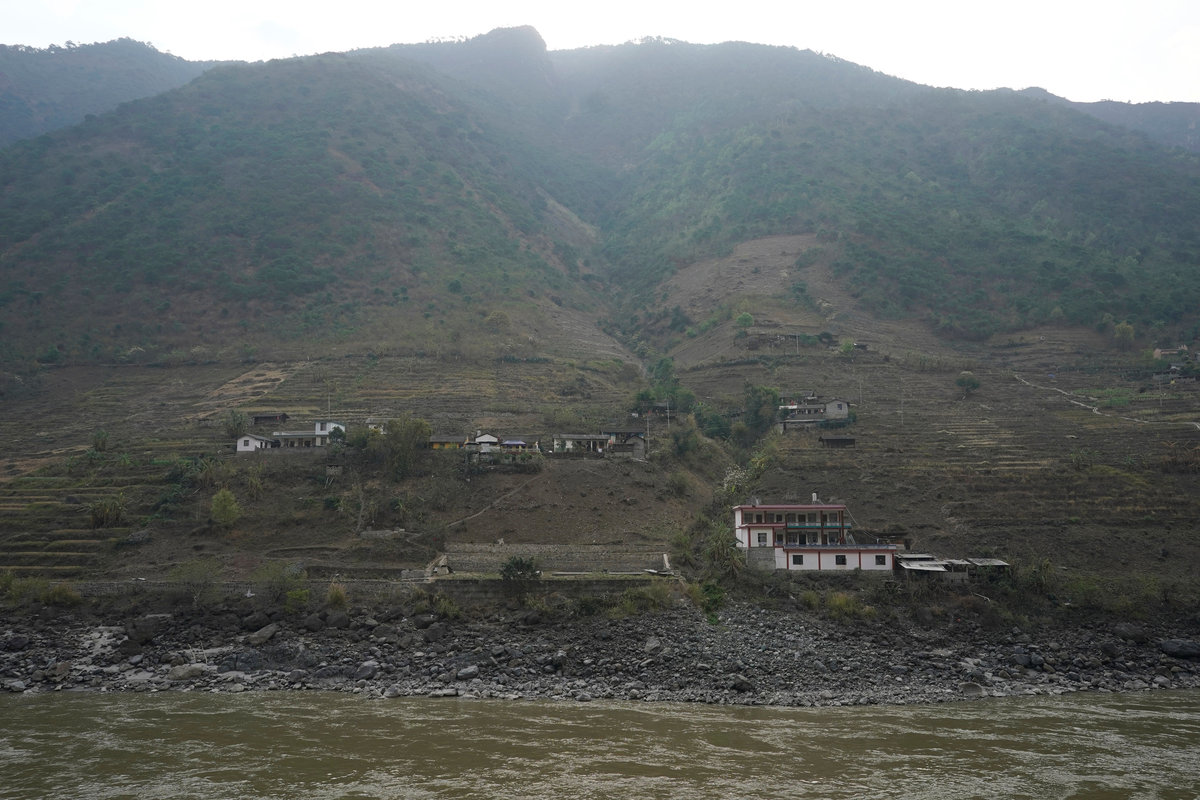
Using a boat is out of the question for the villagers of Lazimi, which lacks proper roads and bridges because the rocks and foaming waters of the river Nu, whose name means "angry" in Chinese, make it just too dangerous to risk.
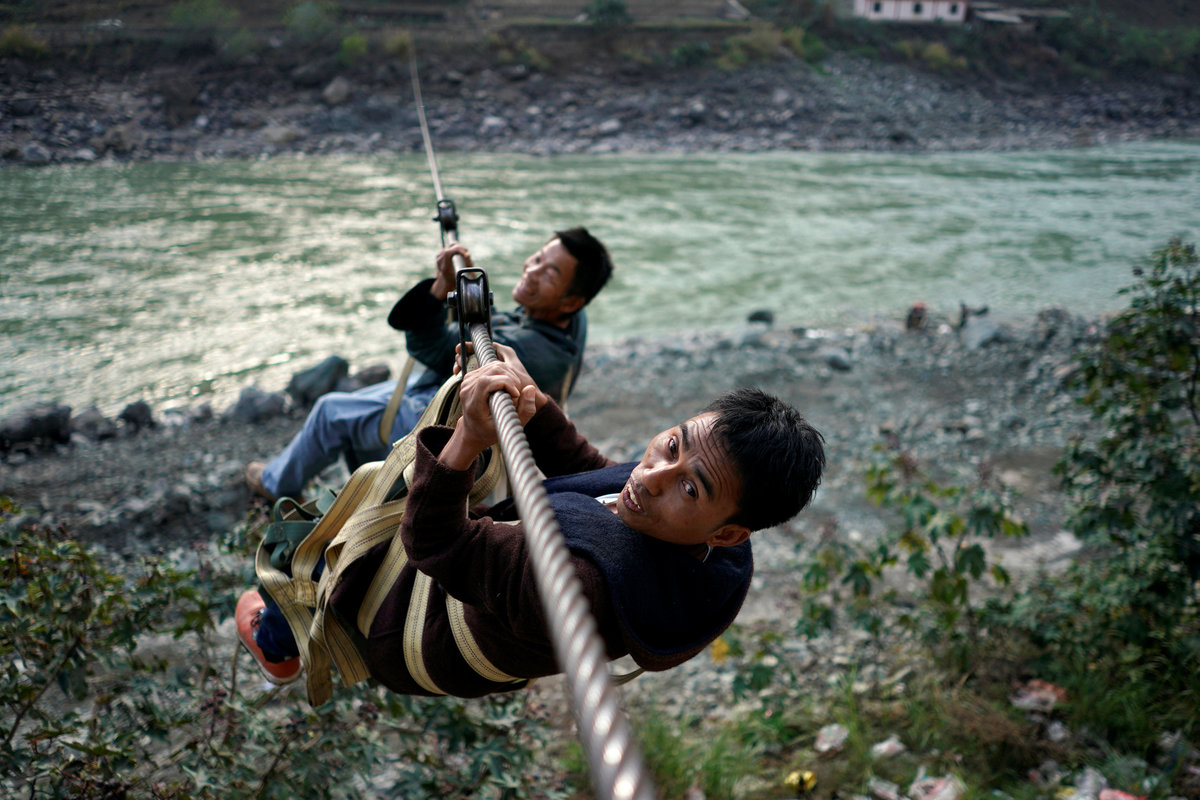
"If they built a bridge, that would be nice, but for now we can't get over there," said Cha, who has come to see the zipline as just another inconvenience, even if her two-year-old has to cling to her for dear life on every visit to a Saturday market.
Most villagers, who are members of the Lisu ethnic group and are deeply religious, also zip across every Sunday for mass services at nearby churches. The nearest bridge over the river is 20 km (12 miles) away from the mountainside village.
The villagers have applied their own ingenuity in building the ziplines, inclined downhill and relying mostly on gravity, to cross the Nu, which snakes from Tibet along China's border with Myanmar through the southwestern province of Yunnan.
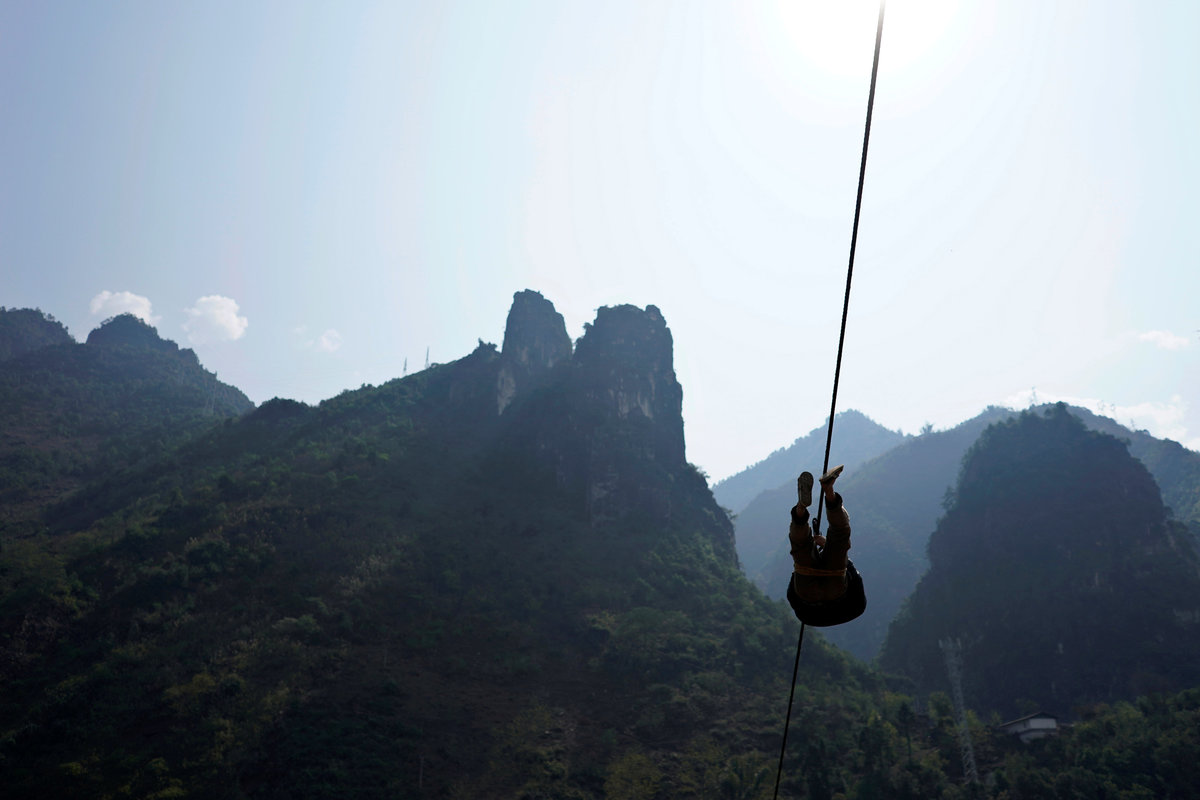
People estimate about 20 to 30 hamlets in the region still rely on the ziplines as their primary means across the river, although the lines are not always reliable, since they become slippery when it rains and too dangerous to use.
Several zipline villages remaining in Fugong county, an eight-hour drive from Lazimi, are swiftly being connected to the outside world with bridges built by road construction projects.
"Right now, conditions are a bit better and they're building bridges, so these ziplines are being torn down," said Yun Zeqing, an engineer who has maintained the zipline in one of the Fungong villages for decades.
"Here we have no bridge, so we get across with the zipline."
(Reporting by Joseph Campbell; Editing by Clarence Fernandez)