ST. LOUIS _ Circuit Judge Rex Burlison on Monday rejected a bid by Missouri Gov. Eric Greitens for a trial by judge, not a jury, on Greitens' felony invasion of privacy case.
The judge's announcement came at the end of a hearing Monday to discuss recent filings by Greitens' defense team, the prosecution, news media and the alleged victim's ex-husband.
Shortly after the hearing and outside of the courtroom, Burlison said he would rule "shortly" on those other issues, including whether the indictment against Greitens would be dismissed and whether it was illegal for a Harvard professor to serve as an assistant prosecutor.
The trial is set for May 14.
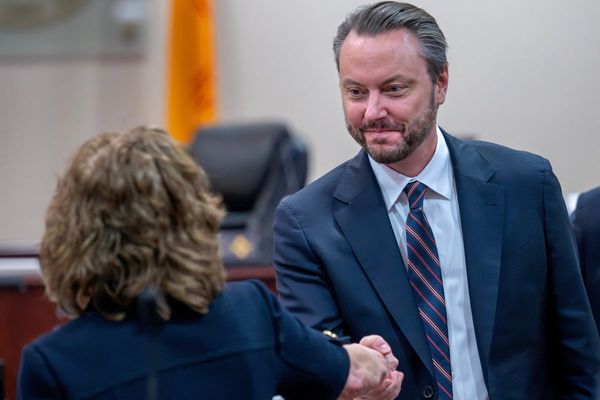
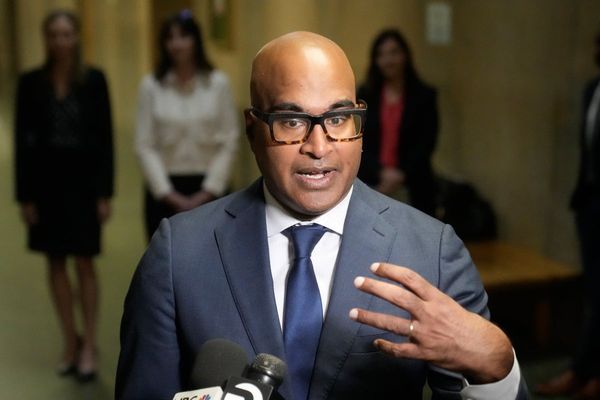
Asked after the hearing about his reaction to a jury trial, defense lawyer Ed Dowd Jr. said, "I'm great with a trial by jury." He said he and other defense lawyers are veterans of many jury trials in St. Louis, saying that, "I think they'll be great."
Dowd said the governor would not appeal Burlison's decision.
The governor sought to waive his right to a jury trial because of "significant legal and evidentiary questions" that require "objectivity and analysis" that his lawyers argued would best be decided by a judge, as well as intense pretrial news coverage.
"The risks have been explained to him," said defense lawyer Jack Garvey. "The attention placed on this case is just huge."
Greitens was indicted by a St. Louis grand jury Feb. 22 on a charge that he took a nude or semi-nude photo of his bound lover during a consensual sexual encounter at his Central West End home in 2015, before he became governor. He is accused of transmitting a compromising picture "in a manner that allowed access to that image via a computer."
The governor has been accused of threatening to release the photo if she ever mentioned his name; he has admitted the affair but has denied blackmailing her.
At Monday's hearing, Greitens' lawyers said Greitens' indictment should be dismissed because, they say, First Assistant Robert Steele "flagrantly misled" the grand jury about Missouri's invasion of privacy law. The defense said Steele misstated the law when he instructed grand jurors that what Greitens did with the photo was "irrelevant."
Transmission is a key element of the indictment because that makes the crime a felony instead of a misdemeanor. Missouri's invasion of privacy statute says a person commits felony invasion of privacy if he or she "disseminates or permits the dissemination" of a compromising photo "to another person." The indictment against Greitens cites a different part of the law that references transmitting such photos "in a manner that allows access to that image via computer" _ which could be invoked whenever a modern cellphone is involved.
Defense lawyer Jim Martin said he wasn't accusing Steele of intentionally misleading jurors but said what Steele told them was wrong. Martin also argued that there's no evidence a photo exists or that it was transmitted, pointing out that Greitens' lover told grand jurors that she never saw a camera or smartphone during the sexual encounter. Martin also said the woman's ex-husband testified that he never saw a picture but knows iPhones can transmit pictures. Martin also referred to deposition testimony last week by private investigator William Don Tisaby, who said he hadn't seen a photo or knew of evidence it had been transmitted.
Robert Dierker, chief trial assistant for Circuit Attorney Kim Gardner, told the court that "the defense continues to attack the underpinnings of the grand jury indictment," to lure the judge into ruling on the facts of the case. While calling the defense argument "eloquent and able," Dierker also said it was appropriate in a motion for judgment of acquittal during a trial but not for the dismissal of the indictment.
Dierker said transmission of the alleged photo can be "circumstantially inferred from the use of the iPhone" because "devices know how to transmit to the cloud."
"I don't deny that there is no explicit evidence of transmission presented to the grand jury," Dierker said.
Burlison also heard arguments from Greitens' lawyer that Gardner's appointment of Harvard professor Ronald S. Sullivan as a special prosecutor was illegal. Referring to Sullivan as "an outsider," Martin said it was "dangerous" for someone "with no connection to the city or state and who will not be held accountable as an elected official would."
Sullivan, who wrote Friday's motion attempting to disqualify the Dowd Bennett law firm from the case, said the indictment alleged that Greitens' use Confide, a secretive message-destroying texting phone application, was central to the invasion of privacy case.
"Mr. Sullivan made that up out of whole cloth," Martin said. "That's where we are prejudiced, when an outsider makes bold and unsupported false statements."
Dierker responded: "Most of Mr. Martin's argument is beside the point."
At the end of the hearing, Mark Sableman, a lawyer for 15 news media organizations, sought a conference with Burlison to discuss whether cameras would be allowed for the trial. Burlison told Sableman to first talk with prosecutors and Greitens' lawyers, saying he'd have a "different look at it" if both sides consented to cameras.
In a March 15 hearing, a lawyer for Greitens' former lover and Dierker both said they would oppose cameras. Martin told the St. Louis Post-Dispatch Monday that there had been no decision yet.