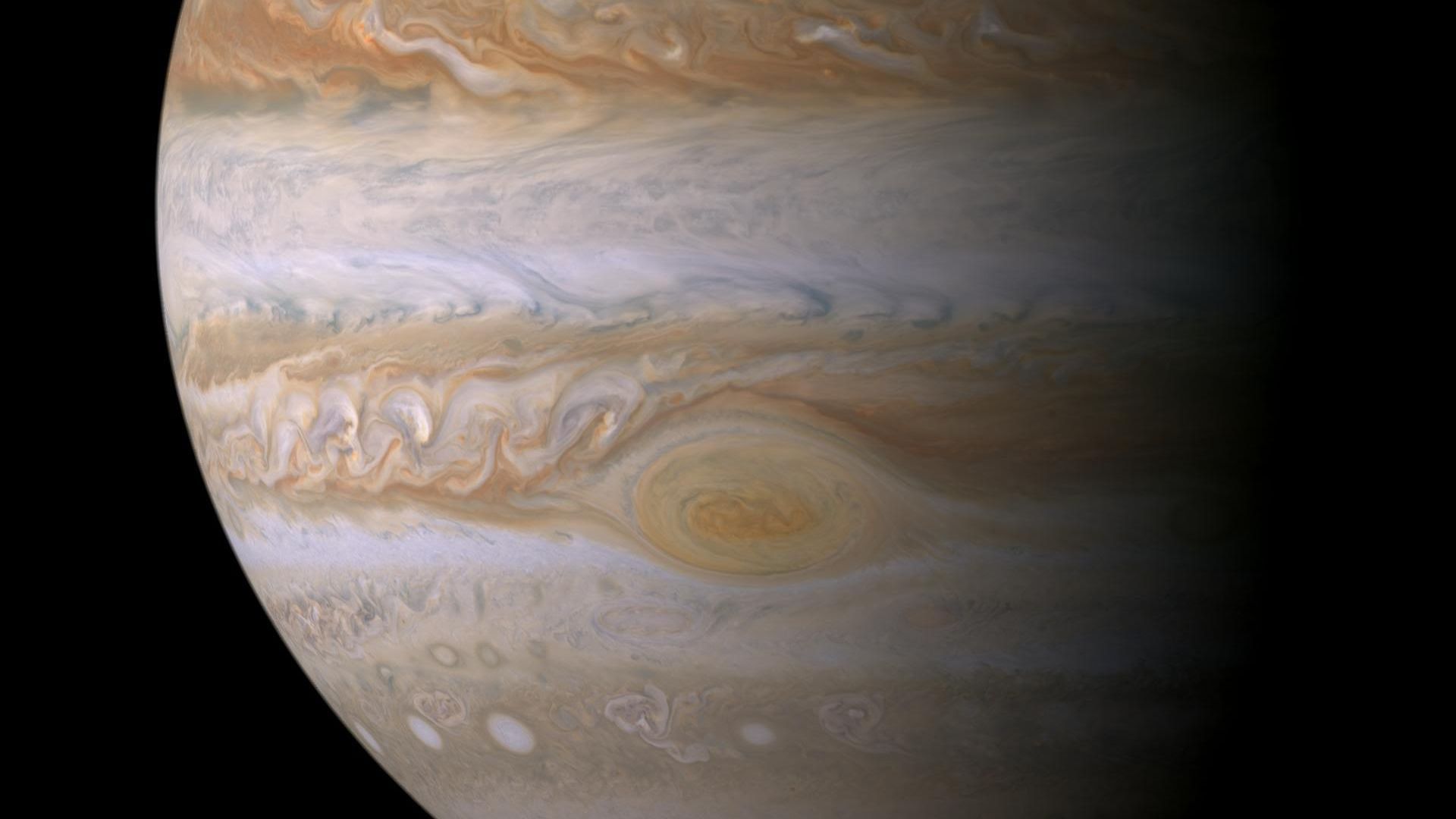
Look up this week to see Jupiter putting on a show for observers on Earth.
The big picture: The largest planet in our solar system is at its brightest this week. Jupiter is currently in a favorable alignment with Earth and the Sun, allowing the planet to shine brightly through the night and making observing the planet unusually rewarding.
Details: You can spot the huge planet with your naked eye at dusk and through the night all month, according to NASA.
- Your view gets even better if you have a pair of binoculars or a small telescope. By using one of these tools, stargazers will be able to see the planet’s four largest moons — Ganymede, Europa, Callisto and Io — and possibly Jupiter’s distinctive bands of clouds.
- Look east after sunset, and you should spot the bright planet shining above the horizon.
Be smart: Sometimes it’s hard to tell the difference between a planet and a star when looking with your naked eye, but there’s a shortcut to avoid that confusion.
- If an object is twinkling, it’s a star. But if it doesn’t twinkle, it’s probably a planet.
- A satellite, on the other hand, moves across the sky without blinking, while a plane’s flashing lights give it away.