
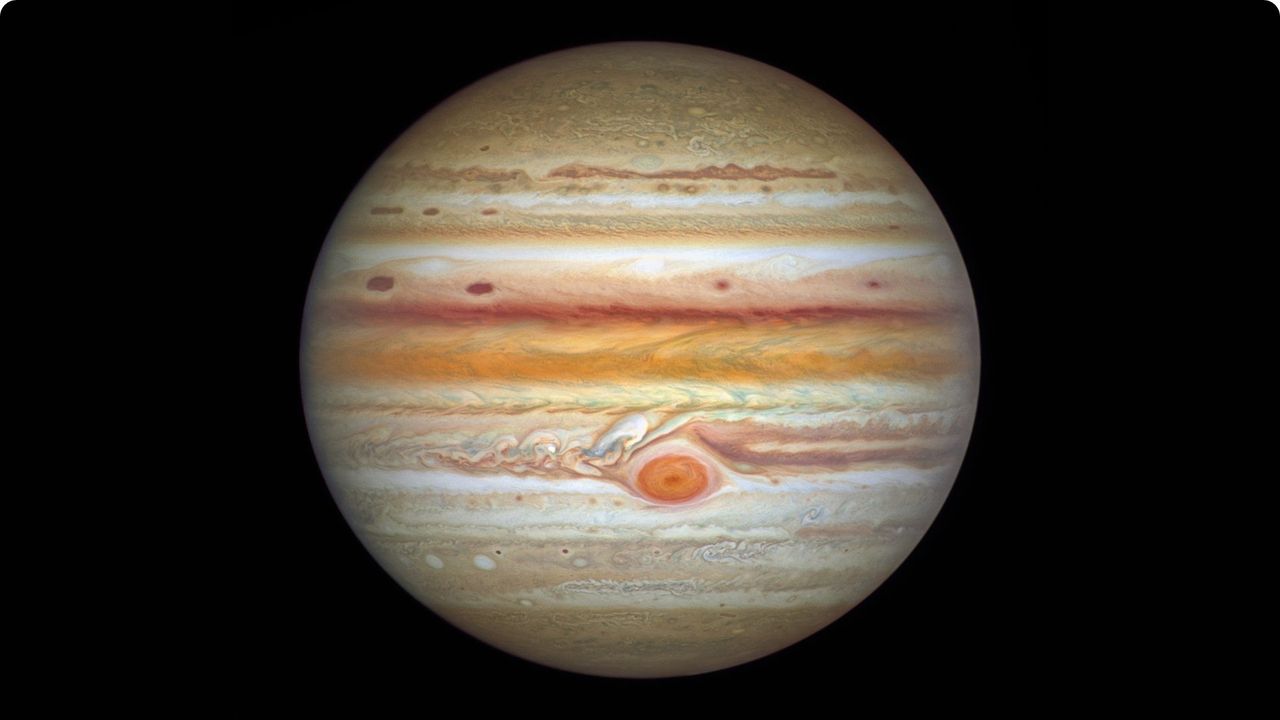
The gas giant Jupiter will appear to reverse direction in the night sky from tonight (March 10) onward, bringing an end to its temporary retrograde motion that began in November 2025, which saw it travel westward through the stars of the constellation Gemini.
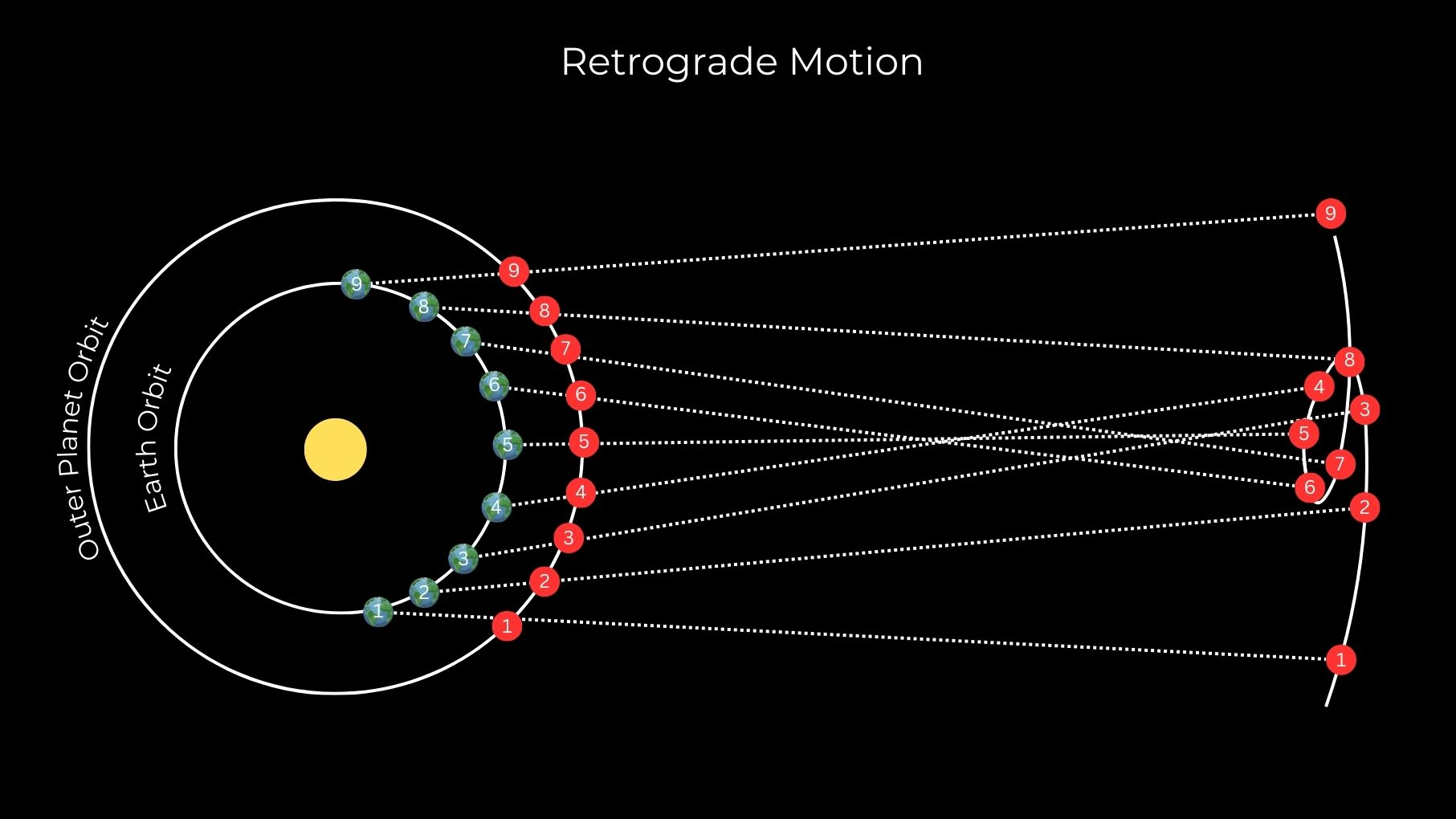
Under normal circumstances, the outer planets of our solar system — Mars, Jupiter, Saturn, Uranus and Neptune — travel eastward through the night sky relative to the fixed starfield beyond. However, each of the planets appears to periodically shift direction and double back on itself.
This trick of perspective is known as retrograde motion, and occurs as Earth — traveling faster in its orbit compared to the outer planets — catches up to and overtakes a planet in the period surrounding opposition, when a planet is opposite the sun in Earth's sky.
As Earth passes an outer planet, in this case Jupiter, it appears to first stand still and then travel backwards (westward) relative to the background stars, before eventually returning to its ordinary prograde motion as our planet moves further from the point of opposition.
Jupiter will then continue its regular eastward motion through the evening sky until late June, when it will become temporarily lost from sight ahead of its solar conjunction on Jul. 29. The gas giant will re-emerge as a morning planet in the predawn sky in mid-August and won't enter retrograde motion again until Dec. 12 later this year, according to in-the-sky.
Want to get a closer look at the king of the planets? Then be sure to check out our picks of the best telescopes available in 2026, along with our equipment guide for seeing and photographing the planets.
Editor's Note: If you would like to share your planetary photography with Space.com's readers, then please send your photo(s), comments, and your name and location to spacephotos@space.com.