Canada strives to respect all regions, to be gender equal and holds up multiculturalism as official government policy — but our music awards don’t always seem representative of these goals.
Over the years, critics have pondered: why are the #JunosSoMale? Why were hip hop and rap snubbed for so long? Why has it been so hard for Indigenous artists to be represented outside of the Indigenous Juno category?
This year, according to a CBC music analysis, Ontario artists have three-quarters of the nominations (75.6 per cent) in the non-genre Juno Award categories (for group, single, album, artist, breakthrough artist and breakthrough group, songwriter and Juno fan choice).
As well, in those award categories and in the international artist category, nominees are mostly male (at 58 per cent). Thirty-eight per cent of nominees in these categories are female and another eight per cent are for groups with both women and men. Six categories have no female nominees. The CBC analysis did not include race.
Both music industry insiders and fans have a right to ask why the Junos aren’t more representative of Canada’s diversity — and what’s being done or might be done to change this. After all, the awards show, run by The Canadian Academy of Recording Arts and Sciences (CARAS), receives funding from the Government of Canada and FACTOR, which administers funds from Canadian Heritage through the Canada Music Fund as well as from private radio broadcasters.
Investing in music development
CARAS is more than the body that runs the Junos — its mandate is to “promote and celebrate Canadian music and artists.” CARAS started the non-profit organization MusiCan, now MusiCounts, in 1997. MusiCounts is the education pillar of the Juno Awards — meaning the organization promotes music education in schools by providing instruments, says Kristy Fletcher, MusiCounts’ executive director.
Through MusiCounts’ Band Aid program, schools can apply for up to $15,000 in musical instruments. In 2020, 90 schools received Band Aid funding in nine provinces and all three territories. The only province missing was Prince Edward Island.
The Band Aid program, as well as MusiCounts’ other programs, are a great first step to bolster children’s access to music, since music development starts with picking up an instrument.
But the gap is widening between the number of schools that apply for funding and the number that MusiCounts can give funding to. Last year, the organization funded one in five schools, but Fletcher says that this year they are only able to fund one in seven. Applications increased by 15 per cent this year and 40 per cent last year.
Investing in emerging artists
CARAS also invests in cross-country artists through the Allan Slaight Juno Master Class, a program that is meant to be a bridge “between music education through MusiCounts and the celebration and promotion of excellence through The Juno Awards.”
This program is open to emerging artists who are growing their careers (but aren’t now Juno nominees). This year two women and two men of Toronto, Victoria, Vancouver and Montréal were selected for the week-long master class.
The artists will also perform at JunoFest, before the Juno Awards. Artist Aiza, who grew up in Montréal, is bilingual, and is now Toronto-based, will also perform at the Junos.
Widening who is nominated
The Juno nomination process in almost every category starts with artists submitting themselves for consideration. From there, submissions to almost all categories go through screening committees that can suggest artists submit to another category in which they may have a better chance — but the artist does have the final say. Then, depending on the category, nominees are decided by either academy delegates, judges, consumption and social data or some combination of these.
Delegates are people working in the Canadian music industry. Judges on the other hand are industry members who apply to participate. Ten are selected in each category. “Judges will be balanced geographically, to represent all major markets across the country,” according to Junos criteria.

No breakdown is publicly available that shows who is a voting delegate. But what is known is that all three major labels have their Canadian operations headquartered in Toronto.
Two of the six categories in which no women are nominated at the Junos this year are Recording Engineer and Producer of the Year. When I attended Trebas Institute for Audio Engineering, Production and DJ Arts, there were five women in my class of 15 students. I don’t remember having a single female instructor in my time there.
“If we’re only hiring male engineers and producers, we’re only ever going to get men nominated in these categories,” said Nuela Charles, via email, whose album Melt is nominated for adult contemporary album of the year at this year’s Juno Awards.
Beyond the music financial centre
In 2015, according to an Ontario Creates Music Industry Profile, 79 per cent of Canadian record production and distribution operating revenues were generated in Ontario.
Should this make artists across Canada feel okay about the fact that 75.6 per cent of Juno nominees are Ontario artists? Or, does it pressure them to move closer to Canada’s music business centre?
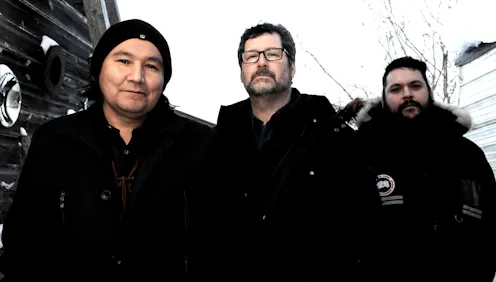
Diga is frontman of Digawolf — a group from Yellowknife which is nominated for Indigenous artist or group of the year award at this year’s Junos.
“Yellowknife is home … My goal is to try my hardest to try to make this all happen without having to move south,” says Diga, who writes and performs in both English and Tlicho.
He says he finds inspiration in his hometown. He runs a studio there as well, Naka Productions — allowing him to help other artists in Yellowknife and remote communities around it build their careers in their home and save on travel expenses, a big challenge for artists in the North.
At the 2019 Western Canadian Music Awards, Digawolf was nominated in both the Indigenous and rock artist categories, but at the Junos, the band was only nominated in the Indigenous artist or group category.
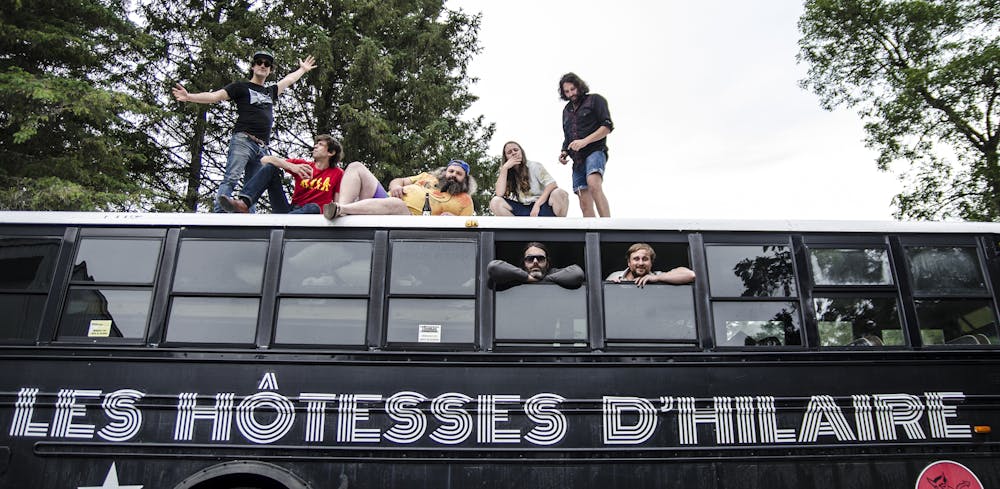
Serge Brideau, frontman of Les Hôtesses d'Hilaire, echoes Diga’s sentiments about finding inspiration in his home on the other side of the country, Tracadie, N.B.
“Being Acadian … That reality of everyday life here, politically and culturally, definitely is inspiring,” says Brideau.
There is support outside of the Junos for musicians across Canada. There are music industry organizations that helps artists navigate the industry, such as Alberta Music and Music NWT. Artists can apply for grants sometimes through municipalities or provinces and FACTOR administers some funds. The East Coast Music Awards and Western Canadian Music Awards recognize artists on either side of the country.
But is it enough to truly reflect cross-country diversity in award nominees in major categories? Perhaps only time can tell.

Marina Eckersley does not work for, consult, own shares in or receive funding from any company or organisation that would benefit from this article, and has disclosed no relevant affiliations beyond their academic appointment.
This article was originally published on The Conversation. Read the original article.