Frances Perraudin has one more update from Sheffield:
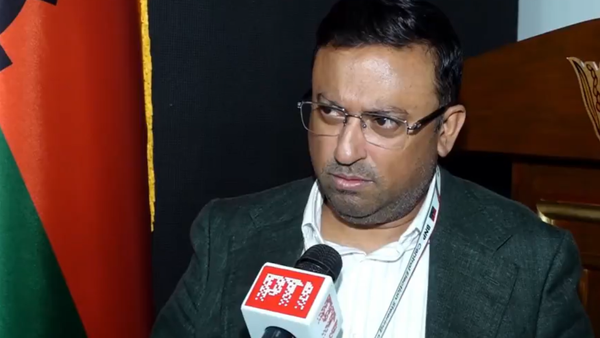
Dr Naadir Ansari used to be a junior doctor in A&E before retraining to be an eye doctor. He decided to change specialism partly because of the hours he had to work in A&E.
“[At the beginning of my career] I used to do 120 hour weeks. I used to do 56 hour shifts. If you were lucky you got to sleep. If you weren’t, you didn’t,” he says.
“I remember walking down the corridor in the middle of the night towards the end of one those shifts and talking to a person next to me who wasn’t really there - I was that exhausted. How can that possibly be safe?”
Although Ansari says those working hours are a relic of the past, he fears they will be brought back with the new junior doctor contract. He says there currently aren’t enough doctors to cover the rotas and that the government’s proposals will only serve to spread existing staff thinner.
“52% of junior doctors finishing their foundation years are going into the NHS. 48% aren’t,” says Ansari.
“That’s a lot of graduates who aren’t going into the NHS. This is a time when the NHS is in crisis. We don’t have a lot of doctors and we can’t attract them in. Making a contract that’s even worse is not going to improve that.”
Ansari says he gets weekly emails from recruiters from countries like New Zealand, Australia and Canada trying to persuade him to apply for positions abroad and offering to pay for his flights. “The doctors who are here now are here because they actually like the NHS. They like the ideals of free at the point of delivery.”
“We have a duty to protect and look after our patients and if this contract goes ahead we won’t be doing that,” he says. “We’ll actually be complicit in their harm.”
Dr Naadir Ansari, a junior eye doctor in Sheffield, says the new contract will make the NHS recruitment crisis worse pic.twitter.com/75ilYFbsbS
— Frances Perraudin (@fperraudin) February 10, 2016
Updated
Summary
Here’s a summary of what’s happened today:
- At least 2,884 non-urgent operations have been cancelled, as junior doctors began their second 24-hour strike in their five month dispute with government over new contracts.The walkout follows the breakdown of last-ditch talks between the British Medical Association, NHS Employers and the Department of Health over the shape of the new contract that all juniors in England will operate under from August.
- Health secretary Jeremy Hunt claimed that 43% of junior doctors have showed up to work - slightly more than during the first 24 hour strike last month. NHS England later confirmed that the 43% figure included doctors who had never intended to strike, such as those working in emergency care.
- Hunt, and a source at Number 10, both suggested the government is ready to impose the contract on doctors. Hunt said: “It doesn’t need to get to that. And I really hope it doesn’t get to that. In the end we do have to have resolution on this as lots of people inside the NHS are beginning to say. But the door is open for discussions.”
- Shadow health secretary Heidi Alexander said the government could have avoided the strike. But Shadow Justice Secretary Lord Falconer said Labour was “neutral” on whether the strike should go ahead. Labour leader Jeremy Corbyn did not mention the strike at PMQs.
- BMA junior doctors leader, Dr Johann Malawana, accused the government of blocking a “cost neutral” BMA offer to sacrifice part of a proposed increase in weekday pay to fund a premium rate for Saturday working. “We presented [a] fully costed and working solution that was rejected due to pride and politics,” he tweeted.
- NHS Employers says that it rejected the BMA proposal on Saturday pay because it was not “cost neutral”. Chief executive Danny Mortimer replied: “The proposal the BMA made wasn’t cost neutral - it removed from the cost envelope that we both have to work within, proposals which would pay doctors in our most shortage specialities (emergency medicine and psychiatry) more money. The BMA rejected that and took it outside the cost envelop. We are waiting for the BMA to try and find some compromise
- NHS providers urged the government to impose new contracts on junior doctors. Chief executive Chris Hopson, said: “If the BMA won’t accept a fair and reasonable offer, then, yes, it is legitimate and sensible for the secretary of state to consider imposition.” His comments were branded a “disgrace” by campaigners.
- Leading figures, including the author JK Rowling and Labour’s candidate for London mayor, Sadiq Khan, have expressed backing for the strike. But Danny Mortimer, chief executive, ofNHS Employers urged the BMA to compromise.
- Nine out 10 junior doctors could quit if the current contract terms were imposed, according to an independent poll. Dr Nicola Payne a junior doctor at Manchester Royal Infirmary says she may move to New Zealand if the new contract is imposed.
- A new YouGov poll reveals that the public continues to back the strike and blames the government for failure to settle the dispute. Of those polls as 49% say junior doctors are right to take action and 31% say they are wrong - similar figures were recorded in November.
That’s it for today, they’ll be much more on the Doctors section of the Guardian’s website.
Nicola Sturgeon, Scotland’s first minister, has boosted efforts to increase the number of medical students from deprived backgrounds by pledging £24m to increase equality of access to medical schools, with a new entry level programme for students from poorer homes, writes our Scotland editor Severin Carrell.
Sturgeon’s initiative, disclosed in speech on Wednesday, comes after the Guardian revealed new figures showing that a large majority of students at Scotland’s five medical schools were from the wealthiest homes or most affluent areas, and a large minority from private schools.
The first minister said: “At present only 1 in 20 new doctors come from the most disadvantaged areas of our country; if we had truly equal access to the medical profession, that figure would be 1 in 5. That’s not a reflection on the talent or aptitude of students from disadvantaged areas, it’s an indication of how disadvantage acts as a barrier to equal opportunity.”
Your questions answered
Jessica Elgot has the answers to the top five questions the British public is asking about the doctors strike on Google:
"Why are junior doctors striking?" - Top questions on the #JuniorDoctorsStrike on @GoogleUK pic.twitter.com/dwXPgVHCpA
— GoogleTrends (@GoogleTrends) February 10, 2016
1 Is the junior doctors strike going ahead?
Yes. All junior doctors who are taking part - that’s all doctors below consultant level - will provide emergency care only, which has led to the cancellation of almost 3,000 operations. There are 55,000 junior doctors in England - a third of the workforce, and just over 37,000 are members of the BMA.
The strike comes less a month after the first 24-hour strike saw 38,000 doctors take part in the first industrial action of its kind for more than 40 years.
Health secretary Jeremy Hunt claims that 43% of junior doctors have showed up to work - slightly more than during the first strike last month. But NHS England confirmed that the 43% figure included doctors who had never intended to strike, such as those working in emergency care.
BMA junior doctors leader, Dr Johann Malawana, said the BMA offered a deal “cost neutral” deal to end the dispute in last nights talks but the plan was rejected. “We have got a reasonable offer and the government has decided instead to play the political game rather than addressing the concerns of these doctors,” he said:
2 Why are junior doctors striking?
There is a bitter dispute between the junior doctors and the Department of Health over a new contract for the medics, which they claim will put patient safety at risk because of the strain on doctors.
Negotiations over the contract have been ongoing since 2012, but in November, the government proposed 11% rise in basic pay for junior medics. But it also proposed redefining what are seen as “unsociable hours”, and normal working hours would include shifts until late in the evening and over Saturdays.
Health secretary Jeremy Hunt also wants to scrap guaranteed pay increases linked to experience, and replace it with set training stages. Doctors who work extra hours and qualify for premium payments may lose some income, but the junior doctors insist the strike is not about money.
Their main argument is that the new contract will mean they are working far more weekends and evenings, which they otherwise would have been paid extra to do. This is linked to the government’s oft-stated target of improving the number of services available at weekends - an ambition for a so-called ‘seven day NHS’ which doctors say already exists in practice.
Junior doctors, rather than consultants, already provide the vast bulk of the cover over antisocial hours.
The doctors are also angry at the suggestion by government that death rates are higher at the weekend because of less adequate care. The doctors claim this is because only the sickest patients are likely to seek treatment at the weekends.
The government has indicated it intends impose the new contract in England if now agreement can be reached, which has led to the industrial action process.
3 When is the junior doctors’ strike?
This strike began at 8am on Wednesday morning and will last for 24 hours, with junior doctors providing emergency care only, although in practice overnight cover is classified as emergency care anyway, so normal staffing levels should resume by late afternoon when junior doctors start their late shifts.
4 How can I support the junior doctors strike?
An Ipsos MORI survey for the Health Service Journal found 64% of people blame the Government for the strike, with just 13% blaming junior doctors.
Many members of the public have been visiting pickets to bring tea and food to striking doctors, as well as using social media and signs to show support. Doctors are also running #meetthedrs events in town centres to chat to the general public.
Brought to Royal Devon & Exeter picket line #IStandWithTheDrs #junioraction #juniordoctors pic.twitter.com/J9XouRM4Hu
— Louise Anning (@LouiseAnning) February 10, 2016
On Northumberland St in the Toon people queing to sign the #NHS petition. #MeetTheDrs pic.twitter.com/8j8vEL5fFv
— #freeRaifBadawi (@davies42g) February 10, 2016
Petitions are also running on both Change.org and 38 degrees where members of the public can pledge to support the junior doctors.
Dr Dagan Lonsdale, a junor doctor at St George’s hospital in south London told the Guardian: “We appreciate any support that people want to offer. The most helpful thing anyone can do is write to their MP to explain why they support us and ask them to support junior doctors in parliament.
Everyone is welcome to join a picket anywhere in the country. On social media we are using the #IAmTheDoctorWho to explain what we do.
Please join us in telling your stories. Patients are using #IAmThePatientWho to tell their own stories of how doctors and the NHS have helped them and why they support junior doctors.
5 What do Labour say about the junior doctors strike?
Heidi Alexander MP, Labour’s shadow health secretary, called the strike “disappointing” but laid the blame for the strike squarely at the feet of Jeremy Hunt. She said:
Today’s industrial action is deeply disappointing, particularly for the patients who have had hospital treatment delayed because of itThe sad truth is that it didn’t have to come to this. Jeremy Hunt’s handling of these negotiations has been a complete and utter shambles.
His comments over the past few weeks and months have caused widespread anger among junior doctors and left staff morale at rock bottom.
We urgently need to see a resolution to this dispute, which doesn’t involve imposing a new contract. Jeremy Hunt needs to stop hiding behind his desk in the Department of Health and get back round the negotiating table.
But Shadow Justice Secretary, Lord Falconer, said Labour was neutral on the strike: He said:
“We are not ambivalent in supporting the cause of the doctors. The precise level of industrial action is not for a political party to decide but for the doctors to decide.”
“So we support their cause but we are neutral in relation to the industrial action.”
Here’s video of part of that interview with Jeremy Hunt and his cagey answer on whether the government had rejected a BMA proposal on pay for Saturday working.

More on the ding-dong between the BMA and government over who is to blame for the strike, via PA.
The BMA’s council chairman Dr Mark Porter, said the government had provoked the strike. He told BBC Radio 4’s The World at One:
“I’m afraid the way they are trying to manage had provoked this. The way they are trying to manage is to pretend that the valued staff who have worked for patients around the week - the only way the government can afford to carry on having them work at weekends is to cut their rates of pay.
“It is the government that is doing all the demands here, has disturbed a way in which junior doctors have for decades worked for patients at weekends and have now come in, ruined industrial relations and made junior doctors so unhappy that 98% of them voted for strike action.
“I’m afraid junior doctors have lost confidence in a Government that manages in that way and has provoked so many committed young professionals to take industrial action.”
Almost three quarters of the of people polled by Sky News within 45 minutes of the strike starting said they supported the strike.
Of 1,380 people survey, only 26% did not support the action.
The group were also asked if they agreed or disagreed with the following statement: “I would feel less safe than usual going to hospital today.”
Some 36% said they would feel less safe, while 64% said they would not.
NHS England clarifies Hunt's turnout claim
NHS England has made an important clarification about Hunt’s claim that 43% of doctors worked during the strike. The figure included doctors who had never intended to strike, such as those working in emergency care, it told PA.
It said 43% of junior doctors - out of a possible 26,000 working on a typical day - have reported for duty on the day shift.
Combining junior doctors, other doctors and consultants, the data suggests 72% of the total trust workforce are in work, it said.
Time to hear more from junior doctors on the Sheffield rally via Frances Perraudin.
An Du Thinh, a junior doctor at Sheffield teaching hospitals, says the gov needs to train and recruit more doctors. pic.twitter.com/pocMjQMIxj
— Frances Perraudin (@fperraudin) February 10, 2016
Lucy Brimfield, 27, a junior doc in Sheff, says she's been demoralised reading some of the strike's media coverage. pic.twitter.com/3hPHWJMAbr
— Frances Perraudin (@fperraudin) February 10, 2016
Rebecca Thomas, 25, a junior doctor at Jessops hospital, says she's protesting against further cuts to NHS services. pic.twitter.com/OKaiRkqbbp
— Frances Perraudin (@fperraudin) February 10, 2016
Dr Naadir Ansari, a junior eye doctor in Sheffield, says the new contract will make the NHS recruitment crisis worse pic.twitter.com/75ilYFbsbS
— Frances Perraudin (@fperraudin) February 10, 2016
NHS Employers says BMA Saturday pay plan 'wasn't cost neutral'
Danny Mortimer, chief executive, of NHS Employers, says that his side rejected the BMA proposal on Saturday pay because it was not “cost neutral” as junior doctors have claimed.
He was asked about the BMA offer to sacrifice some of weekday pay rise for extra money at weekends, on BBC Radio 4’s World at One.
Mortimer replied: “The proposal the BMA made wasn’t cost neutral - it removed from the cost envelope that we both have to work within, proposals which would pay doctors in our most shortage specialities (emergency medicine and psychiatry) more money. The BMA rejected that and took it outside the cost envelope. Secondly, Saturday’s do need to be treated differently to Sundays. We are prepared to find a compromise on that. They haven’t, to date, been prepared to find that compromise.”
Mortimer added: “We have made an offer to the BMA which has sought to pay the doctors who work the most Saturdays for all the Saturdays they work. That’s been backed by the government. And we are waiting for the BMA to try and find some compromise in return.”
Mortimer said it was “simply not true” that the government had rejected the BMA’s offer not the NHS employers. “What I experienced is government ministers backing us to try and find a compromise on Saturdays. Whereas the BMA haven’t been able to compromise their position at all.”
He said it was for the government to decide whether to impose the new contract on doctors.
Labour 'neutral' on strike

One of those top Google questions about the doctor’s strike concerns Labour’s stance on the issue. It is difficult to tell, judging by comments from Shadow Justice Secretary, Lord Falconer, on the BBC Radio 4’s World at One programme.
He said: “We are not ambivalent in supporting the cause of the doctors. The precise level of industrial action is not for a political party to decide but for the doctors to decide.”
He added: “So we support their cause but we are neutral in relation to the industrial action.”
Dr Harriet Nerva explains why she’s on striking. Writing on Guardian opinion, she says:
Jeremy Hunt, the secretary of state for health, continues to push through his political aims with no thought for the horrendous damage they will do to patient care. He is unwilling to truly engage with NHS staff, hiding behind misleading, sensationalist and dangerous statistics. We already know about the Hunt effect – which scares people from going to hospital at the weekend and has already hastened death in a handful of patients.
Never in my career did I think I would find myself having to reassure people that hospitals function at the weekend. Furthermore, when interviewed he refuses to answer questions or concerns from health professionals, instead claiming that we are all being misled by the BMA. This is patronising and is simply not true. Why does he still refuse to listen to the huge concerns expressed by doctors, their union and their training colleges?
Updated
Government ready to impose contract
A Number 10 source indicated the government is still ready to impose the junior doctors’ contract if no agreement can be reached, Rowena Mason reports.
The source said: “We think it is a very reasonable deal... As we’ve said all the way along, we are not going to remove that option from the table and give a veto to the BMA. We’ve certainly gone the extra mile in trying to get a deal and are very disappointed there is a further strike today.”
Jeremy Corbyn wore a ♡unions badge to prime minister’s questions but a Labour aide said it was because he loves the unions and supports trade union week rather than necessarily a symbol of solidarity with the striking doctors.
Asked whether Corbyn would join doctors on the picket line, the aide said he did not believe that would happen, but added: “Labour has been very clear on this. We continue to say Jeremy Hunt is to blame. He has created a crisis of his own making and needs to return to the negotiating table. What Labour wants is to see a negotiated settlement. There is no change in attitude. People visiting picket lines is a matter for them.”
The doctors strike did not come up at PMQs to the surprise of many commentators.
Junior doctors' strike not raised at #pmqs. Or Cameron's mam and aunt. Never mind Europe. Surprised
— Kevin Maguire (@Kevin_Maguire) February 10, 2016
#pmqs now running overtime. But the shock is that not a single MP has mentioned junior doctors strike. https://t.co/FFkEjL6NGi
— PoliticsHome (@politicshome) February 10, 2016
In Sheffield, Frances Perraudin has moved from the picket line to a junior doctors rally.
About 150 junior doctors have gathered for a rally opposite the Sheffield children's hospital. "Not safe, not fair". pic.twitter.com/KLLrY8owjb
— Frances Perraudin (@fperraudin) February 10, 2016
The control centre at Croydon University Hospital have sent in contribution to GuardianWitness explaining how it is dealing with patients today.
Deputy chief operating officer at Croydon Health Services NHS Trust, Alison Smith, said: “It’s a hive of activity with doctors, nurses and managers all working together to keep our services running. We are closely monitoring that we have enough staff on the ground to care for our patients.
“This morning, at the 8am handover, our junior doctors stayed on to complete the safe handover of care for their patients - before joining the picket line. Despite the ongoing dispute, our patients come first. It is a difficult decision to cancel appointments and operations, but we have done so to bring our consultants and nurses together in the right the places so that we can continue to deliver safe care.
“In total, 31 planned routine operations and 216 non-urgent outpatient appointments scheduled for today have had to be postponed. Every appointment will be rescheduled and we have been contacting everyone affected by phone, letter and text.”
Addressing the concern that today’s strike could cause a backlog Alison said: “Our teams are working flat-out to re-book appointments and procedures to get all of patients affected back in by March without impacting on our waiting lists for other patients.”
Around fifty junior doctors ditched the picket lines to take a more innovative approach to thhe strike by offering the public free life-saving CPR lessons, writes Nazia Parveen.
While others brandished banners to protest reforms on NHS working conditions, several teams decided to carry on teaching their skills as health workers.
The sessions were held in Didsbury and Levenshulme. Hundreds of parents and their children were expected throughout the day to learn CPR, performed on mannequins with instruction from the striking staff.
Bernadette Lomas, a 34-year-old Manchester Royal Infirmary (MRI) junior doctor specialising in child and maternal anaesthetic, organised the initiative, saying she wanted to raise awareness of the walkout while giving people more confidence to take steps that could help save others’ lives.
She said: “The primary aim was to give something positive back into our community- using our skills and knowledge to benefit those around us, in the knowledge that some of the public would be experiencing disruption and inconvenience due to the strikes.
“We also wanted to provide junior doctors with a positive outlet for the day- affirming that they have life-saving abilities which can be easily passed on in the community.
“It has given doctors a very valuable face to face interaction with the public outside of the hospital setting, which in my opinion talking to those around me has benefitted everyone. It’s good for people to see that we are normal with everyday stresses of life, families, children, and it’s good for doctors to see that people appreciate them and their skills.”
The event is the fourth session that has been held. They have all coincided with strike days and have been held in a variety of venues.
Lomas, a mother-of-two added: “Every person coming to learn has been overwhelmingly positive about what we are offering. As they are free and babies and children are welcomed it’s been particularly well received by new parents and those with older children; most first aid courses attract a fee and don’t allow children older than babes in arms.”
At the session in the Home cafe, Didsbury, staff nurse Ashley Bass, 33, said he wanted to “give something back to the community.”
He added: “It is really important for the public to learn life saving skills and events like this are essential because it teaches people the basics. It is also a really positive way for doctors to be able to spend strike day sharing their knowledge and teaching people in the community for free.”
Heather Brown, 36, a teacher attended the session with her 15-week old daughter Maisie.
She said: “Before this session I was not sure what to do in a situation where someone started choking but now I fee like I could deal with it and I feel a lot more confident.
“It is absolutely fantastic that the doctors are doing this. There are as many doctors here as mothers and babies and it is great to be able to get some expert advice about CPR and choking as well as being able to try things out on the dummies.”


The BMA has yet to respond to Hunt’s claim about strike turnout, but it claimed that support for the strike was “holding firm”.
Dr Johann Malawana, BMA junior doctor committee chair, said:
“With thousands of junior doctors attending more than 160 pickets and ‘meet the doctor’ events across England, today’s action is a resounding rejection of the Government’s threat to impose an unfair contract, in which junior doctors have no confidence.
“We deeply regret the disruption caused to patients, but this is a fight for the long-term delivery of high quality patient care, for junior doctors’ working lives and for ability of the NHS to rise to the enormous challenges facing it.
“Junior doctors already work around the clock, seven days a week and they do so under their existing contract. If the government want more seven-day services then, quite simply, they need more doctors, nurses and diagnostic staff, and the extra investment needed to deliver it.
“Rather than addressing these issues, Jeremy Hunt has rejected a fair and affordable proposal put forward by the BMA and is instead ploughing ahead with proposals that could see many junior doctors voting with their feet. That is why today’s action has the support not only of 98% of those junior doctors who voted for it, but the majority of the public, who blame the Government for backing junior doctors into a corner, leaving them with no option.”
Hunt claims 43% of doctors turned up to work
Health secretary Jeremy Hunt claimed that 43% of junior doctors have showed up to work - slightly more than during the first 24 hour strike last month.
Speaking to reporters he said all the issues in the dispute had been resolved apart from pay rates for Saturday working.
Asked why he rejected the BMA’s “cost neutral” proposal for a smaller overtime rate at weekends and a reduction in basic pay, Hunt chose his words very carefully. He said: “There has been no rejection of any proposals or plans that would deal this weekend effect that is of such concern for patients and the public.”
He added: “Today 43% of junior doctors have turned up to work, so the turnout for the strike has been slightly lower than before. I’m very grateful to all the doctors who have turned up to work today. There is no need for this industrial action.”
Asked when he would impose the new contract on doctors, Hunt said: “It doesn’t need to get to that. And I really hope it doesn’t get to that. In the end we do have to have resolution on this as lots of people inside the NHS are beginning to say. But the door is open for discussions.”
Updated
Amy Sedghi, a former Guardian staffer who now works at Google, has been looking at the top questions being asked on Google UK about the junior doctors strike.
She summarised the results in a tweet:
"Why are junior doctors striking?" - Top questions on the #JuniorDoctorsStrike on @GoogleUK pic.twitter.com/dwXPgVHCpA
— GoogleTrends (@GoogleTrends) February 10, 2016
Answers on a postcard...
Updated
Among the shoppers and commuters at Tooting Broadway station, St George’s doctors have set up a meet the doctors stall, writes Aisha Gani.
Alongside it is an Antony Nolan trust stall to get doctors striking and members of the public to sign up as marrow donors.
Popped to St Tooting Broadway station where there's a meet the doctor stall, telling the public #IAmTheDoctorWho pic.twitter.com/wGo0cFxQBs
— Aisha S Gani (@aishagani) February 10, 2016
David is a core surgical trainee and wants to be a plastic surgeon but wants to have the best training available.
Wearing a stethoscope around his neck he said: “I’m here to explain to people we’re striking about patient care and the need to safeguard against unsafe hours and also to dispel Hunt’s lies that the BMA is the problem.
“Hunt is talking utter nonsense turning and turning this into a trade union debate, he’s talking nonsense when he says we’ve been misled. We’re intelligent people who can think for ourselves.
“I think the most dangerous of the proposed contract when fairly robust safeguards will be destroyed and make it easier for the trust to make us work 16-18hrs in a row - which is bad for patient safety.”
He added: “Training suffers as while we have to do day to day work we will miss vital training opportunities.”
David is a core surgeon and wants best training to become a plastic surgeon. He tells me colleagues have gone abroad pic.twitter.com/0aUQhyJtuD
— Aisha S Gani (@aishagani) February 10, 2016
Some of his medical colleagues have already left the country, David said: “One in my best friends is in New Zealand now and another went six months ago. They say there’s better work and life balance and are treated with respect.”
“Previously they said they would only go for a year. Now they’re saying they’ll stay there for ever .”

There are two pickets outside the Manchester Royal Infirmary (MRI), a large teaching hospital near Manchester University, which is a regional centre for kidney and pancreas transplants, haematology and sickle cell disease, writes Helen Pidd.
Protesters said the only junior doctors working were at the busy Accident & Emergency Department, which sees around 145,000 patients each year.
Nicola Payne, a junior doctor from Leicester training to become a GP, said she would consider moving to New Zealand if the new contract was imposed.
The 30-year-old had already spent three years working over there, and as a result said she realised “there is a better way to run a health service. I came back at the end of 2014 and if I had known about the new contract I may never have returned to the UK. I’ll be tempted to go back to New Zealand if the contract is imposed.”
In New Zealand, accident and emergency doctors never work more than three night shifts in a row, whereas in the UK some people were doing 12 on the trot, she said. “We feel more like service providers than trainees most of the time,” she said. “We are supposed to be learning but there is such a shortage of staff that there are gaps all over the rotas and we don’t have time to actually train.”
Green Party leader Natalie Bennett, has joined a picket outside Barnet General Hospital today. Speaking from the picket she said:
“The government is playing with fire with its bullying, disrespectful attitude towards the junior doctors.
“There is a global shortage of medical professionals and almost everyone I have spoken to on the doctors’ picket lines knows a colleague who has already emigrated. Many more are considering it.
“Our talented healthcare professionals are a national asset who are being driven away by this government. We need to value, support and listen to our junior doctors.
“Instead, ministers are failing to address doctors’ serious concerns surrounding safe working conditions, and aren’t offering proper recognition for those working unsocial hours.
“The government must rethink the way they’re treating our NHS. As a start they should negotiate with the doctors in good faith, and put forward the offer of a contract that is fair and works for staff and patients alike. Until then we’ll continue to stand in solidarity with the junior doctors as they fight for what’s right.”
Supporting #JuniorDoctorsStrike at #Barnet hospital - my placard reads "I support our #juniordoctors & our NHS" pic.twitter.com/7m4VLYZyOY
— Natalie Bennett (@natalieben) February 10, 2016
The strike might come up at prime minister’s questions. Andrew Sparrow will be following it live.
Singing to the tune of Abba’s Voulez Vouz, junior doctors at Northwick Park came up with this ditty:
“Jeremeeeeey, ah, ah, we don’t want your contact, we don’t want your contact, nothing fought for nothing gained”.
Singing picket -talented doctors on the front line fighting in rhyme @TheBMA #notfairnotsafe #JuniorDoctorsStrike pic.twitter.com/dXSSkROk3z
— Bea Bakshi (@bakshib87) February 10, 2016
Arielle Bossuyt has more from the picket line at the Royal Free, in Hampstead, North London.
" it's my last year but i am standing today for next generations." Sofia, junior doctor for 12 years. pic.twitter.com/kfIuWWrdoI
— Arielle Bossuyt (@ArielleBossuyt) February 10, 2016
"It's not just about docters. Gouvernment attack once more the National Health System." Members of socialist party. pic.twitter.com/ngGLyoD9St
— Arielle Bossuyt (@ArielleBossuyt) February 10, 2016
Paul is a patient and juniors doctors saved his life. Today, he bought the breakfast and his support. pic.twitter.com/UIhn4YsA2I
— Arielle Bossuyt (@ArielleBossuyt) February 10, 2016
Klaxons all around the Hospital !#supportToJuniorsDoctors pic.twitter.com/AFbxMXDeXH
— Arielle Bossuyt (@ArielleBossuyt) February 10, 2016
Government dismisses strike as 'completely unnecessary'
The government has dismissed the strike as “completely unnecessary”.
In a statement the Department of Health said: “It is very disappointing that tens of thousands of patients and NHS staff have been inconvenienced by the BMA. We have now agreed the vast majority of the contract detail with the BMA but it is a great shame they have broke the agreement we made at Acas on the outstanding issue of Saturday working and pay for unsocial hours.”
Updated
Readers have been sharing their picket pics on GuardianWitness. Here’s from a sample from around London:
Great Ormond Street:

Junior Doctors Strike outside London biggest Children's Hospital
Receiving plenty of support from passing public and patients, doctors are picketing today and holding Meet the Doctors events at nearby tube stations.
West Middlesex University Hospital:

Public support remains strong for junior doctors
Public support remains strong
King’s College:

King's College Hospital, London
Junior doctors at our local hospital, King's College in Denmark Hill, London, striking to save the NHS.
And a couple from outside London.
Canterbury

and Telford

You can share your photos, videos and stories by email, text, tweet or by clicking on the blue buttons in the live blog.
Updated
Anita Wale, a doctor with seven years experience, says she is reluctant to strike but grateful for the support of consultants in her department at St George’s Tooting, writes Aisha Gani.
“We had to get taught how to picket for today. I love my job but the proposed contract makes me scared,” she said.
She added: “Jeremy hunt is saying seven day working week isn’t happening and isn’t working.”
She points to her fellow radiologists Joy and Joe on the picket line: “This is a demonstration that it is happening for acute care, and one of the things George’s does is that we’re a trauma centre. So if somebody comes in having a car accident they often have a CT scan from head to pelvis and that needs to be reported by expert doctor in imaging.”
“This hospital is so busy it needs two junior radiologists and a consultant at all times during out of hours - which is nights and weekends - and our consultants already work during the week and Saturday and Sunday.”
Anita, doctor of 7 yrs, is a radiologist and explains to the Guardian how Hunt's contract will affect her field pic.twitter.com/jnmpSy2w3c
— Aisha S Gani (@aishagani) February 10, 2016
Joy a radiologist at St George's goes onto say how the proposed service would work with such limited resources pic.twitter.com/QVu2dUEEjO
— Aisha S Gani (@aishagani) February 10, 2016
Dr Thomas Payne, 25, a junior doctor picketing outside Sheffield’s Northern General hospital, says he would love to see a seven-day expanded NHS, but that the government is going about it in the wrong way, writes Frances Perraudin.
“Taking a highly efficient and well functioning 5 day service and stretching it over 7 days just isn’t going to work,” he says.
Dr Daniel Pennells, 25, says the government is trying to pretend that working on a Saturday is the same as working on a Tuesday. “We’re not saying that we won’t work on a Saturday. We already do,” he says.
“But the minute we give into the idea that it’s no different to a weekday it will leave it open for the government to do the same to nurses and other people who work in the NHS.”
Both Payne and Pennells will have to choose a specialism in the next two years and both say they are seriously put off going into acute medicine - which is already suffering from a recruitment crisis - because of the increasing working hours.
“If you increase the number of anti-social hours you have to work, that is going to impact on recruitment to those specialisms that provide a lot of out-of-hours and acute service,” says Payne.
“There are certain things I wouldn’t apply for and wouldn’t consider doing,” says Pennells. “A&E, for example.”
“I do like acute medicines and treating very sick patients, and I think it’s a very important area of medicine that is struggling. But I couldn’t do that and see my fiancé and have a good life.”
He adds: “No one likes striking. It’s such an awful thing for us to do, but it’s the only way we can get our message across because we’re not being listened to be the government.”
Sheffield junior docs Thomas Payne and Daniel Pennells say long hours put them off specialising in acute medicine. pic.twitter.com/tH8KrtBoiH
— Frances Perraudin (@fperraudin) February 10, 2016

BMA junior doctors leader, Dr Johann Malawana, confirmed that the BMA offered a deal “cost neutral” deal to end the dispute in last nights talks.
Speaking to Sky News at a picket line outside Northwick Park hospital in north London, he said: “Unfortunately the government rejected that plan and pushed doctors once more into this form of action.”
He added: “We have got a reasonable offer and the government has decided instead to play the political game rather than addressing the concerns of these doctors.”
Speaking above chants of “Where are you Jeremy?”, Malawana said: “Doctors up and down this country are extremely upset with the politicisation of this contract negotiation.”

Shadow health secretary Heidi Alexander said the government could have avoided the strike.In a statement she said:
“Today’s industrial action is deeply disappointing, particularly for the patients who have had hospital treatment delayed because of it.
“The sad truth is that it didn’t have to come to this. Jeremy Hunt’s handling of these negotiations has been a complete and utter shambles. His comments over the past few weeks and months have caused widespread anger among junior doctors and left staff morale at rock bottom.
“We urgently need to see a resolution to this dispute, which doesn’t involve imposing a new contract. Jeremy Hunt needs to stop hiding behind his desk in the Department of Health and get back round the negotiating table.”
Summary
Here’s a summary of how things currently stand:
- At least 2,884 non-urgent operations have been cancelled, as junior doctors began their second 24-hour strike in their five month dispute with government over new contracts. The walkout follows the breakdown of last-ditch talks between the British Medical Association, NHS Employers and the Department of Health over the shape of the new contract that all juniors in England will operate under from August.
- BMA junior doctors leader, Dr Johann Malawana, accused the government of blocking a deal which is understood to have proposed switching part of an increase in weekday pay to fund a premium rate for Saturday working. “We presented [a] fully costed and working solution that was rejected due to pride and politics,” he tweeted.
- The main NHS employers group has urged Secretary of State Jeremy Hunt to impose new contracts on junior doctors. Chris Hopson, chief executive of NHS Providers, said: “If the BMA won’t accept a fair and reasonable offer, then, yes, it is legitimate and sensible for the secretary of state to consider imposition.” His comments were branded a “disgrace” by campaigners.
- Leading figures, including the author JK Rowling and Labour’s candidate for London mayor, Sadiq Khan, have expressed backing for the strike. But Danny Mortimer, chief executive, ofNHS Employers urged the BMA to compromise.
- Nine out 10 junior doctors could quit if the current contract terms were imposed, according to an independent poll. Dr Nicola Payne a junior doctor at Manchester Royal Infirmary says she may move to New Zealand if the new contract is imposed.
- A new YouGov poll reveals that the public continues to back the strike and blames the government for failure to settle the dispute. Of those polls as 49% say junior doctors are right to take action and 31% say they are wrong - similar figures were recorded in November.
Dr Nicola Payne a junior doctor at Manchester Royal Infirmary says she may move to New Zealand if the new contract is imposed, Helen Pidd reports.
Manchester Royal Infirmary Jr Dr Nicola Payne, 30, says she may move to New Zealand if new NHS contract is imposed. pic.twitter.com/cGvfgKKnjF
— Helen Pidd (@helenpidd) February 10, 2016
The junior doctors picket outside Manchester Royal Infirmary https://t.co/Rqm4cupS9z
— Helen Pidd (@helenpidd) February 10, 2016
Labour’s candidate for mayor of London Sadiq Khan has shared his support for the strike with a with a selfie.
I support #Juniordoctors. The Government’s approach is bad for the NHS, bad for patients & bad for London. pic.twitter.com/q7qPMT8h26
— Sadiq Khan MP (@SadiqKhan) February 10, 2016
Momentum, the grass roots movement backing Jeremy Corbyn’s leadership of the Labour party, has urged supporters to join their nearest picket lines. It said the strike was “everyone’s fight”.
Find your nearest #JuniorDoctors picket line - then pop by & give them some #solidarity. This is everyone's fight: https://t.co/nITyjoXQOW
— Momentum (@PeoplesMomentum) February 10, 2016
Here’s a selection of more picket line pics.


Frances Perraudin has moved on to Sheffield’s Northern General where one picket was holding up a banner quoting Nye Bevan, one of the founders of the NHS.
Junior doctors striking outside the Northern General, the biggest hospital in Sheffield with 1,100 beds. pic.twitter.com/pTlt7eodk6
— Frances Perraudin (@fperraudin) February 10, 2016
NHS Employers urged BMA to compromise
Danny Mortimer, chief executive, of NHS Employers urged the BMA to compromise.
In a statement he said:
“We have listened and worked hard to address the BMA’s concerns. We now need to see from the BMA the will to also compromise, with a focus on resolution – rather than strike action.
“Patients should not suffer over a dispute about pay. We will continue to want to talk with the BMA to agree a contract that is fair and safe for doctors and patients.”
“For me it’s been a general increase in dissatisfaction with the government as a whole,” James, a doctor working in A&E at St George’s hospital Tooting, told Aisha Gani.
He said: “The main reasons for striking for me is the removal safeguards in contracts, and the fact doctors can be put back lower pay grade and shunted by the government.”
“It’s not about the number of hours I do - I stay behind five or six hours and it really doesn’t come into it.”
“But the lack of appreciation means it’s now boiling to a head.”
“It’s ridiculous for people to claim the BMA is pulling the wool over 30,000 highly educated people. It’s highly insulting,” James said, who himself was a patient of the NHS this weekend after colleagues treated him when he injured his leg in a hockey match on Saturday.
James added: “I’m not an activist but this strike action has definitely stoked up support from areas it hadn’t done so in the past.”
James who works in A&E and who was injured this Saturday and treated by colleagues pic.twitter.com/v9kvbQJzL8
— Aisha S Gani (@aishagani) February 10, 2016
Today’s strike coincides with the annual, UK-wide recruitment drive by hospitals and NHS trusts and boards to hire and train the next generation of junior doctors and registrars, writes Severin Carrell.
Scotland’s chief medical officer Catherine Calderwood launched the Scottish NHS recruitment campaign on Sunday - one directed heavily at English and overseas doctors. It quotes four junior doctors who stress the value they place on “growing” doctors and “being made to feel part of a team”.
Scotland’s first minister Nicola Sturgeon is due to deliver a speech on health reform in Scotland later today.
Clive Peedell, leader of the National Health Action Party, has rounded on the head of NHS Providers for calling on Hunt to intervene by imposing contracts.
Earlier Chris Hopson, chief executive of NHS Providers, said: “If the BMA won’t accept a fair and reasonable offer, then, yes, it is legitimate and sensible for the secretary of state to consider imposition.”
Peedell said the call was “a disgrace”.
.@ChrisCEOHopson Your support for imposition is a disgrace. If FTs can't recruit Drs in future, you must share blame #JuniorDoctorsStrike
— Clive Peedell (@cpeedell) February 10, 2016
So @ChrisCEOHopson of @NHSProviders supports imposition. If this happens and rota gaps worsen in FTs, he should resign #JuniorDoctorsStrike
— Clive Peedell (@cpeedell) February 10, 2016
Sophie Herbert, who works in emergency care at St Georges, Tooting, tells Aish Gani that the dispute is about more than contracts.
“This isn’t just a dispute about our contracts this is a much bigger issue which the government is intentionally hiding from the media,” she said.
Herbert added: “It’s about the privatisation of the NHS. In 2012 the health and social act provided a legal route for the privatisation of the NHS. This has already resulted in 70% contracts being sold off to private providers”
“But majority of voters do not want the health service sold off and cherish NHS.”
As she spoke her colleagues behind her called out: “Support our junior doctors! Hi-five for junior doctors!”
Most passersby signal their gave support and took stickers from those on the picket line. One woman entering the hospital gates said: “I fully support you.” But one man shouted: “you should be ashamed of yourself.”
Sophie who works in A&E: this is a much bigger issue which the government is intentionally hiding from the media pic.twitter.com/qavq4sjdjB
— Aisha S Gani (@aishagani) February 10, 2016
Frances Perraudin has more video of views from the picket line in Sheffield.
Tina Thekkekkara, in her 6th year of training in paediatrics, says the proposals will put people off acute medicine. pic.twitter.com/sXhER2ZCpv
— Frances Perraudin (@fperraudin) February 10, 2016
Jenna Fielding, 31, works in haematology and says this is mainly a patient safety issue. pic.twitter.com/xr7x0QhexX
— Frances Perraudin (@fperraudin) February 10, 2016
JK Rowling backs the strike
The author JK Rowling, who is married to a doctor, has told her 6.7 million followers on Twitter that she is backing the strike.
Speaking as a doctor's wife: pic.twitter.com/ZuEsBRlrFz
— J.K. Rowling (@jk_rowling) February 10, 2016
Salford Royal Hospital in Greater Manchester is often held up by Jeremy Hunt as a flagship example of the seven-day NHS already in motion, writes Helen Pidd.
But the junior doctors manning the picket on Eccles Old Road on Wednesday said the health secretary repeatedly “grossly misrepresented” the reality of Salford Royal’s weekend offer.
“What we offer is a seven-day emergency service, just as all acute hospitals do,” said one woman, who asked not to be named. The truth is that all Salford Royal really offered extra was “slightly enhanced consultant cover”, she added.
Sir David Dalton, the senior NHS boss trying to resolve the junior doctors dispute, is chief executive of Salford Royal NHS Foundation Trust. Yet the doctors on the picket outside his hospital said he had never directly consulted any of them about the changes to the contract, despite them writing to him to ask for meetings. “We have had no direct communications from him,” said one doctor.
Kavita Patel, 26, who is a year-and-a-half into her junior doctor contract, currently working in intensive care, stressed that junior doctors already worked weekends. “I work two weekends in three. This Friday, Saturday and Sunday did three 12.5 hour night shifts, starting at 8pm,” she said.
She insisted junior doctors were not overpaid, claiming to take home £2,400 each month after tax. But she stressed: “We are not really doing this for ourselves, however it may seem. We are doing this for our patients and the future of the NHS.”
Junior doctors don’t have an inherent problem with working Saturdays, as long as other elements of the health service are also beefed up, Patel suggested. “There’s no point having more junior doctors working each weekend if you don’t also have more consultants, porters, nurses and pharmacists covering the same shifts,” she said.
Picket at Salford Royal, often held up - misleadingly, according to striking junior Drs - as model of 24/7 hospital pic.twitter.com/ovr8sohAfz
— Helen Pidd (@helenpidd) February 10, 2016
Updated
Hannah Barham-Brown got to the St George’s hospital in Tooting at 8am this morning to join the picket line, writes Aisha Gani.
The final year medical student said: “I’m here as I’m going to be a medic and want to stand up for my future colleagues. I’m also a patient at the the NHS, as I have a syndrome as joints dislocate easily. I had surgery here in December.”
“The treatment has been fantastic and I want be a medic because of the junior doctors who have put me together.”
She added: “I’m currently in placement in GP land and although morale is low there’s an amazing sense of unity.”
Hannah a final yr student said: "I wanted to be a medic because of the junior doctors who put me back together" pic.twitter.com/BMn0x4SkuA
— Aisha S Gani (@aishagani) February 10, 2016
She joined fellow medics in handing out stethoscope clips.
Doctors in hi-via jackets in good spirits, in the rain hand out stethoscope clips too pic.twitter.com/HnizeeqIOG
— Aisha S Gani (@aishagani) February 10, 2016
Updated
Arielle Bossuyt tweets images of the scene at the Royal Free in Hampstead, north London.
#JuniorDoctorsStrike. " it's important to make people understand why are we strike today " a junior doctor. pic.twitter.com/3jhYyGhxe1
— Arielle Bossuyt (@ArielleBossuyt) February 10, 2016
#JuniorDoctorsStrike. At Royal Free Hospital. pic.twitter.com/cqFiVk7F8Z
— Arielle Bossuyt (@ArielleBossuyt) February 10, 2016
The BMA says Jeremy Hunt’s policy on junior doctors’ contracts is unilateral action which breaks a very long convention of UK-wide changes to doctors contracts, so ending the tradition of a single, border-less UK deal, writes our Scotland editor Severin Carrell.
Neither the Scottish nor Welsh government are following his lead and are refusing to match it, which means if Hunt wins, junior doctors will have entirely different contacts in different parts of the UK for the first time.
The BMA believes that will dilute their confidence in moving jobs between Scotland and England, and undermines the surviving elements of a pan-UK NHS.
Chris Sheridan, a psychiatry registrar who works across the housing estates of Dundee and the rocky, tree-lined glens of Perthshire, is watching the junior doctors’ strikes in England with some anxiety. The hospital picket lines may be several hundred miles away but the conflict has potentially serious repercussions for Scottish doctors too.
For Sheridan the escalating conflict between Hunt and junior doctors working in England’s hospitals is evidence that the once universal national health service, where doctors can expect to seamlessly move from Shetland to Shrewsbury, is breaking apart.
Until now, doctors across the UK trained and worked to nearly identical contracts agreed by all four governments; Scotland’s famous medical schools train doctors without any reference to borders. But there is no junior doctors’ strike in Scotland because, like the Welsh, Nicola Sturgeon’s government is refusing to match or follow Hunt’s proposals.
If Hunt wins in his battle, hospital doctors in different parts of the UK will for the first time have noticeably different contracts – working more challenging and stressful shifts for different rates of pay in England. Sheridan, chair of the British Medical Association’s Scottish junior doctors’ committee, believes this raises doubts for the first time about whether Scots will want posts in England.
“I have friends in England [and] it’s really interesting to hear the chat from them. People are really angry. They’re really worried about it. There’s a fear that it could get bad,” he said. “Some people have thought, should I continue training here at all or should I go somewhere else to work?”
Peter Bennie, chair of the British Medical Association in Scotland, believes Hunt’s plans would increase a slow but significant break-up of the once closely integrated UK NHS – an institution that most defines Britishness, into wholly separate services.
“As we sit here, there are medical students at all five Scottish universities who will end up working at hospitals in England,” he said. “They’re now seeing a new contract imposed on them with no say on that at all … The solution would be far more reasonable behaviour from the government and a realisation that there are consequences across the UK.”
Bennie points out that even Alex Salmond, the former Scottish National party leader and first minister, wanted to protect the concept of a single, pan-UK system for doctors, and a shared NHS, if he had won the 2014 independence referendum.
Whether you’re a junior doctor taking part in the strike, volunteering your time elsewhere or you’re a patient who has been affected we’d like to hear from you.
You can share your stories, photos and videos by email, text or via a tweet, or you can click on the blue buttons in the live blog.
Updated
Junior doctors in Sheffield have been explaining to Frances Perraudin why they are taking action.
Mohammed Sharif, 26, who is training to be a GP, says junior doctors are “running on empty”. And Sona Ghosh, 26, another GP trainee, says the contract will over stretch an already over stretched workforce.
Mohammed Sharif, 26, is training to be a GP. He says junior doctors are 'running on empty' and 'at breaking point' pic.twitter.com/XC7HUI33Po
— Frances Perraudin (@fperraudin) February 10, 2016
Sona Ghosh, 26, GP trainee, says the plans will over stretch an over stretched work force. pic.twitter.com/OAzwyZTFK4
— Frances Perraudin (@fperraudin) February 10, 2016
Updated
Frances Perraudin videos an early morning picket line at Sheffield’s Royal Hallamshire hospital.
Junior doctors gather on the picket line at Sheffield's Royal Hallamshire hospital. pic.twitter.com/tsRBUtp4m1
— Frances Perraudin (@fperraudin) February 10, 2016
There are around 1,000 junior doctors working in Sheffield. Around 35% of them are going to work today. pic.twitter.com/SxU3bnYp2z
— Frances Perraudin (@fperraudin) February 10, 2016
Updated
On a drizzly and cold February morning junior doctors, some of whom have many years of practice, have joined the picket lines at the gates of St George’s hospital in Tooting in south west London, writes Aisha Gani.
Doctors handed out leaflets, turquoise stickers and lanyards with the caption: “one profession” while some motorists going by beeped in support.
The hospital, which provides special treatments at a regional and national level including cardiac and neurosurgery and cancer while also providing day-to-day service for its local population, has around 1000 hospital beds and is one of the largest teaching hospitals in the country.
Up and early: junior doctors from various departments on strike outside St George's and handing out stickers pic.twitter.com/IKKehhe2uE
— Aisha S Gani (@aishagani) February 10, 2016
NHS Providers urges Hunt to impose contracts

The main NHS employers group has urged Secretary of State Jeremy Hunt to impose new contracts on junior doctors.
Speaking to the BBC Radio 4’s Today Chris Hopson, chief executive of NHS Providers, said:
Our members are saying to us ‘this really does need to be reach a conclusion’. The ideal conclusion would be for employers to make a fair and final reasonable offer and for the BMA to accept it. If the BMA doesn’t accept it, our members are saying to us, that the secretary of state has to find a way to bring this to a conclusion – 3,000 operations being cancelled today, we can’t carry on like this.
If the BMA won’t accept a fair and reasonable offer, then, yes, it is legitimate and sensible for the secretary of state to consider imposition.
Hopson added: “It really important that we get the right contract that enables us to recruit and retain high quality junior doctors. However ... across whole swaths of our economy we are moving to providing 24-hour a day, seven days a week services. We need to modernise the junior doctors’ contracts.”
Updated
The BMA’s junior doctor leader, Johann Malawana, has urged strikers to contact the BMA if they are unsure about any requests from hospitals to return work.
In a video message he pointed out that there was now an agreed protocol between NHS England and the BMA about returning to work only if there is a “major unpredictable incident”.
In the first 24 hour strike a hospital in Sandwell ordered strikers back to work citing high demand, in what medics claimed was a pre-planned attempt to break the strike.
Public blames the government for the dispute
A new YouGov poll reveals that the public continues to back the strike and blames the government for the failure settle the dispute. Of those polls as 49% say junior doctors are right to take action and 31% say they are wrong - similar figures were recorded in November.
The poll found that the public are also more likely to say the government is to blame (45%) rather than the BMA (12%) while 30% say the blame is on them both.

YouGov adds:
Conservative voters are the only demographic group more likely to say doctors are wrong (53%) than right (28%) to go on strike, however over 60s are almost evenly divided (45% right, 41% wrong).
Majority public support for strike action is relatively rare. In 2014 46% opposed and 28% supported a one-day teachers strike over pay and pensions; in 2013 49% said firefighters should not even have the right to strike while 42% said they should; and Londoners divided 40% for and 42% against a law declaring a total ban on strikes for underground workers in 2014.
Strike starts
The second 24-hour strike has now started. Junior doctors will only provide emergency care until this time tomorrow.
The Guardian has team of reporters gauging the mood among patients, doctors and their NHS bosses at hospitals across the country.
Frances Perraudin (@fperraudin) will be providing updates from two hospitals in Sheffield. Our North of England editor Helen Pidd (@helenpidd) will be dropping into hospitals in Manchester.
Aisha Gani (@aishagani) is heading to St George’s in Tooting, South London. And Arielle Bossuyt (@ArielleBossuyt) will be at the Royal Free hospital in North London.
Our health policy editor Denis Campbell (@denis_campbell) will be filing regular updates on the dispute plus an explainer on where we are now with the negotiations.
In the meantime PA explains current understanding about failed last minute talks:
It is understood the BMA put forward a proposal that would have seen doctors’ basic pay rise by about half the 11% offered by ministers in return for Saturday not to be treated as a normal working day.
The union argued it would have been cost neutral, meaning the government would not pay any more than the £5bn currently spent on junior doctor salaries.
But it is thought the government blocked that deal.
Dr Anne Rainsberry, national incident director for NHS England, said: “The NHS is doing everything possible to minimise the impact of this regrettable strike which will delay care for thousands of patients at a time of year when service pressures across the health service are already at their highest.
“We will monitor the situation across the country to ensure plans are in place, and people are ready to respond to any significant increases in pressure in any region over the period of this strike.”
Updated
Matthew Hopkins, chief executive of Barking, Havering and Redbridge University Hospitals NHS Trust, predicted that this strike round would be less disruptive than the first at his hospital.
Speaking to BBC Radio 4’s Today Programme he said 45 operations and 151 out patient appointment have been cancelled, which is “significantly less than last time”.
He said the strike was “unhelpful”, but added: “We have tried to minimise it [the impact] as best we could.”
He called for a quick settlement “that resolves the dispute quickly for patients, because that’s my main concern”.
Weds diary @BHR_hospitals interview on Today Prog, check #JuniorDoctorsStrike, @VM_Institute #ThePRIDEWay Guiding Team meet, wkly team meet
— Matthew Hopkins (@M_J_Hopkins) February 10, 2016
Almost 90% of junior doctors could quit over new contract
Nine out 10 junior doctors could quit if the current contract terms were imposed, according to a poll seen by the Independent.
The poll, which was conducted via an online junior doctor network, independent of the BMA, asked whether medics were “prepared to consider resignation in the face of imposition of the contract in its current form”. Of 1,045 junior doctors who responded, 922 said they would.
Responding to the poll, the Department of Health said medicine was “an attractive career” and assured junior doctors the new contract included safeguards and better training opportunities.
Summary
Welcome to live coverage of the second 24-hour strike by doctors in their five-month dispute with the government over new contracts.
The British Medical Association’s [BMA] decision to go ahead with the strike has led to the cancellation of almost 3,000 operations.
Junior doctors – which refers to all doctors below consultant level – will only provide emergency care from 8am.
The strike comes less a month after the first 24-hour strike saw 38,000 doctors take part in the first industrial action of its kind for more than 40 years.
The dispute is focused on a new contract for junior doctors proposed by Health Secretary Jeremy Hunt as part of a government drive to put the NHS on a seven-day working basis.
Some of the issues dividing ministers and the BMA have been resolved, but there is still a dispute about the expectation that doctors will work on Saturdays without receiving premium pay.
Talks to avert the strike broke down after Health Secretary Jeremy Hunt reportedly rejected a proposed deal on weekend working.
The BMA’s junior doctor leader, Johann Malawana, accused the government of putting pride and politics before a working solution.
No answer to the question. We presented fully costed & working solution that was rejected due to pride & politics https://t.co/ffAG2hKjma
— johannmalawana (@johannmalawana) February 9, 2016
Currently, 7pm to 7am Monday to Friday and the whole of Saturday and Sunday attract a premium rate of pay for junior doctors.
An offer from the government in November said doctors would receive time-and-a-half for any hours worked Monday to Sunday between 10pm and 7am, and time-and-a-third for any hours worked between 7pm and 10pm on Saturdays and 7am and 10pm on Sundays.
But in a new offer, dated 16 January, Sir David Dalton – the chief executive of Salford Royal NHS foundation trust, who has been drafted in by the government to broker a deal, said that as part of an overall agreement, a premium rate of pay could start from 5pm on Saturdays rather than 7pm. Premium pay could also start at 9pm Monday to Friday.
The BMA rejects the idea that Saturday is a normal working day. It proposed using some of the proposed increase for weekday pay to cover a premium rate for Saturday working. The government has suggested it will impose the new contract on junior doctors if agreement cannot be reached in the next few weeks.
The action comes as leaked NHS figures indicate that the number of young medics applying to continue their career in the health service by becoming specialists has plunged to a new low, appearing to bear out fears that the dispute will hit recruitment.
Figures passed to the Guardian show that the number of Foundation Year 2 (F2), who have applied to start training as a specialist in a branch of medicine next August in the NHS, has fallen to just 15,855, a figure that is 1,251 fewer than in 2013 – a 9.2% drop – and 453 fewer than the 16,308 who applied last year, a 2.83% decrease.
Updated