Is it the early illustrated edition of Old Possum’s Book of Practical Cats, accompanied by a droll letter from TS Eliot? The 1877 title page of Black Beauty, with Anna Sewell crediting herself as its translator “from the original equine”? Guillaume Apollinaire’s poem taunting the once wild and proud lion (“Now you’re only born in cages / In Hamburg, among the Germans”)? Or Montaigne gazing at his cat in a 1602 edition of his Essays? Each visitor to Animal Tales will have their own favourite in this free British Library exhibition about “animals on the page”, stretching all the way from Aesop and Ovid to Dolly the Sheep, Dave Eggers and Helen Macdonald.
We once lived in proximity to animals, an introductory panel declares, knowing how they were reared and relying on them for transport and clothing as well as food. Now, in contrast, they live apart from us except as pets (“we” are tacitly assumed to be urban), but “inhabit our imaginations and haunt our literature”. Animal Tales sets out some of the most enduring and compelling results of this haunting in half a dozen sections, with silhouettes of foliage and beasts as backdrop. Visiting the compact but treasure-packed exhibition in the library’s atrium gallery feels rather like going round an unusually hygienic zoo, with all the animals reduced to two dimensions and vitrines replacing cages or enclosures.
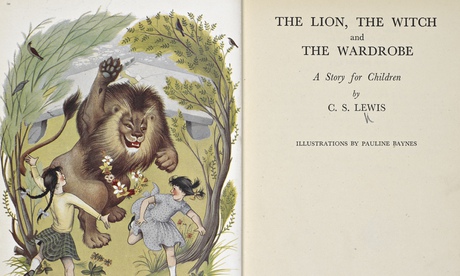
The most international section brings together works drawing on folklore and myth, including a story about the spider superhero Anansi, the 16th-century Chinese novel Journey to the West, the Grimms’ “Little Red Riding Hood” and Ted Hughes’s Crow (Hughes may be the only author to figure twice, as his poem “Cows” pops up later on). Animal Farm illustrated by Ralph Steadman, CS Lewis’s Narnia novels, Art Spiegelman’s Maus, Mikhail Bulgakov’s Heart of a Dog and a Chinua Achebe parable about a leopard seizing power make up a strong selection of bestial allegories or satires.
Equally eminent are the books chosen to represent animal-human transformations, including, besides Ovid’s Metamorphoses in a tiny 16th‑century French edition, Keats’s “Lamia”, David Garnett’s Lady into Fox, the typescript of an Angela Carter version of “Beauty and the Beast”, and Philip Pullman’s I Was A Rat!. The neighbouring display of work for younger readers puts children’s writers – Sewell, Beatrix Potter, Anthony Browne, Judith Kerr, SF Said – alongside moonlighting literary giants such as Eliot and Chekhov.
Much less coherent is the exhibition’s final gathering of material, although there are beguiling items here, too, as illustrated bestiaries (with texts by Apollinaire and fellow-poets Mark Doty and Pablo Neruda) are juxtaposed with books in which the animal is the titular star and/or the hero and narrator – a motley group of titles including Moby-Dick, Watership Down, Kes, H is for Hawk and Jack London’s dog-centred The Call of the Wild. Also in need of more TLC is a somewhat skimpy assortment of texts linked by the theme of looking at animals, which, as well as the Montaigne essay and John Berger musing on zoos, includes a copy of Gilbert White’s pioneering A Natural History of Selborne that was owned and annotated by Coleridge.