Celebrated annually on 19 June across the US, Juneteenth commemorates the announcement of the abolition of slavery in Texas and the nation’s ”second” Independence Day.
The day now more widely represents the emancipation of enslaved African-Americans across the US following the Civil War and its violent aftermath.
As the nation reels from the killings of black Americans in police custody, Donald Trump was shamed by his opponents for choosing to host his first rally since the onset of the coronavirus pandemic on Juneteenth, in Tulsa, Oklahoma, which recently recognised the 99th anniversary of a two-day massacre of hundreds of black residents by a white mob. The president's rally has since been changed to Saturday 20th June.
Here’s a brief history of Juneteenth and how it’s recognised today.
What happened?
On 19 June 1865, roughly 2,000 Union Army soldiers landed at Galveston, Texas, with news that enslaved people were now free.
In his order, Union Army Maj Gen Gordon Granger announced that “the people of Texas are informed that, in accordance with a proclamation from the Executive of the United States, all slaves are free”.
“This involves an absolute equality of personal rights and rights of property between former masters and slaves, and the connection heretofore existing between them becomes that between employer and hired labour,” he continued.
But the announcement arrived more than two years following then-president Abraham Lincoln‘s Emancipation Proclamation, which signalled the end of slavery in the US but did not end the enslavement of all people in the nation at the time, contrary to its legacy and evocative language.
Why was there a delay?
Although the proclamation was issued on 1 September 1862, it didn’t go into effect until 1 January 1863. The war raged on for more than two more years.
The 13th Amendment to the US Constitution, which formally abolished slavery in the US, wasn’t passed by Congress until 31 January 1865. It was ratified later that year.
Meanwhile, roughly 200,000 black men had enlisted among the Union ranks in the months before Confederate General Robert E Lee surrendered at Appomattox, Virginia on 9 April.
What was left of local Confederate armies and militia men held out in uprisings as slavers in the southern states migrated west to the Confederacy stronghold of Texas, along with thousands of enslaved people they had taken with them.
For the more than 250,000 enslaved people in Texas upon the Union Army’s arrival, General Granger’s order didn’t instantly release them from their chains; many slavers suppressed the news to the people they enslaved.
The general’s order continues: “The freedmen are advised to remain quietly at their present homes and work for wages. They are informed that they will not be allowed to collect at military posts and that they will not be supported in idleness either there or elsewhere.”
Slavery’s formal end ushered in a decade of Reconstruction, which sought the continued emancipation of black Americans and inclusion of the secessionist states into the US amid white supremacist paramilitary terror and a devastated post-war economy.
While the 13th Amendment prohibited the enslavement of Americans, it exempted slavery for those convicted of a crime. “Black codes” in economically devastated southern states subjected harsh penalties for newly freed black Americans for crimes like loitering or breaking curfew, ensuring they would remain in chains for decades to follow.
The practice of “convict leasing” prisoners for labour to build railways and mines, among other private construction projects, became ”slavery by another name” that is echoed in today’s mass incarceration that disproportionately impacts black Americans.
Why is it called Juneteenth?
The word is a portmanteau of “June” and “nineteenth”.
How is it celebrated?
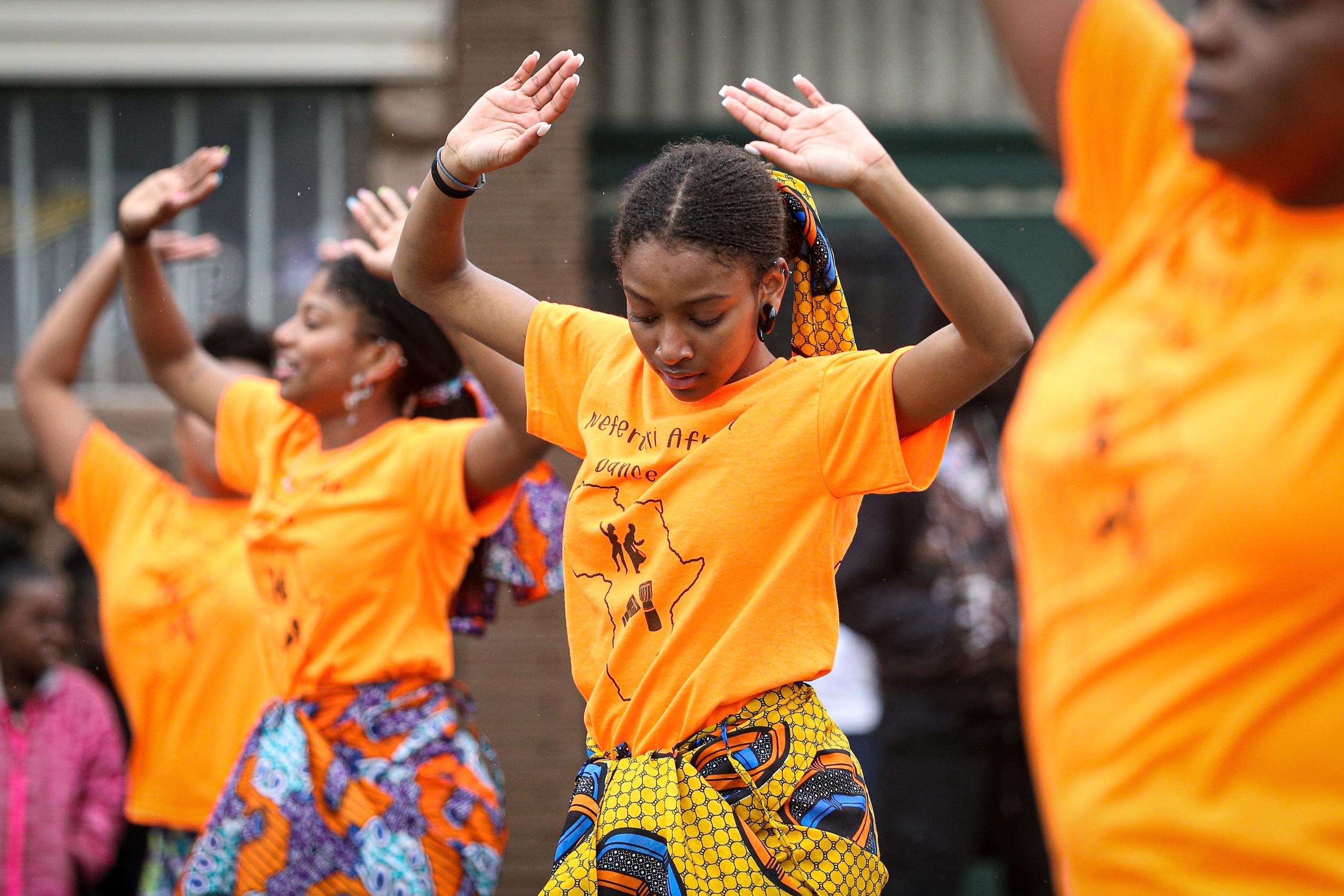
Parades, festivals, concerts, family gatherings, church services and other community events are hosted across the US, but Juneteenth remains an unofficial national holiday. It is not celebrated on the federal level, whereas the Fourth of July — which marks the signing of the Declaration of Independence in 1776— is recognised nationwide just a few weeks later.
In his “What to the Slave Is the Fourth of July?” address in 1852, abolitionist Frederick Douglass noted the nation’s hypocrisy of celebrating Independence Day while imposing a brutal regime of slavery.
Juneteenth was not formally recognised in Texas, where the order was delivered, until 1979. It was the first state to do so.
In memory of the historic event, 19 June is now observed in most states, though not all. Hawaii, North Dakota and South Dakota do not recognise it as a state holiday.