When we followed this path beside the river Tees a month ago the first shoots of wood anemones were forcing their way through frosted soil. This morning there were carpets of leaves but almost all their flowers had run to seed.
There is urgency about woodland flora in spring, a race to bloom and be pollinated before the closing of the tree leaf canopy plunges the ground into shadow. Latecomers to the competition are inventive in their move to claim a niche.
The stolons of wood sorrel carry the plant’s flowers along fallen moss covered branches; primroses huddle close to tree trunks where the soil is too shallow for closed ranks of bluebells; tall stems of red campion rise above them both.
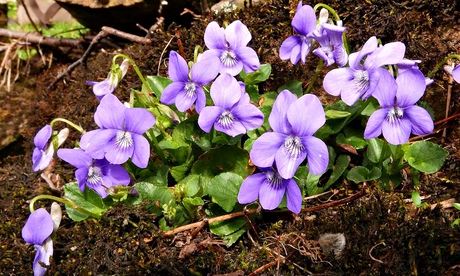
Most of the dog violets that fringed the path on our earlier visit were hidden under glossy green tongues of wild garlic leaves and had begun to switch to cleistogamy, their summer reproductive strategy whereby showy flowers needing bees are replaced with minute flower buds that self-pollinate and never open.
Beyond the wood and across the pastures, where the river Tees flows through a rocky gorge on its way to its confluence with the river Greta, we found one violet that had escaped from shade and shortage of pollinators. It had sprouted from a seed, perhaps washed down-river, that had lodged in a crevice of a fallen boulder.
The tenacious plant had survived winter floods; and sometimes it must have been engulfed as snowmelt in upper Teesdale turned the river into a raging torrent. Now, with roots encased in cool moisture and leaves bathed in spring sunshine, it had produced a floral display that none of the woodland violets could match.
There are some ecologists who would say that nothing in our landscape can now be considered truly wild and unmanaged, uninfluenced by humans. But perhaps this is a matter of scale. This accident, this tiny seed swept into a rock fissure to bloom with a degree of perfection that horticultural artifice could not achieve, was wildness in its purest form.
Phil Gates @seymourdaily