KOLKATA: The city has never had the organ donation movement going at the pace it is currently moving. On Sunday, Kolkata clocked the fifth organ donation of this month, a record-breaking number in terms of donations in a particular month.
Despite the ferocious third wave, Bengal this year has already recorded nine donations, breaking 2020’s record of six. People in the organ donation movement hope new heights are achieved and many more donor families come forward to save lives.
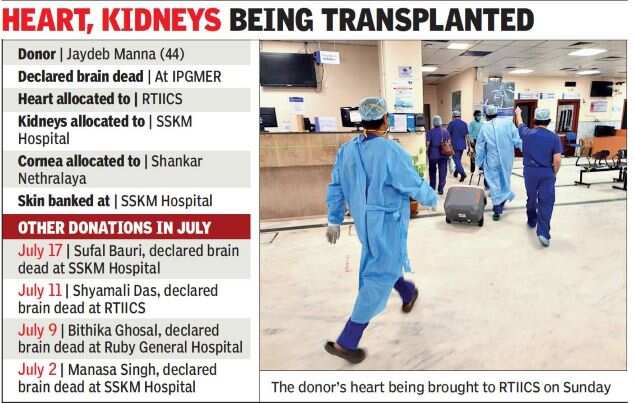
The deceased donor, Jaydeb Manna, was taken to IPGMER’s Trauma Care Centre four days ago. The 44-year-old resident of Howrah’s Shyampukur had sustained a head injury after falling from a high-rise building in Kolkata.
“The head injury was grievous. Doctors tried their best to save him, but ultimately gave up and explained to us what brain death is. We were told we could donate his organs. We gave it a thought and agreed as his organs could save a few lives. We did not let go of this opportunity,” said Anita Manna, the deceased’s sister-in-law.
Once the family consented to the donation, Regional Organ and Tissue Transplant Organisation (ROTTO) allocated the heart to RN Tagore International Institute of Cardiac Sciences (RTIICS) and the two kidneys to IPGMER. The liver was found unfit for transplant.
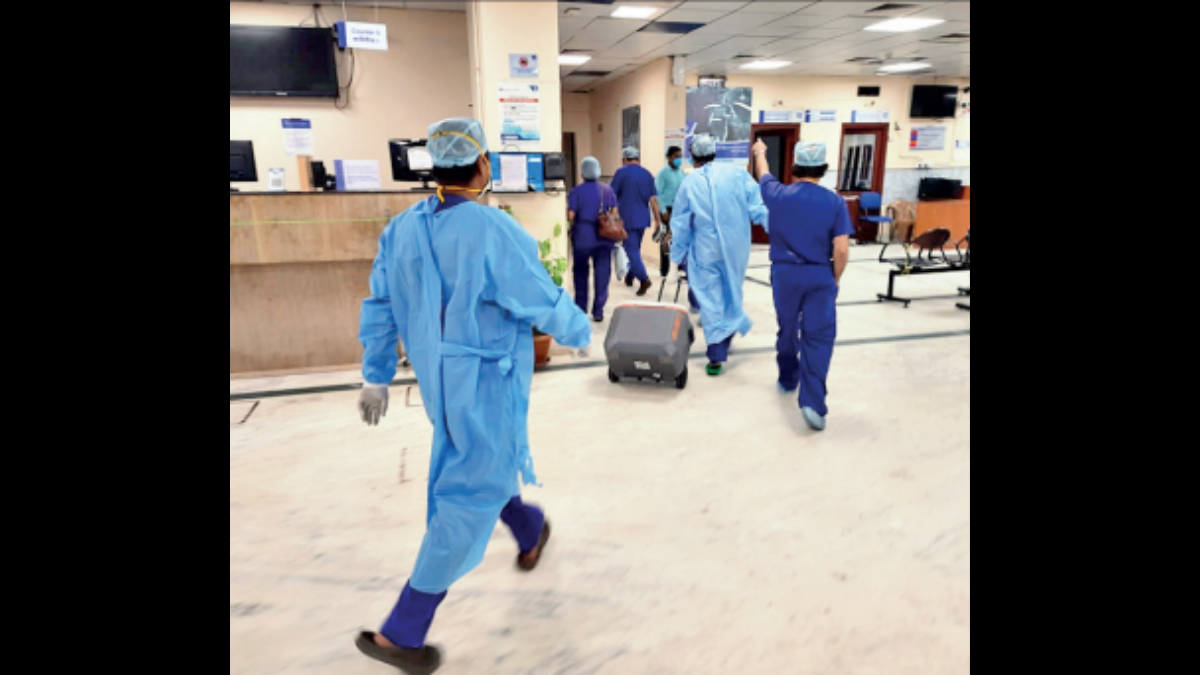
The organs were retrieved and harvested on Sunday evening. All the three transplant surgeries were on in the two hospitals till reports last came in. “The heart is being transplanted into a 43-year-old man suffering from end-stage heart failure in our hospital. We offer our condolences and support to the grieving family of the donor,” said a spokesperson at RTIICS.
Of the five donations so far in July, three have come from the state-run SSKM’s trauma care centre.
“In fact, there had been three more brain-death declarations at the trauma care centre this month, but they could not be converted into organ donations as the families did not agree. But the fact that the trauma care centre’s critical care team has started identifying more brain deaths should prove to be a game changer in the near future,” said IPGMER director Manimoy Banerjee.
Even in 2018, when there were 15 donations, the highest in the state so far, no particular month had seen five donations. The pandemic had hit the donation and transplant movement with Bengal recording only six donations in 2020.
“The ultimate game changers are doctors in the intensive care units who can identify brain death on time and the transplant coordinators who can convince and motivate the deceased’s family for the donation. We respect the donors’ families,” said IPGMER nephrology professor Arpita Raychaudhury, joint director, ROTTO.