The almost 17 years Juliet Lyon spent as director of the Prison Reform Trust before stepping down in July was good preparation for her new role as chair of the Independent Advisory Panel on Deaths in Custody (IAP). With figures last month showing violence and death in English and Welsh prisons at an all-time high, the need for the IAP has probably never been greater. At the PRT Lyon often came into contact with bereaved families whose loved ones had died while in the care of the state. Although some were homicides, most were self-inflicted.
As a long-term prisoner, I was frequently on wings and landings when fellow prisoners took their own lives. My first-ever article for the Guardian in 1998 was about the impact that such deaths have. There were 1,247 prison suicides in the 20 years I served before my release in 2004, according to figures from the charity Inquest.
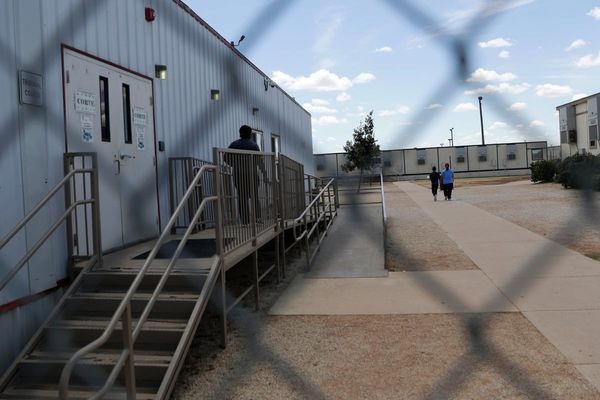
These days death is even more prevalent in our prisons. In the 12 months to June this year there were 321 prison fatalities. With 74 more than during the same period the previous year, it was the highest toll ever recorded in England and Wales. Of these, 105 were self-inflicted, 186 were recorded as death from natural causes, (although since the average age in the case of such deaths is 56 it suggests that these might not be just “natural”) – and at least five were prisoner-on-prisoner killings. Twenty-five other deaths are still waiting to be classified. As well as the record deaths, last year there were on average 160 cell fires a month, more than 34,000 instances of self-harm and an almost trebling of incidents involving violence.
So how does the IAP plan to bring about a reduction in deaths? Lyon says: “A priority is to learn from bereaved families and people who have attempted suicide in custody and survived.” She says that just before we met she spoke to a mother whose son had been killed in prison. “If the state deprives you of your liberty, the one thing it has an obligation to do is to keep you safe. The high rate of deaths currently indicate that something is going terribly wrong.”
The IAP, an independent arms-length body, set up in 2008 on the recommendation of the Fulton review into deaths in custody advises ministers from the Home Office, the Department of Health and the Ministry of Justice. Its remit is to “act as the primary source of independent advice to ministers and service leaders on measures to reduce the number and rate of deaths in custody”.
While deaths in police and immigration custody have remained constant and decreased in the case of those detained under the Mental Health Act the increase in prison deaths is a particular concern. “What you can see from the figures,” says Lyon, “is that the work the Prison Service did from about 2007 on safer custody was pretty effective. There was an intense concentration on how to make prison safer, particularly on how to reduce suicide. Safer custody teams in all prisons, working closely with the Samaritans and Samaritans-trained ‘prisoner listeners’ led to quite a drop in self-inflicted deaths.
“Few people know that almost 2,000 prisoners, trained by local Samaritans, now work day and night in almost every prison across England, Scotland and Wales to support people in need. Nothing else does as much to show how much responsibility and care people in prison can shoulder and to save countless lives.”
The IAP, she says, will focus on clusters of deaths in particular prisons and look at how to reduce high numbers of natural deaths in custody. “We’ll also be briefing ministers on evidence and solutions to the distressing rise in the deaths of women in prison, 11 in the year to June 2016 compared to one death the year before – and on the particular vulnerability of people still serving the long-abolished indeterminate sentence for public protection (IPP). We have to really be prepared to work across departments to find solutions, but we can set and monitor guidelines.”
The justice secretary Liz Truss has declared very publicly that she wants to make prison safety her priority and when she was home secretary, Theresa May gave a speech supporting the joint PRT and Women’s Institute Care not Custody campaign to stop vulnerable people ending up in police or prison cells. But prison staff cuts, the massive increase in the use of new psychoactive substances – so-called “legal highs” – and general overcrowding has meant that prison regimes have become more and more limited.
Does she agree with the Samaritans that the cuts are largely responsible for the rise in prison deaths? “The causes are complex,” she says, “but sucking hope out of the system has taken a terrible toll. Research and best practice show that good staff-prisoner relations, personal officer work, information-sharing with other disciplines, mental healthcare and constructive regimes with time out of cell, contact with family and friends and something to work towards all make a positive difference.”
She says she welcomes the opportunity and the responsibility to help reduce deaths in custody. “When someone takes their own life it is hard to describe, or even imagine, the despair that has led to it or the pain of loved ones left behind. If you talk to anyone charged with the care of people who are detained, they never forget a death in custody – it’s like swallowing a stone that never goes away.” She says she had lots of misgivings about giving an interview so early in her new role.
“But as long as it goes beyond a day in the papers and serves as a firm reminder of the state’s duty to protect life and the pressing need to make prisons safer then it will be worth it.”
Curriculum vitae
Age 66.
Lives North London.
Family Married, two children.
Education Exeter University (English and drama degree); Institute of Education (Rights MA).
Career 2000-16: director, Prison Reform Trust; 1990-2000: associate director, Trust for the Study of Adolescence; 1980-90: regional manager, Richmond Fellowship; 1976-79: head of community education, Court Fields school, Somerset; 1975-76: teacher in charge, Dryden Clinic Exe Vale; 1971-75; social services foster parent, Devon and Camden; 1971-72: research assistant, Schools Council.
Public life Chair, Independent Advisory Panel on Deaths in Custody; visiting professor, Birkbeck, University of London; CBE.
Interests Gardening, beekeeping.