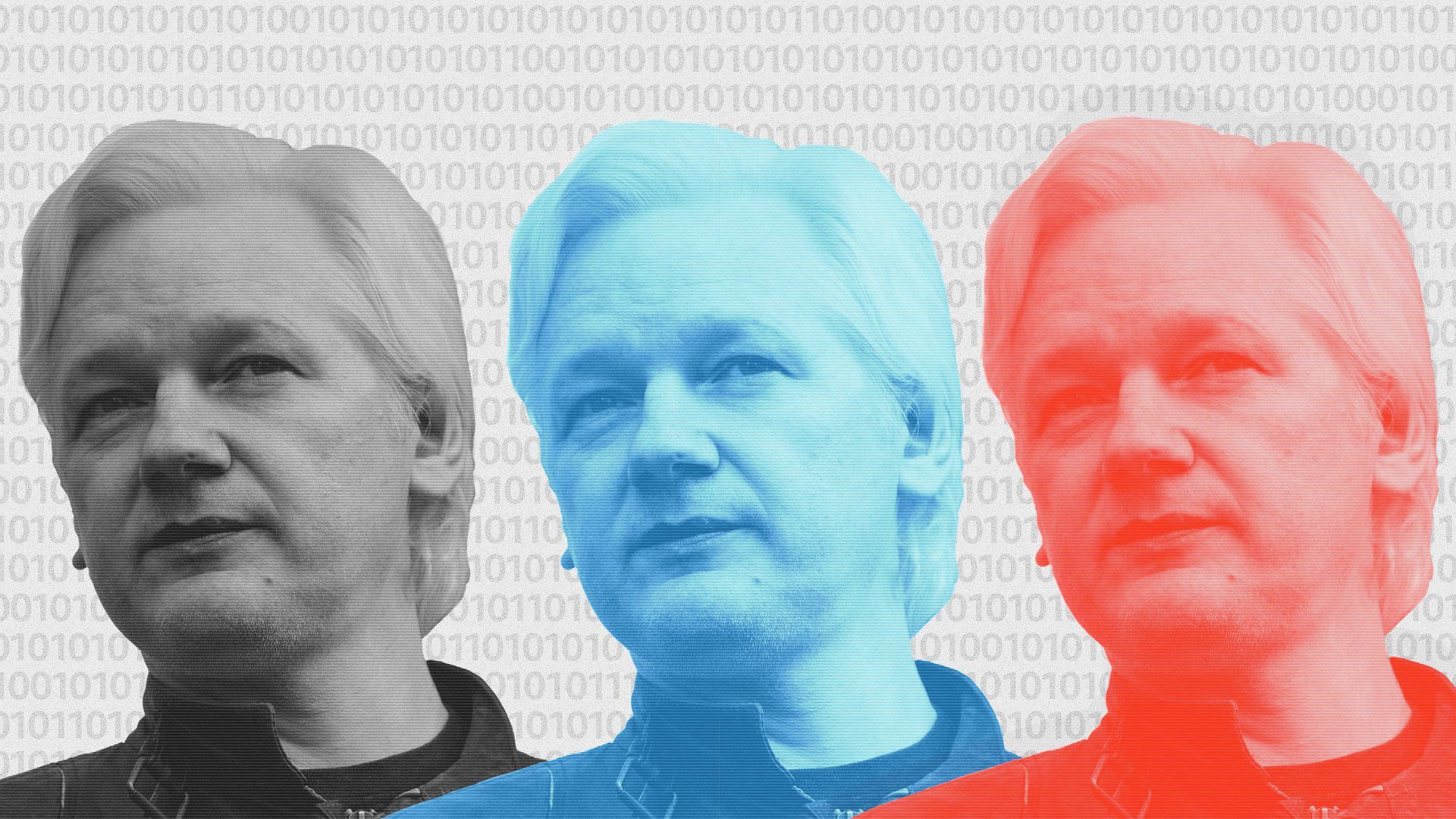
WikiLeaks founder Julian Assange was arrested at Ecuador's London Embassy Thursday after the country withdrew its offer of asylum. The U.S. Department of Justice subsequently released its indictment of Assange — importantly focusing on his technical assistance helping Chelsea Manning hack State Department cables rather than on publishing leaks.
Why it matters: That the indictment focuses on Assange the hacker, not Assange the reporter, blunts a long held press freedom argument that he should not be charged with crimes. All journalists rely on leaks, and many relied on classified information publicized by WikiLeaks, making a river of journalists guilty of the same crimes for which Assange would be prosecuted.
- Axios Codebook predicted that Assange indictments would have little to do with press freedom in November.
The other side: If charges had been focused on being an intelligence asset of Russia by publishing leaks (they aren't), that'd be a blow to, well, me specifically. I directly received and reported on documents from Guccifer 2.0, the avatar of Russia's hacking efforts in the 2016 election.
The big picture: Assange's previously reported upon activities appear to have gone far beyond journalistic practice into what most reporters would consider criminality. He potentially:
- Hacked a website of an anti-Trump PAC and shared the password with the Trump campaign.
- Directed hackers to attack a specific target — transcripts show that a request was brought to those hackers by an intermediary they believed was sent by Assange.
- Provided hackers with technical assistance in the form of a search algorithm to sift through hacked documents.
The bottom line: All of those things would appear to be illegal. No, it doesn't matter if the password on a website is easy to guess.