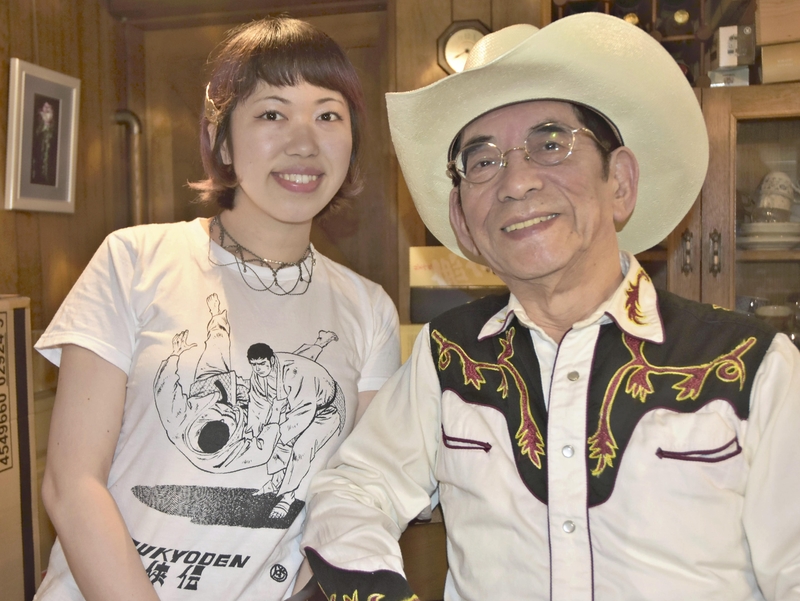
The Jukyoden manga series by Baron Yoshimoto, which depicts the lives of four generations of a family of judoka, inspired young people in the 1970s and left a lasting impression on Japanese pop culture.
The title of a song by folk rock singer Morio Agata, for example, was inspired by the series, and Akane, the heroine in one of the manga's stories, appeared in a liquor commercial with a memorable catch-phrase.
The manga, which was serialized in the Shukan Manga Action weekly magazine from 1970 to 1980, tells the story of judoka Kankuro Yanagi and his descendants during the Meiji era (1868-1912) and Showa era (1926-89). As members of society's bottom tier, the characters live simple and sometimes crude lives, and must cope with needless violence and warfare.
Yoshimoto said he was able to create the stories because "something like a celebration of humanity was born within me." He became an independent artist in the mid-1960s after working as an assistant to mangaka Masamichi Yokoyama. Though his illustrations initially resembled those of American comics, his style changed when he authored a series of realistic short stories titled "Gamble Series: Tobakushatachi," which was carried in the same magazine in 1969 and 1970. Yoshimoto despised gambling, but decided to interview gamblers for the series.
"I went to a horse racing course and watched the spectators in the stands," Yoshimoto recalled. "I saw an old woman, apparently lost, miserably crouching near a chain-link fence. I was moved by her raw desire to show her nature. It convinced me of the Buddhist teaching that 'earthly desires are enlightenment.'"
His perspectives on humanity inspired Yoshimoto to create various different characters and learn about the histories that shaped them. He started working on "Jukyoden," the first story in the series, out of a desire to portray a realistic man living in modern times.
"Jukyoden" depicts the life of Yanagi, who comes to Tokyo from the Kyushu region in 1905 as a young judoka. Yoshimoto described the protagonist as "having very realistic feelings about human life and possessing earthly desires." The character confronts various characters, including a female pickpocket, yakuza gangsters and prison inmates.
"I read the novel 'Sugata Sanshiro' [of which the protagonist is a judoka during the Meiji period] and also practiced judo as a child, which influenced my work," Yoshimoto said.
In the 1980s, Yoshimoto moved to the United States, where he worked with Marvel Comics. The first English translation of one of his works hit stores in the United States in May this year. The book, "The Troublemaker," featured works he published in Japanese adult magazines and kashihon rental manga.
The serialization of "Jukyoden" began in 1970. That same year, Yukio Mishima committed suicide and student protests swept through the nation. Many young people were at a loss as to how to live their lives amid the ongoing turmoil. As a result, they embraced the character of Yanagi, who courageously confronted similarly chaotic times.
The Jukyoden series was part of the golden age of gekiga -- a form of manga with more mature themes -- in adult manga magazines, having become Yoshimoto's defining work.
"I spent all of my earnings at the time on entertainment," Yoshimoto said. "I didn't make storyboards. I drafted installments in three days and spent the remaining four days of the week having fun."
To depict Yanagi's life in jail, "I even thought about what I should do to go to prison," he added with a laugh.
Read more from The Japan News at https://japannews.yomiuri.co.jp/