A federal judge appears ready to defy the Obama administration and accelerate the release of potentially inflammatory videotapes depicting the force-feeding of detainees at Guantánamo Bay.
Judge Gladys Kessler has accused the administration of launching baseless legal challenges to delay or minimize the impact of a court-ordered release of videotapes showing what lawyers who have viewed them say is brutal and shocking treatment.
A Justice Department challenge to Kessler’s order last year to disclose the classified footage is among “the most frivolous I’d ever seen,” Kessler said at a Thursday hearing at the US district court in Washington DC. The delays, which have lasted the better part of a year, have served to diminish the “cause for concern” by the public about the Guantánamo force-feedings, Kessler said.
Kessler said she would soon order a timetable for release of the tapes, despite Justice Department lawyer Andrew Warden’s objections that removing the faces and names of US personnel at Guantánamo remains a laborious process.
“We’re going to move as fast as we can,” Kessler said.
The Guardian is part of a consortium of media organizations that have since last year fought in court for the release of the tapes.
The Obama administration has treated everything about the videos as a state secret. The very existence of the tapes was unknown until a former detainee on hunger strike, Abu Wael Dhiab, launched a legal challenge to his forced feeding. When Dhiab’s attorneys neared a court date, the Justice Department issued an extraordinary and unsuccessful request to prevent the public from entering the courtroom.
Over three days in Kessler’s courtroom in October, lawyers for the human rights group Reprieve argued that the forced feedings, typically conducted on a restrained detainee via a tube fed into the stomach through the nose, were both highly painful and medically unnecessary.
Contradicting the government’s contention that the forced feedings were needed to prevent detainees from starving themselves to death to protest their extensive confinement at Guantánamo, Dhiab’s attorneys argued the feedings were a punitive measure to suppress the hunger strikes.
After the hunger strikes spread throughout Guantánamo and aroused both international attention and a renewed push by Obama to close the infamous detention center, the Guantánamo Bay military command stopped releasing even basic information about the strikes it had previously made public.
Kessler in October ordered the release of the tapes. The government appealed her ruling, but an appellate court sent the case back to Kessler.
In the interim, Dhiab himself was released from Guantánamo Bay after 12 years, without ever facing a charge. The 46-year-old Syrian now lives in Uruguay and urges other nations to accept the repatriation of Guantánamo detainees.
“We hear Obama say that prisoners at Guantánamo have to be treated humanely, but every time he appears saying that on television we see that has a very negative repercussion,” Dhiab told an Argentinian interviewer in February.
Cori Crider, an attorney for Dhiab from Reprieve, said she hoped to “wrest this [video] evidence into the daylight,” accusing the Obama administration of suppressing “grisly” footage.
“Their motive is obvious: if Americans were permitted to see the truth in these tapes, the conversation about Guantánamo would change overnight,” Crider said.
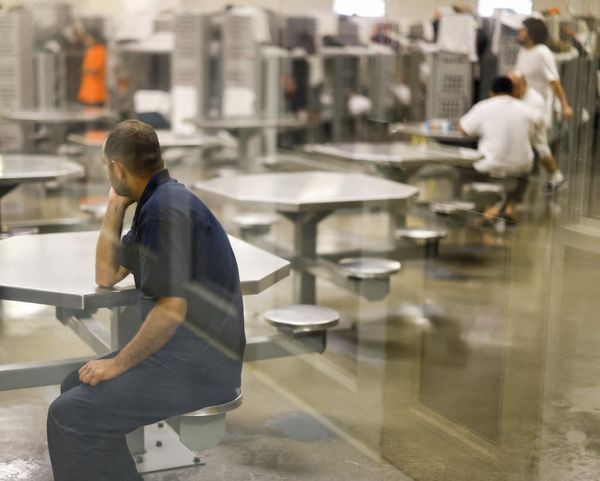
Guantánamo Bay currently houses 116 detainees. The military command there continues not to reveal how many remain on hunger strike, Carol Rosenberg of the Miami Herald tweeted on Thursday, even as it confirms the feedings continue at night during the Muslim holy month of Ramadan.