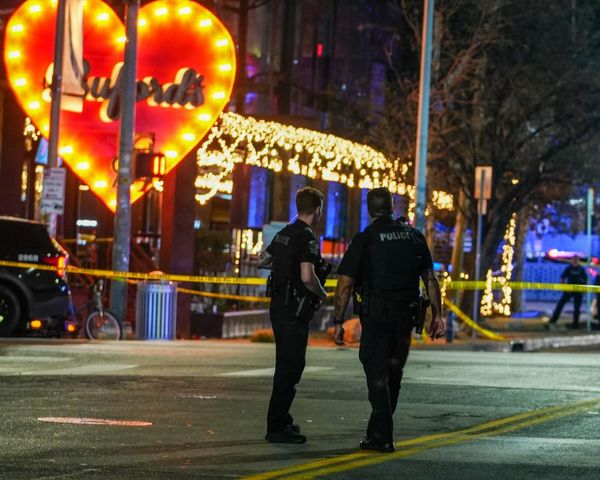
WEST PALM BEACH, Fla. _ Families who lost loved ones and those who were injured in the 2016 massacre at Pulse nightclub returned to court Monday in hopes of keeping alive their lawsuits against a Jupiter security company that employed gunman Omar Mateen.
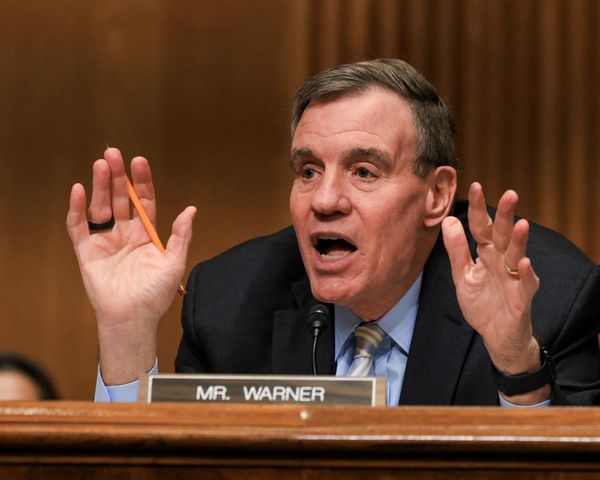
Having already rejected claims in one of the civil lawsuits filed against G4S Secure Solutions, Palm Beach County Circuit Judge Donald Hafele voiced doubt that the company could legally be held responsible for what was the deadliest mass shooting by a single gunman in U.S. history before it was eclipsed a year later when gunfire erupted at a concert in Las Vegas.
"If we require every employer, every individual, to report to some unknown body, we'd be placing a horrific burden on every person, every employer in this country," he said during the hourlong hearing.
He decried Mateen's horrific acts and voiced sympathy for the families of the 49 people who were killed and the 53 others who were wounded before the 29-year-old Fort Pierce security guard was shot dead by police.
But, Hafele said, G4S didn't orchestrate the attack. It didn't send Mateen to the popular Orlando club and it didn't give him the weapons he used to mow down innocent people who were simply enjoying a night out.
"He was not there at the direction of G4S. He was not using the handgun to which he was licensed to use," Hafele said. "It was not the G4S handgun. It was a semi-automatic weapon."
Attorney Keith Altman, who represents the victims and their families, argued that G4S gave Mateen the training and tools he needed and that it did so without regard to public safety.
As it did in hundreds of other cases, G4S submitted phony documents to the state falsely claiming that Mateen passed annual psychological tests he needed to renew a Class G firearms license that allows security guards to carry concealed weapons. The company was ultimately fined $151,000 by the state for submitting false documents.
Further, Altman argued, a Port St. Lucie gun shop owner who sold Mateen the rifle and pistol he used in the attack said the Class G permit was persuasive in allowing Mateen to purchase the firearms. Initially reluctant to sell Mateen the semi-automatic weapons, the retailer said he did so only after Mateen showed him his special firearms license.
"The facts suggest the existence of the Class G license allowed him to get the weapons," Altman said, urging Hafele not to throw out the lawsuits.
By submitting fraudulent documents and ignoring Mateen's disturbing claims that he was connected to the Boston Marathon bombers, al-Qaida and Hezbollah, G4S put the license in Mateen's hands, he said. "They breached their responsibility to protect the public," Altman said.
Hafele and attorney Rick Hutchison, who represents G4S, said Mateen could have purchased the semi-automatic weapons without the Class G permit. "As a matter of law, Mateen went through the proper steps to buy a gun," Hutchison said. "The law's the law. How can G4S be held to a higher standard?"
Last year, Hafele threw out one of the four lawsuits G4S faced in Palm Beach County that accused the company of contributing to the deadly shooting. In his ruling, Hafele staked out the differences between the company's responsibility for the Pulse massacre and the federal government's role in the 2001 anthrax attack that killed Bob Stevens, a photo editor at The Sun tabloid in Boca Raton. Stevens died after opening a letter that contained the deadly powder.
A lawsuit filed by Stevens widow claiming the government was responsible for her husband's death was allowed to proceed and eventually settled for $2.5 million. Altman argued that G4S was equally culpable. Hafele disagreed.
"In Stevens, the government created an ultra-hazardous toxin in a laboratory and owed a duty to the public to implement adequate safeguards to prevent its removal from the laboratory," Hafele wrote. "Here, however, although (G4S) trained and employed Mateen, (it) was not capable of controlling Mateen's movement as the government was able to control the anthrax's movement."
After that ruling, about half of the 96 people who joined the lawsuit decided to appeal Hafele's decision to the 4th District Court of Appeal. The other half elected to file a new lawsuit. Three other lawsuits were filed against G4S on behalf of people who were killed at the nightclub.
Hafele gave Altman and Hutchison 15 days to file written statements about why the four suits should or shouldn't be tossed out. A ruling, he said, would follow.