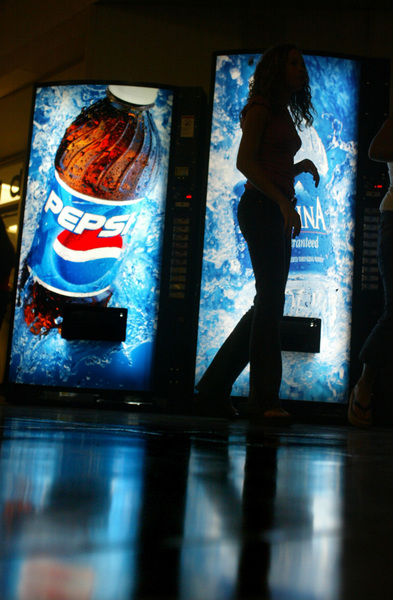
CHICAGO _ A judge on Friday put Cook County's penny-per-ounce tax on sweetened beverages on hold. It was set to go into effect Saturday.
The ruling by Circuit Judge Daniel Kubasiak came days after the Illinois Retail Merchants Association and several grocers filed a lawsuit against the Cook County Department of Revenue seeking to block the tax, which they argue is unconstitutional and too vague.
County officials have said the new tax is needed to pay for services and will improve the public's health over time. Meanwhile, many retailers oppose the tax, which would apply to a wide variety of sugar- and artificially sweetened beverages.
The retailers have argued that, under the Illinois Constitution, similar objects should be taxed uniformly. Under the sweetened beverage tax, drinks in a bottle, or from a fountain machine, are taxable. But on-demand, custom-sweetened beverages, such as those mixed by a server or barista, aren't subject to the tax. Also exempt: purchases made with food stamps.
David Ruskin, a Horwood Marcus Berk lawyer representing the retailers, told the judge at a Thursday hearing that a temporary restraining order was needed because there currently isn't a system in place for the thousands of customers who would be due refunds should the tax eventually be found unconstitutional. That lack of a refund setup on taxes already collected, he said, would make retailers vulnerable to class-action lawsuits by members of the public who would clamor for their money back should the tax eventually be struck down.
Failing to collect the tax results in a $1,000 penalty for the first offense and $2,000 for each subsequent offense. "Those penalties are going to put retailers out of business," Ruskin said during the Thursday hearing.
The judge noted that retailers knew months ago that this tax was looming. "I suspect every tax has some sort of quirk," Kubasiak said.
But Ruskin noted that, since June 1, the county has revised the regulations "no less than four or five times." So the court also should ask the county why it continued to make changes to the tax right up until the last minute. "They have revised their own regulations," Ruskin said. So "it's not just the retailers" who aren't ready.
Retailers need more time to get cash registers and accounting systems changed, he said, noting that some merchants also operate outside Cook County.
On the other side, Assistant State's Attorney Sisavanh Baker told Kubasiak on Thursday that the tax, on its face, is essentially unchanged since it was enacted in November 2016. She also said the retailers lack standing in court since they're just collecting the tax from consumers.
"This is a lawful tax," Baker said. In the unlikely event that the tax is found unconstitutional, dollars collected can be refunded _ which means that there's no irreparable harm, she said.
The judge wondered about the process by which consumers could claim refunds if the tax is thrown out, such as whether they'd have to keep their receipts.
Consumers regularly save receipts, Baker responded.
James Beligratis, another assistant state's attorney, said concerns about class-action lawsuits are a "conjured-up scenario" that can be raised with any new tax. He said the county's recent changes were made to help clarify what's required under the tax. The ordinance also is structured similarly to taxes on alcoholic beverages, gasoline and bottled water, levies that have survived legal challenges, Beligratis said.
The sweetened beverage tax could also help reduce obesity rates, an upside outweighing the harm of the tax, the lawyers said. The county is seeking to have the lawsuit dismissed.