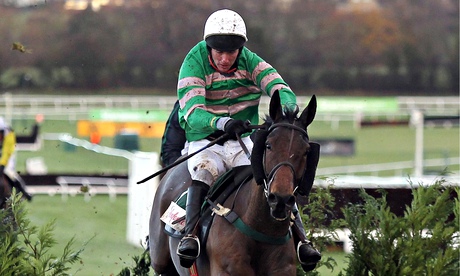
Approaching the second anniversary of the catastrophic Cheltenham Festival fall that left him paralysed, the Irish jockey John Thomas McNamara, along with his wife Caroline, recently granted an audience to the Racing Post. Alastair Down was the man tasked with asking the questions, a job the hard-bitten graduate from journalism’s old school admitted filled him with trepidation. Down described “the palpable air of apprehension as I walk in to see a figure venerated in the weighing room as a horseman who was as good as, or better than, 99% of jockeys who ever rode”. The picture so skilfully painted after his visit to Limerick was one of a husband and wife at something approaching peace with the savage hand dealt to them in March 2013.
With the help of his formidably capable wife and three young children, among many others, the man known to all as “JT” seems to approach the terrifying ordeal visited on him with the same courage and enthusiasm with which he participated in the sport that has left him unable to move from the neck down. His only grumbles? Frustration he is unable to play with his children, contempt for the treatment he received on the Dublin leg of a 15-month rehabilitation tour and good-humoured irritation with the apparently myriad mechanical shortcomings of the wheelchair that offers him some little independence.
I don’t remember his fall but its aftermath remains vivid. Days spent manning the Guardian’s online Cheltenham Festival live blog from our London office are long and occasionally tedious: all the admin of steeplechasing’s fabled Olympics with none of the boozy, ribald fun. The Fulke Walwyn Kim Muir Chase was the second-last race on the card that day and on its conclusion it quickly became apparent all was not well.
On board a horse called Galaxy Rock, McNamara had come a cropper at the first and was still receiving medical attention as connections of the winner, Same Difference, were collecting their prize and plaudits. On television there was genuine concern for JT and as dusk drew in over Prestbury Park there was also the worry the final race might yet succumb to darkness. The wait went on and word filtered through that an air ambulance had been summoned to ferry the jockey to a Bristol hospital. The sense of foreboding grew.
Despite knowing him only by his reputation as a fine jockey and an even finer fellow I remember feeling frightened for the tough-as-teak JT McNamara but presumed for no particular reason this seemingly indestructible veteran would ultimately be OK. Embarrassingly, I also remember being fed up with the seemingly interminable delay he’d prompted because I wanted to get out of the office and go home.
Almost two years to the day before this I’d felt similar trepidation and apprehension to that experienced by Down when I walked into the ward of a south London hospital to visit the brother of a good friend. Another jockey, who like McNamara was approaching the end of his career, this fellow had ploughed through a fence at Lingfield racecourse a day or two before, suffering serious but unspecified spinal injuries in the process.
Propped up in bed, head anchored by a neck brace, he could talk but move nothing except a couple of fingers on one hand. Truth be told, I didn’t know him all that well but apparently well enough for his wife to lecture me for no longer being in cahoots with the girlfriend she’d been introduced to when we’d all met at a wedding some months previously. “Will you leave the poor fucker alone,” came the plea from the stricken patient, who you’d think might have had more pressing concerns on his mind.
With his wife coming and going from down the country, where three children were also in need of her attention, the days that followed were surreal, as strange as one might expect when spending hours at the bedside of a paralysed man with whom you’ve twice got drunk but otherwise don’t really know. I read aloud from the paper he couldn’t hold, scratched various parts of his face on request and held his cup so he could drink through the straw. For the first time I spoon-fed a grown man while he bravely hid any concerns regarding when or if this involuntary surrender of dignity would end.
Well, up to a point. In one particularly outlandish scene I pressed a mobile to his head so he could inform an inquisitive racing scribe he’d be back in the saddle in no time. It was big talk from a man unable to hold a telephone, never mind a saddle, whip or reins. Equally clear is the memory of the relief I felt on getting out of that terrible place with all present having once again avoided getting a definitive answer to the Big Question.
My pal was moved elsewhere, finally got the answer he was looking for and skipped out of rehab after months spent lying on his broken back. McNamara was not so lucky but battles on regardless, his every unassisted breath a triumph of stubbornness over science. Amid all the hoopla of next week’s Cheltenham Festival, a four-day drama of good and bad news, the knowledge of his daily struggle will add a dose of always welcome perspective.