
Guilt is a disagreeable host. It fills the room, crowds the conversation, and leaves everyone drained by the time dessert arrives.
For decades, charitable fundraising has leaned heavily on emotional heaviness, the stark images, the sobering statistics delivered mid-meal, the implicit weight of "you should give more" hanging over every table. And yet, by every measure, donor fatigue has become a reality in a world saturated with appeals. Engagement is slipping, and the very audiences nonprofits most depend on, such as high-net-worth philanthropists, are stepping back.
So let me ask the question that the fundraising world has been reluctant to face: What if the model itself is the problem? For someone who has spent a lifetime watching how people give, and more importantly, why they give, I've seen the answer change. Dramatically.
I have been raising money since grade school. I collected spare change for missionaries. I volunteered wherever anyone would have me. In 2002, I was named Volunteer Woman of the Year in Palm Beach, an honor I still hold close. And in all those years, from Girl Scout cookie drives to small circuses I staged in my own backyard and charged admission for, one truth kept surfacing: people give most generously when they are genuinely glad to be there.
That realization became the architect of everything I built with Old Bags Luncheon™.
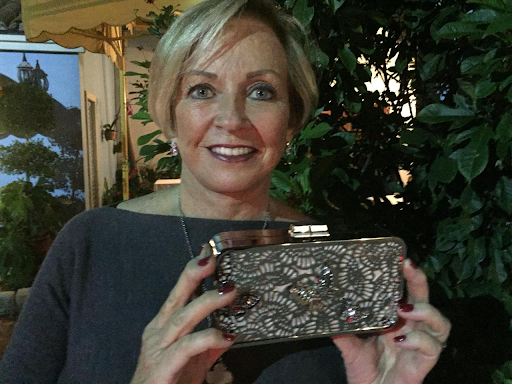
The premise was simple. Women love handbags. Handbags carry meaning, memory, and aspiration. So I gathered my friends, explained the idea for a luncheon and silent auction centered entirely on designer bags, and watched their faces light up. That was the first signal. Not reluctant compliance or charitable obligation, but pure delight.
Over the past 25 years, Old Bags Luncheon™ events have been held across the country and around the world, in Southampton, Naples, Saratoga, and now, with our eyes on Japan. We never once advertised. The events always sold themselves. New clients came to us, often because a guest had attended an event and immediately wanted to bring the model to her second-home community. That kind of organic momentum does not happen because people feel guilty. It happens because they feel something worth returning to.
When guests arrive at one of our events, the tone they walk into is intentional. They walk into a ballroom-style setting, or at a country club, or a beach club. The events are held at the most elegant venues, beautifully arranged, with details considered with care. They browse a display of donated handbags, each one labeled with its donor's name, drawing people in. Music carries through the space, and conversation builds naturally. A speaker may take the stage, someone whose presence adds another layer of interest to the day.
The speakers over the years have included the likes of Martha Stewart, Priscilla Presley, Susan Lucci, and Phyllis Diller. The lunch is delightful, the energy is celebratory, and somewhere within that experience, philanthropy does its work.
Do I ignore the cause? Not at all. I simply refuse to overwhelm the moment with it. Guests understand why they are there. It exists in the spirit of gratitude, not guilt. The information about the charity is shared thoughtfully, often at a close or through the resources that they take home with them. I've always led with the belief that the day itself is about engagement, not immersion in hardship.
There's science behind this instinct as well. Research consistently shows that positive emotional states influence generosity, a phenomenon called the "warm glow" effect. Conversely, studies published have documented that graphic emotional appeals or negative sentiment, when overused, may not be as effective. Donors might mentally step away from causes that feel relentlessly heavy.
The truth is that people do not want to be shown the underbelly of life. They already carry that knowledge. What they want is permission to show up fully, to be cheerful, to be part of a community that treats generosity as something heartfelt rather than something burdensome.
Some have asked me, "Does this approach dilute the seriousness of the mission?" On the contrary, it respects the intelligence and emotional bandwidth of the audience. It acknowledges that generosity does not require discomfort to be genuine. High-net-worth individuals often already contribute across institutions. What they seek now is meaning. Connection. A reason to show up again.
At Old Bags Luncheon™, that is the philosophy. It has to be a win for everyone.
The cause benefits, of course. But the donors also win, with an experience embedded in beauty, community, and yes, a handbag they will carry with pride. More importantly, the model wins because it repeats. It travels. It scales without the overwhelming buzz.
That kind of growth reveals something important. The future of giving is not quieter or more somber. Philanthropy is entering what we call the experience economy. People invest their time and attention in moments that carry emotional resonance and social value. Giving becomes part of how they live, how they connect, and how they express what matters to them.
So I ask, why shouldn't generosity feel glamorous? Why shouldn't a charitable event be something you anticipate with excitement? Why shouldn't doing good also feel good?
For someone who has been in the business for nearly three decades, I see a future where charity becomes vibrant and invites people in instead of weighing them down.
And as I look ahead, I am equally focused on what comes next for the platform I built. Old Bags Luncheon™ has reached a scale and maturity where its next chapter could benefit from new stewardship. I am actively exploring opportunities to pass it forward to someone who understands that this model is not simply about fundraising, but about reshaping how people experience giving itself.
Because giving has always been human. Making it joyful, however, becomes something people return to, again and again.
About the Author:
Eileen Cornacchia is a visionary nonprofit leader and the creator of Old Bags Luncheon™, a globally trademarked fundraising organization. With a career spanning education and design, Eileen combines creative tenacity with a philanthropic heart to turn everyday items into life-changing donations for underprivileged children and families.






.png?w=600)




