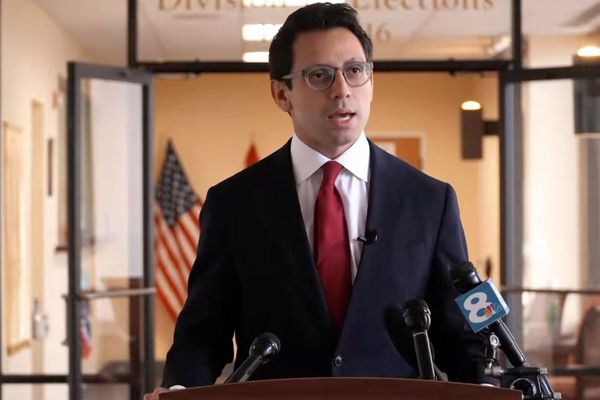
After years of working with real estate investors, Joshua Chapin noticed that many faced the same challenge. They had successfully built wealth through rental properties, apartment buildings, commercial real estate, and closely held businesses, but eventually reached a point where ownership itself became the problem.
Some were preparing for retirement and wanted to step away from active property management. Others were facing substantial capital gains taxes after a sale. Many were trying to balance income needs, estate planning goals, family considerations, and long-term wealth preservation while determining what to do with highly appreciated real estate.
Those conversations became one of the foundations of Breakwater Capital.
As Founder and President of Breakwater Capital, Joshua Chapin works with successful real estate investors, business owners, and high-net-worth individuals navigating important financial transition points. Rather than focusing solely on investment management, the firm specializes in helping investors evaluate complex 1031 exchanges, Delaware Statutory Trusts (DSTs), direct title investments, alternative investments, and wealth preservation strategies designed to address liquidity, tax efficiency, diversification, and long-term planning objectives.
His philosophy is straightforward: creating wealth and preserving wealth are two very different challenges, and each requires a distinct strategy.
Many investors know how to build wealth. The more difficult question is how that wealth should function once retirement planning, estate considerations, tax exposure, income needs, and legacy goals become the primary focus.
Why Wealth Preservation Changes the Conversation
Many of Breakwater Capital's clients have already achieved significant financial success. They own apartment buildings, commercial properties, industrial assets, businesses, or investment portfolios that have appreciated substantially over time.
At that stage, the challenge often changes.
The question is no longer how to pursue the highest possible return. The question becomes how to preserve after-tax wealth, maintain income, manage risk, create flexibility, and prepare for future generations.
According to Chapin, many investment mistakes occur when investors continue using accumulation-focused strategies long after their priorities have shifted toward preservation.
That shift in mindset influences nearly every recommendation made at Breakwater Capital.
Rather than focusing exclusively on growth, the firm helps clients evaluate how taxes, concentration risk, liquidity needs, estate planning objectives, income requirements, and succession goals fit into a broader long-term strategy.
Why Alternative Investments Matter to Breakwater Capital Clients
Alternative investments have become increasingly popular among sophisticated investors, but Chapin believes their value is often misunderstood.
Many investors assume alternative investments are primarily about pursuing higher returns.
In reality, many of Breakwater Capital's clients are not searching for aggressive growth. They are searching for a way to replace the income generated by a property they no longer wish to manage. Others are seeking diversification after years of owning a concentrated real estate position. Some are focused on preserving after-tax wealth while reducing management responsibilities and maintaining predictable cash flow.
In these situations, alternative investments are not viewed as products. They are evaluated as potential solutions to specific planning challenges.
At Breakwater Capital, alternative investment solutions frequently include private real estate offerings, Delaware Statutory Trusts, Opportunity Zone investments, and other carefully selected strategies designed to complement traditional portfolios.
The goal is never to recommend alternatives simply because they are available. The goal is to determine whether a particular strategy solves a specific problem for the investor while supporting long-term wealth preservation objectives.
Planning Before Products
Before discussing Delaware Statutory Trusts, replacement properties, alternative investments, or exchange structures, Chapin spends significant time understanding the investor's broader objectives.
Conversations frequently focus on current and future income needs, estate planning goals, tax considerations, family dynamics, concentration risk, liquidity requirements, risk tolerance, desired involvement in property management, and long-term legacy objectives.
According to Chapin, recommendations begin with an extensive discovery process designed to understand how an investor wants their wealth to function over the next decade rather than simply identifying replacement property.
For many investors, the most important decision is not selecting an investment. It is determining whether a proposed strategy supports their broader financial goals.
This planning-first philosophy influences every recommendation made at Breakwater Capital and helps ensure that investment decisions are driven by objectives rather than products.
The Role of 1031 Exchanges in Long-Term Wealth Preservation
Among the areas where Chapin has developed significant expertise is the use of 1031 exchanges as part of a broader wealth preservation strategy.
Many real estate investors eventually face a familiar dilemma. They own highly appreciated property but hesitate to sell because doing so would trigger substantial capital gains taxes and depreciation recapture.
A properly structured 1031 exchange allows investors to defer those taxes by reinvesting proceeds into qualifying replacement property.
While the tax benefits are well understood, Chapin believes many investors focus too heavily on the mechanics of the transaction and not enough on the planning opportunities it creates.
His role extends beyond helping clients satisfy IRS exchange requirements. The focus is helping investors evaluate whether an exchange remains the best solution in the first place.
For many Breakwater Capital clients, a 1031 exchange is not simply about tax deferral. It can also be an opportunity to improve diversification, reduce management responsibilities, consolidate holdings, increase passive income, transition toward retirement, address estate planning objectives, or reduce exposure to a single property type or geographic market.
Because no single strategy is appropriate for every investor, clients often evaluate multiple approaches before deciding whether completing an exchange is the right decision. In some cases, retaining existing real estate may make sense. In others, Delaware Statutory Trusts, direct-title investments, or alternative investment structures may better align with long-term objectives.
The goal is not simply to complete an exchange. The goal is to help investors make informed decisions that support their future income, tax, estate, and wealth preservation goals.
The process itself can be complex. Strict IRS deadlines, replacement property identification requirements, financing considerations, and investment selection all require careful planning.
Chapin works with investors to evaluate how a 1031 exchange fits within their broader financial goals rather than treating the exchange as an isolated transaction.
Often, the most important question is not whether a client can complete an exchange. It is whether the replacement strategy supports where they want to be financially five, ten, or twenty years from now.
Why Delaware Statutory Trusts Continue to Grow in Popularity
Delaware Statutory Trusts have become one of the most frequently discussed solutions within Chapin's practice.
DSTs allow investors to complete a 1031 exchange while acquiring fractional ownership interests in institutional-quality real estate.
Rather than purchasing an entire replacement property and assuming management responsibilities, investors can own interests in professionally managed assets such as multifamily communities, industrial facilities, medical office buildings, net-leased commercial properties, and other institutional-quality real estate.
For many investors, this structure solves multiple challenges at once.
A DST can allow an investor to maintain tax-deferral benefits while transitioning away from active property ownership. It can also provide access to larger institutional assets that might otherwise be unavailable to individual investors.
Many Breakwater Capital clients reach a point where they no longer want the responsibilities that come with being a landlord. They may be tired of tenant issues, maintenance concerns, management responsibilities, or the concentration risk associated with owning a single property.
In those situations, DSTs can provide a path toward passive ownership while preserving exposure to real estate.
Chapin emphasizes that DSTs are not appropriate for every investor. Like any investment, they involve risks, tradeoffs, and suitability considerations.
The key is understanding how the structure aligns with an investor's goals, income needs, risk tolerance, liquidity requirements, and long-term planning objectives.
A Risk-First Approach to Due Diligence
Many Breakwater Capital clients spent decades evaluating properties, tenants, financing structures, occupancy levels, and cash flow before making investment decisions.
Chapin believes alternative investments deserve the same level of scrutiny.
The firm's due diligence process is designed to evaluate not only potential returns, but also the factors that could impact capital preservation, income stability, and long-term performance. Rather than beginning with projected returns, the process begins by identifying potential risks and evaluating how an investment may perform under less favorable market conditions.
Before discussing projected returns, Chapin begins with a different question:
"What has to go wrong for this investment to fail?"
That question shapes the due diligence process at Breakwater Capital.
While many investment discussions focus on upside potential, Chapin believes investors should first understand downside risk. No investment is without uncertainty, and experience across multiple market cycles has reinforced the importance of evaluating risk before pursuing return.
The quality of the sponsor is often one of the most important variables in any alternative investment. Breakwater Capital evaluates sponsor experience, historical performance, operational capabilities, and how management teams performed during challenging economic periods.
Debt structures also receive close attention. Chapin reviews financing arrangements, debt maturities, refinancing exposure, interest-rate sensitivity, and balance-sheet strength to better understand how investments may perform under changing market conditions.
Tenant quality and lease structures are similarly important. Breakwater Capital examines tenant financial strength, industry exposure, lease obligations, occupancy trends, and the overall quality of income supporting an investment.
Perhaps most importantly, Chapin evaluates whether projected cash flows remain sustainable across multiple economic scenarios.
The objective is not to predict the future perfectly. The objective is to understand how an investment may respond if conditions become less favorable than expected.
That discipline reflects a broader philosophy: protecting capital often begins with identifying risks before they become problems.
Education Before Recommendations
Education has long been a core part of Chapin's approach.
Over the course of his career, he has conducted more than 200 educational seminars for real estate investors, financial professionals, and individuals exploring tax-efficient investment strategies.
Topics have included 1031 exchanges, Delaware Statutory Trusts, alternative investments, passive income strategies, tax planning concepts, wealth preservation, and real estate liquidity planning.
The goal is not to simplify complex topics into sales presentations. It is to help investors understand both the opportunities and risks involved in major financial decisions.
Clients frequently work with Breakwater Capital because they want to understand not only what they own, but why they own it.
That educational foundation often leads to more informed decisions and stronger long-term planning outcomes.
Helping Investors Navigate Important Financial Transitions
Breakwater Capital was built around a specific challenge: helping successful real estate investors navigate the transition from wealth creation to wealth preservation.
Whether the conversation involves a 1031 exchange, a Delaware Statutory Trust, a concentrated real estate position, or a broader liquidity event, Chapin believes every recommendation should begin with planning, education, and a clear understanding of what the investor is ultimately trying to accomplish.
The firm's approach emphasizes understanding objectives before discussing investments, evaluating downside risk before projected returns, and exploring multiple strategies before recommending a solution.
Sometimes that process leads to a 1031 exchange. Sometimes it leads to a DST. Sometimes it leads to an entirely different strategy—or no action at all.
The objective is not simply to identify investments. It is to help investors make informed decisions during some of the most important financial transitions of their lives.
About Joshua Chapin
Joshua Chapin is Founder and President of Breakwater Capital, where he specializes in helping real estate investors navigate complex 1031 exchanges, Delaware Statutory Trusts (DSTs), direct title investments, liquidity events, and wealth preservation strategies. He has conducted more than 200 educational seminars covering 1031 exchanges, alternative investments, tax-efficient investing, passive income strategies, and real estate wealth preservation. Known for his planning-first approach and rigorous due diligence process, Chapin helps investors align major financial decisions with their income, tax, estate, and legacy objectives while building long-term strategies designed to preserve and protect wealth.