It’s not often you see a Major League Baseball team throw a temper tantrum in public – so pay attention to the Los Angeles Angels of Anaheim over the next few weeks. Behind their anger lurks one of the next battlegrounds for labor relations in baseball.
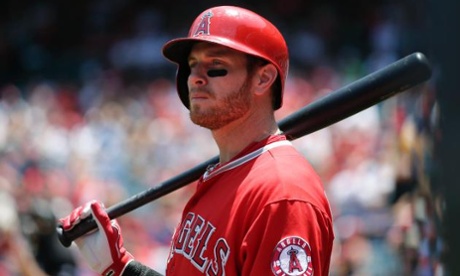
The man of the hour, of course, is Josh Hamilton. The details are familiar by now: Hamilton, the 34-year-old superstar outfielder who the Angels signed to a five-year, $125m contract with $83m still remaining on the deal, self-reported a relapse in his recovery from alcohol and cocaine addiction directly to the league office earlier this year. He did not fail a drug test, either before or after reporting his own relapse. After some deliberation, a panel was convened by Major League Baseball to determine Hamilton’s punishment. That panel deadlocked, and an outside arbitrator had to be brought in. The arbitrator found that Hamilton had not violated the terms of the Joint Drug Agreement or the Collective Bargaining Agreement – the two binding documents that lay out the league’s drug policy for players – and thus could not be suspended.
That these details are familiar is the first hint that something’s wrong. The JDA and the CBA are very specific about what can and cannot be disclosed about a player’s violation – or suspected violation – of their provisions. First off, we’re not supposed to know Hamilton self-reported his relapse. That information came via a leak to Angels’ beatwriter Mike DiGiovanna. And we’re not supposed to know the panel deadlocked. That information came via another leak to DiGiovanna and his colleague, Bill Shaikin.
Frankly, we’re not even supposed to know that an arbitrator found Hamilton to not be in violation of the JDA and CBA, but considering the hideously leaky ship the Angels and MLB were running to begin with, the league felt comfortable just making that public. And at the same time, the Angels, furious that Hamilton hadn’t been punished – and childish in their fury – went fully public as well, eviscerating their own player in the media. Craig Calcaterra has a more in-depth rundown of those events here at HardballTalk where he addresses how convenient all that is.
Then Angels owner Arte Moreno got directly involved before this weekend’s home opener at Angels Stadium, and the full shape of the tantrum was made clear: where the rest of us saw a man struggling with addiction comporting himself professionally and dealing with a relapse in precisely the right way, Moreno saw dollar signs. He saw opportunity. He saw clawback.
This is the business savvy we claim to love in our rich – the weird sociopathy of the Business Decision, where men like Moreno simply must engage in whatever behavior it is that theoretically leads to them swimming in the largest pile of gold coins possible, because money is its own morality. It is entirely just, then, that Moreno should refuse to confirm whether or not Hamilton will ever again play for the Angels. And it’s entirely appropriate that Moreno and his team’s general manager, Jerry Dipoto, continue to conduct this business in public, while Hamilton and his representation remain silent. The fact of the matter is that many people – a majority, perhaps – will see this as a smart business decision instead of craven opportunism, because in our society there is no clear distinction between the two. Perhaps there never was.
Ultimately, this is not about Josh Hamilton, who is a rich man who will remain so regardless of whether Arte Moreno claws back “his” $83m. It is about precedent, and the foundational principle of the guaranteed contract – something that the players have fought long and hard to keep sacrosanct, something they watched their counterparts in the NFLPA compromise all too easily in their last round of collective bargaining, and something that should be found in far more places in our society than our just our playing fields. This is the second time in as many years that an extremely rich team has attempted to use provisions in the Joint Drug Agreement to get out of a contract they regretted for financial reasons.
In the first instance, the New York Yankees did not succeed in getting Alex Rodriguez banned from baseball for life, but they did secure salary relief for one season – despite this only being Rodriguez’s first punishable transgression under the JDA. Now the Angels are trying to use Hamilton’s disease – and his entirely proper handling of a relapse – in order to escape a financial commitment they now regret. The message is clear: players should suffer for their mistakes, but teams shouldn’t suffer for their own.
This, along with the recent disputes over the service-time gaming of top prospects, figures to be something that comes up early and often when the league and the union sit down to discuss the next version of the CBA in 2016. Until then, hopefully Moreno won’t get his way. We’ll have to wait and see. But the Angels have made one thing clear: they’ll keep us in the loop. As loudly and angrily as they possibly can.