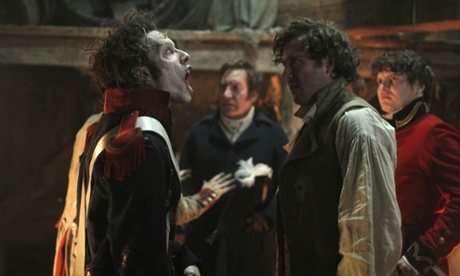
Spoiler warning: this blogpost contains references to episode three of Jonathan Strange & Mr Norrell on BBC1 in the UK.
To read the recap for episode two, click here.
Henceforth, this episode shall signify the moment when, in the parlance of Slim Charles from The Wire, “game got more fierce”. The Education of a Magician feels like a bit of a turning point in Jonathan Strange & Mr Norrell. Increasingly, the whimsy is set aside, the darkness gathering. It is perhaps less an education than a baptism of fire once Strange pitches up in Lisbon, fresh off the boat with his magic bowl strapped to his back and that poor sod Jeremy, Strange’s manservant, humping 40 leather-bound tomes about like a knackered pit pony. An impressive amount of action and plot was stuffed in this week, and without it feeling too rushed, I thought. Quite an achievement in the grand scheme.
‘We live in blackness and misery all the days of our lives … ’ – Lady Pole
Lady Pole (Alice Englert) looks dog-bloody-tired by this stage, up all night dancing, then up all day being all pale and insane. She is now mad on tapestry. If she can’t reveal the nature of her enchantment vocally, then needlepoint it shall be, as she embarks on Harley Street’s answer to Bayeux. She has a tough ride this week, driven to such drastic measures. Lady Pole’s predicament, more than any other, has changed the tone of the show, notably following her attempted suicide, then the sight of her strapped to a bed in a whitewashed room, Norrell delivering the news that she has a lifetime of torment left. It was a bleak business. The denouement, her attempted assassination of Norrell, pitched things up just a smidge, too. Now there’s a cliffhanger for you. Childermass had better pull through, that’s all I’m saying. His persistent Yorkshireness would be sorely missed.
‘He is sure to be bored at home, madam … as soon as he has tasted war … ’ – the Gentleman with the Thistledown Hair
Marc Warren’s Thistledown made himself known to Arabella this week, a worrying turn of events as he tires of Lady Pole’s tortured mien, finding Arabella’s vivaciousness altogether more intriguing. While the Magician is away, the chaotic spirit from a magical dimension will try to whisk your wife away to his baroque all-night raves, as the saying goes. Brilliantly, she later puts him in his place when he offers to remedy Lady Pole’s madness, but at a price.
Arabella: “You ask for something in return, sir. If you can do such a thing, if it is in your power to help, then for the love of God, do it. But do not make a bargain of my friend. You will forgive me, sir. We should not meet again without my husband present.”
Have some of that, you creepy bugger.
“The position of magician is by no means well enough respected …” – Strange
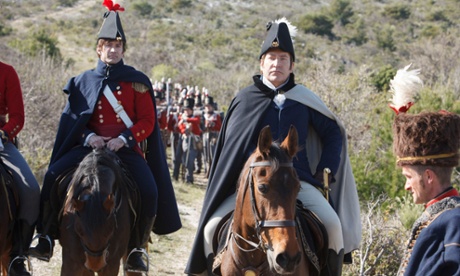
Strange arrived at the Peninsula this week finding himself quite the chocolate teapot, not the big potatoes he is in London or Portsmouth, say, with his horses made of sand and suchlike. Suffice to say that Wellington, when he finally arrives, is summarily unimpressed by Strange’s offers of magical solutions to wartime problems.
Strange: “I can make it rain, my lord.”
Wellington: “It’s rained all winter, it’s only just stopped raining! You and this other gentleman have been a great nuisance to the army, sir … I have no need for a magician here.”
Strange: “I could bring down a plague of locusts upon the French. Or frogs!”
Wellington: “You’d do just as good to drop roast chickens on them, sir! Goodnight!”
Oof. And within a few lines delivered with grumpy brio, Ronan Vibert’s musky Wellington (of The Borgias and the ill-fated Hatfields and McCoys fame) is my new favourite cast-member. Which made it all the more pleasing once he got the measure of Strange in this bromantic exchange.
Wellington: “Could a magician kill a man by magic?”
Strange: “I suppose a magician might. But a gentleman never could.”
Better the whiff of bromance than the bilious funk of the dead. Once he’d created a road for him – and snagged himself a nickname, ”Merlin” – he’d almost won him around. Even when he bollocksed up making the forest disappear and got all his books – and poor Jeremy, he’s in a better place now – blown to bits, he still offered veiled encouragement, like Gordon Ramsay heaping unexpected praise on an exhausted restaurateur after he’s spent three solid days calling him a big twat in his own kitchen.
“You must give up this notion, sirs … he will get to know …” – Childermass
Meanwhile in the north, Segundus and Honeyfoot have gone all “free school”-mad like Toby Young, but loads less odious. They want to start the first academy for magic, only for Childermass to turn up – it was a long old pony trek from London just for a few lines – and grumpily spray the project with Norrell territorial piss. The poor pair of hapless tits really can’t seem to catch a break. They’re the Chuckle Brothers of sorcery; well-intentioned, but often ending up smacking the other in the head with a ladder and then treading in a paint pot.
“The magic I will do this night is not modern magic. In fact, it is very ancient. It is the magic of the Raven King. I do not wish it to be mentioned in dispatches.” – Jonathan Strange.
Things got a bit Walking Dead In A Windmill later (must note that down as a future drama pitch), when Strange consorted with the teachings of the Raven King to drag the Neapolitan captives back from hell for a spot of interrogation. The “captain, my captain” moment, with the troops removing their hats in deference to the magician, felt a bit heavy-handed, but not necessarily out of place.
Other matters of note
-
Fingernails of the week
Much like “hat of the week” last week, there might not be another “fingernails of the week”, but we’ll see. Anyways, the Gentleman’s talons were bared this week, figuratively and literally. Long nails on a chap, unless he’s an accomplished flamenco guitarist, tend to polarise opinion, but Thistledown’s were enough to make one gip, as Childermass might say, wrapping his bony fingers around his hanky after his contretemps with Arabella. Get that man to a nail bar, tout de suite.
• Contents condensed …
I’d be interested to know how the book readers are coping thus far with the plot being condensed as it is, the wartime action in particular. Obviously, it would be impossible to cram it all in, but have there been moments missed you’d have liked to have seen on screen?
• Is our Faerie fearsome enough?
“Thecoordinator” in the comments last week rightly mentioned that the book’s dealings with the Faerie hinterlands are uniquely spooky; spine-chilling at times. Marc Warren’s Gentleman is creepy, sure, but does he lack the genuine menace needed here? Not sure anyone’s having any sleepless nights just yet.