1. Anselm Kiefer | Royal Academy, London
From the rusty submarines hanging in a vitrine in the courtyard to bookworks in which photographs and black paint created eerie provocative assemblages, Anselm Kiefer’s retrospective rocked me. In a year of eye-opening exhibitions of old and modern masters, it was something else to encounter a living giant. Like a novel by Thomas Pynchon or a building by Frank Gehry, the paintings of Kiefer make me feel that our time is truly creative. He is at once remarkably serious and riotously pleasurable.
Pleasure may seem a strange word to associate with art that faces the darkest horrors of the modern age. The most powerful room in Kiefer’s epic exhibition was dedicated to his engagement with German history. Paintings of sublime Nazi architecture buried in ash froze the mind in limitless expanses of horror. Kiefer’s dense surfaces are like congealed festering stains of history. Bad blood seeps out of them. A black hole of memory lurks at the heart of his work waiting to suck you in.
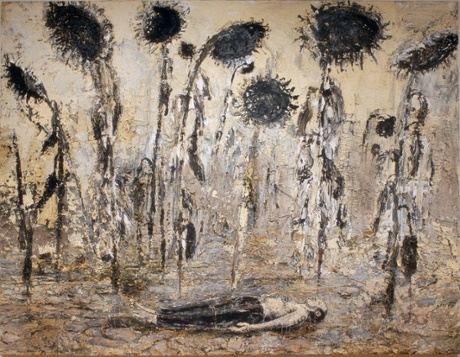
And yet, he has an appetite for history that is joyous as well as clear-eyed. The past is not only a nightmare to him. His paintings reach further back than the 1940s, to the Roman author Tacitus who described the ancient German tribes in his book Germania. Rich echoes of barbaric histories resonated in this exhibition. A Roman legion that was massacred in the great German forest, the woodcuts of Albrecht Dürer and medieval alchemy all feature in Kiefer’s exuberant world view. One installation at the Royal Academy turned a heap of his unfinished paintings into a model of geological strata going back to the early history of earth.
Is his boisterous imagery a little overblown? Kiefer seems too strong for some English palates, a bit “Wagnerian”, to use one easy cliched word for German creativity. I do not understand such criticisms. Kiefer has consciously chosen to revive a romantic conception of art, as well as the traditional genre of history painting, for our time. Asking him to be a different artist makes no sense. He is this artist – warts and all.
I find him stupendous. When he started nosing in the muck of history, he was forcing Germans to face their own past. That battle may be won now. Today, he makes us all see that no great art can be made without memory and history. Kiefer stands on the blood-soaked soil of Europe and makes something grow in it. A giant sunflower, rotting yet majestic. It is the soul of our troubled continent.
2. Picasso Museum | Paris
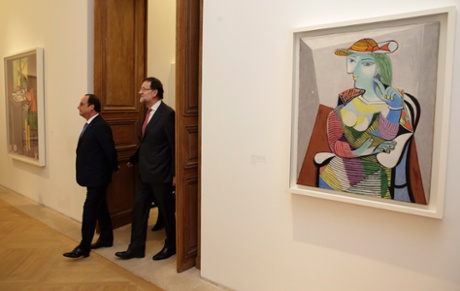
The reopening of the Musée Picasso this autumn put the greatest modern artist back where he belongs, as the outstanding attraction in a city full of art. From his early paintings in the manner of Toulouse-Lautrec to a 1960s series of obscene prints that imagine the sex life of Degas, this is the greatest and most intimate collection of Picasso’s art, a dazzling collage of the prolific and ever-renewing nature of his creativity. It left me enthralled, inspired, hungry for more.
3. Matisse: The Cut-Outs | Tate Modern, London
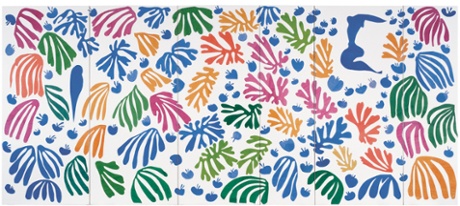
This show transformed the way I see Matisse. It was truly a gift, a treat, a summer joy. It revealed the redemptive utopianism of an artist too easily seen as a creator of bourgeois decorations for the “tired businessman” (as he put it). Matisse’s cut-outs have the generosity of Renaisssance frescoes and a longing to save the world with beauty. They are graciously provocative in their abandon, their daring to be free.
4. Rembrandt: The Late Works | National Gallery, London
Rembrandt’s people are timeworn and world-beaten. Rich and poor, sturdy citizens and criminals alike, all share a consciousness of life’s pain and death’s equality in his late paintings. The triumph of this exhibition was to get some of his true masterpieces, from places like the Rijksmuseum and Kenwood House, and confront the visitor with paintings as strange and moving as his vision of Bathsheba from the Louvre.
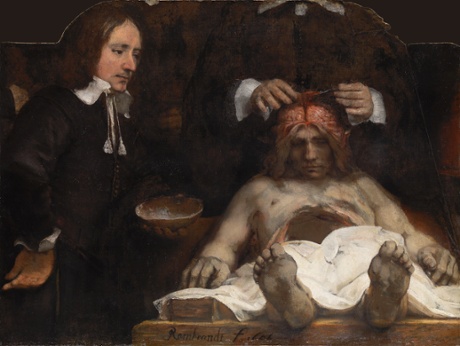
5. Veronese: Magnificence in Renaissance Venice | National Gallery, London
Some artists, such as Titian, are always fashionable. Others are unfairly taken for granted, such as Veronese. This exhibition revealed the staggering sensual genius of a painter who was revered by the impressionists but today is often seen as conventional. As if. This show illuminated Veronese’s dazzling light effects, Shakespearean sense of character and the sheer panache of the Renaissance people he painted.
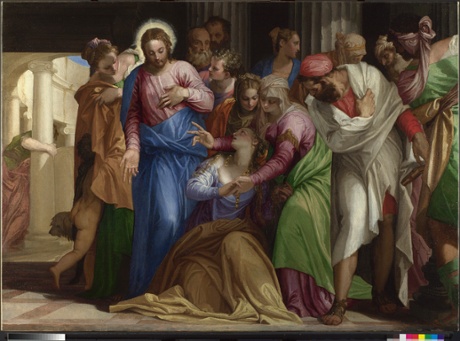
6. Egon Schiele: The Radical Nude | Courtauld Gallery, London
The bold modernism of Egon Schiele set this exhibition alight. That, and his eroticism. In the age of Freud, this Vienna-born artist was fixated on the human body as an expression of the soul. His nudes are desperate, melancholy, and alone. They find solace in sex. His drawings of women are robustly carnal. These fragile lovers in the last days of the Austro-Hungarian empire deserve to be icons of modern art.
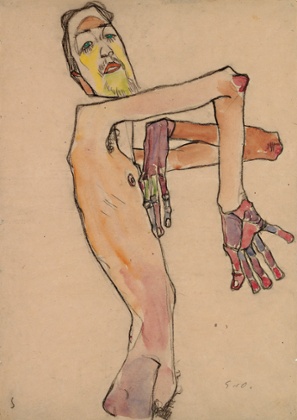
7. Late Turner: Painting Set Free | Tate Britain, London
Turner’s sun shone bright in 2014. This exhibition revealed the jaw-dropping freedom of his art. The success that came to Turner in his 20s liberated him from convention. He was able to experiment, to please himself. The epic and ecstatic paintings that resulted range from sublime scenes of whaling to pictures of the House of Commons on fire, and lit a spark of modern painting soon to flare in Monet’s impression: Sunrise.
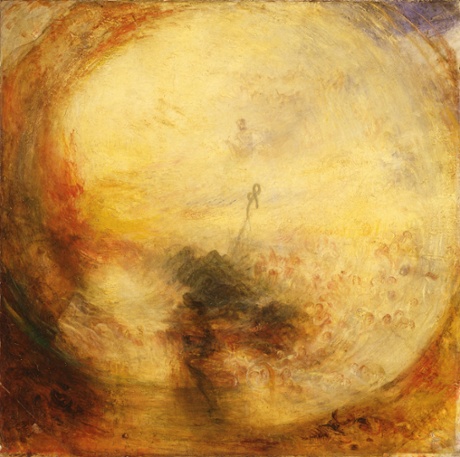
8. Giovanni Battista Moroni | Royal Academy, London
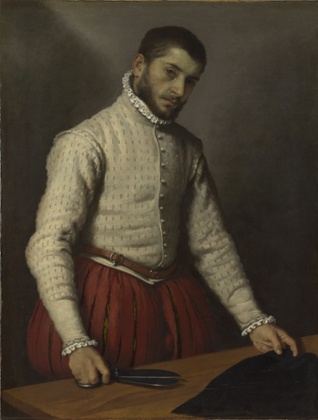
This artist was overdue for discovery, and the Royal Academy did him proud. Moroni painted sensitive, mysterious, poetic portraits in northern Italy in the later 16th century. His people gaze out with confidence, even a sense of conspiracy. They and the artist share jokes and secrets. It is like eavesdropping on a lost world. Moroni is as delicious and singular as some rare liqueur tasted in a small Italian town. His people are immortal. This show gave painting a new star.
9. Generation | National Galleries of Scotland and various venues
This rollicking super-show that opened at galleries across Scotland in June made a convincing case for Scotland being the true centre of artistic excellence in Britain now. Some of the highlights included Jim Lambie’s scintillating fields of colour at the Fruitmarket in Edinburgh, Douglas Gordon’s disturbing montage of videos, and a glass skylight painting by Richard Wright that brought heavenly beauty to the heart of Glasgow.
10. Transmitting Andy Warhol | Tate Liverpool
This rich and enjoyable survey of the man who invented the 21st century managed the rare feat of doing justice to the vast range of Warhol’s multimedia activities, from 1960s psychedelia to 1980s TV, without compromising on its display of his paintings. Warhol’s haunting silkscreened images of faces and flowers benefit from the music of the Velvet Underground resonating in the next room. Open to the world, ever curious, Warhol emerged here as a compassionate observer of modern life.