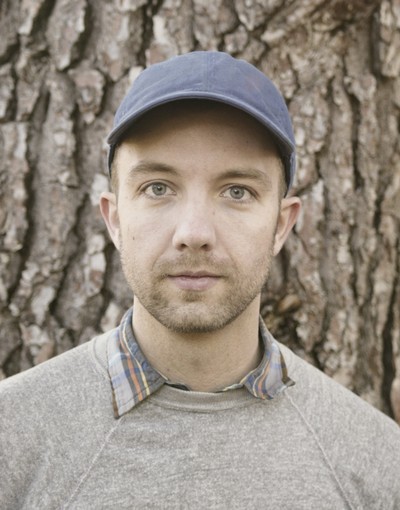
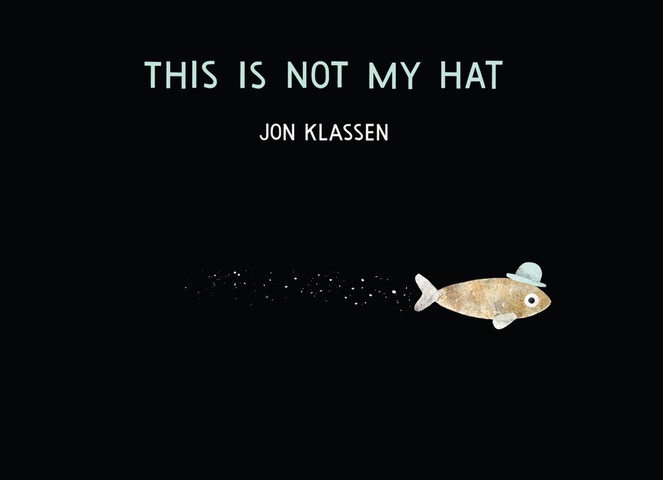
In this gallery Jon takes us on a guided tour of This Is Not My Hat and talks about what winning the award means for him. But first we asked him about his take on the process of writing books for children: "When you write kids books, I think you have to hope you have the sensibilities that are right for kids. Your instincts have to kick in. I don't really think about kids that much when I make my books until the end when I go into schools and think, ah that's right, there's children at the end of this line!"
Photograph: Peter Zuehlke/Walker
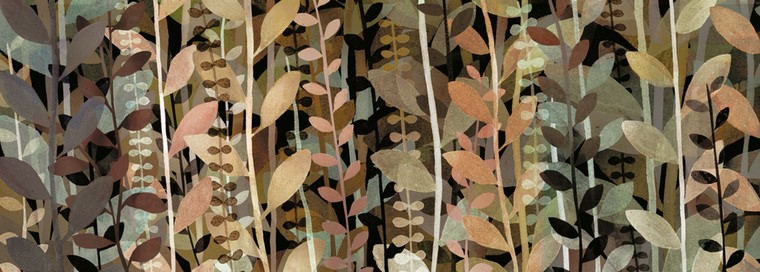
I have a studio but I like working at home best because I don’t like leaving our cat. With This Is Not My Hat I made the pictures in ink first; they are all silhouettes, the plants are just black brush inks. Then I scan the pictures into my computer and invert them so they show up on black and then colourise them. It means you can have loose shapes that look spontaneous because they were when you made them but then you can control exactly where they are are. I like to start with something messy and then clean it up.
Photograph: Jon Klassen, reproduced by permission of Walker Books Ltd
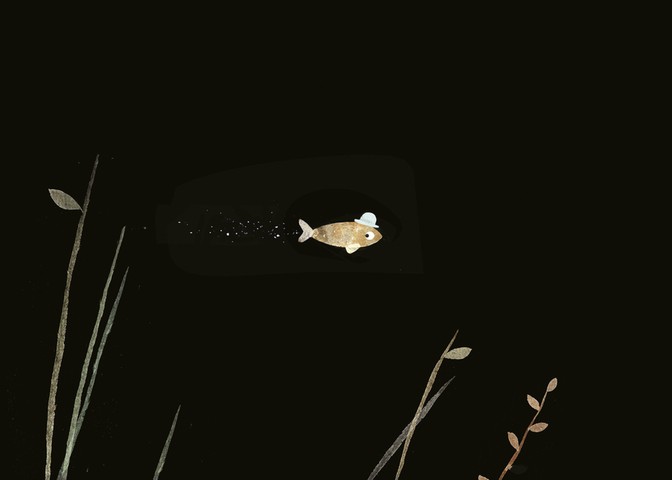
I wanted to use monologue as the mechanism to tell the story of This is Not My Hat and as soon as I thought of that, I thought of The Tell-Tale Heart. You have this narrator saying, look I'm okay. I've done this thing and I'm all right and I'll tell you why! You know as an audience that he's doomed even though he's telling you everything is okay. Choosing this technique suggested the story. On this first page we meet the little fish and he's looking backwards. The eyes are symbols. On its own that's just the fish looking behind himself but as soon as he utters the first words of the story: “This hat is not mine, I just stole it” we see it’s a guilty eye. It’s just a circle within a circle, there's nothing else to it, but now you’ve given it context you know. I can't draw what a guilty fish actually looks like so I had to symbolise it.
Photograph: Jon Klassen, reproduced by permission of Walker Books Ltd
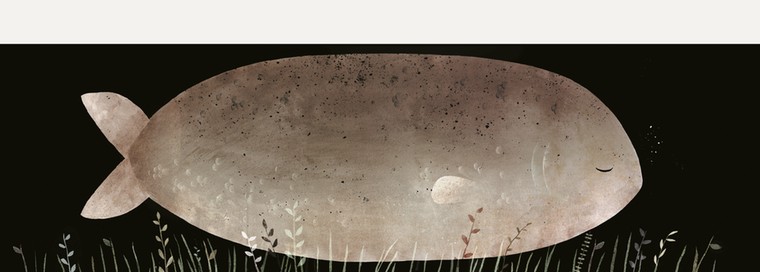
I wanted to give the feeling of what it is to do something wrong and try to talk yourself through it. The little fish picked the wrong hat to steal. That can happen in life. You can't argue that what happened later isn't fair; okay his punishment isn’t proportional to what he did but he stole the hat.
Photograph: Jon Klassen, reproduced by permission of Walker Books Ltd
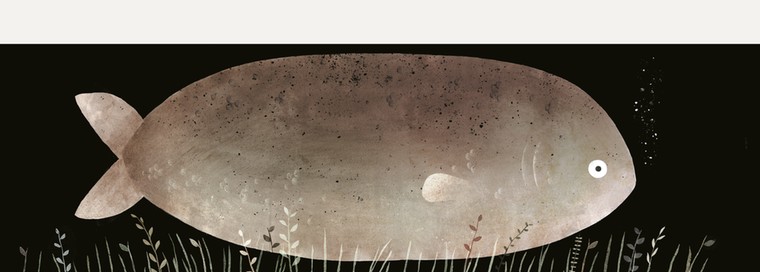
As soon as I drew this page I knew this was the book. I knew the ending of the story and as soon as you see it you know the ending and you know the story. I was thinking of Monstro being introduced in Pinocchio, the whale is first introduced. He is sleeping and then a fish swims by and his eye opens. It's a full screenshot and you get the idea of the scale of everything. It's not even that he's aware of anything, he's this giant force waking himself up. It’s the same here on this page. It's not so much how the eye is drawn, it's what it represents.
Photograph: Jon Klassen, reproduced by permission of Walker Books Ltd
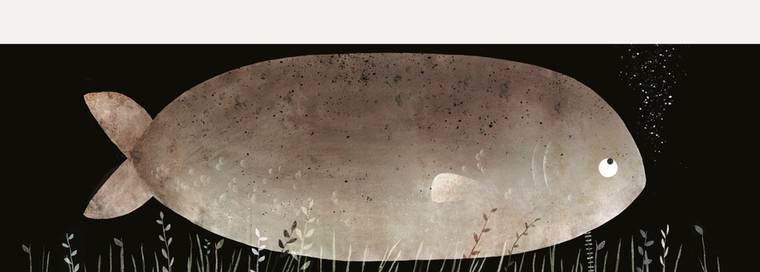
This page was tricky because you want him to look where the hat was. I think the bigger tool here is the bubbles. In the page before the big fish is sleeping so there are just gentle snoring bubbles, here he wakes up so there's more. We're in the moment he's just realised his hat has gone but he hasn't processed yet. He's already angry but you can't have him look angry yet.
Photograph: Jon Klassen, reproduced by permission of Walker Books Ltd
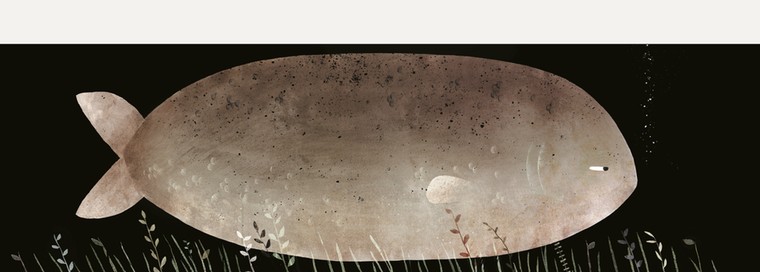
This is the big fish’s most intelligent eye in the book. This eye took forever. I didn't know how smart to make him look! You can't make him look too angry, there's never a downward line, it's straight, that's as upset as he gets. None of this is about anger, this is death coming for you slowly. Slowly and deliberately. Fish just move. They are torpedoes. You can’t argue with him when he finds you and you don't want him to get too complicated because at the end of the day he's fate embodied. He's death coming for you.
Photograph: Jon Klassen, reproduced by permission of Walker Books Ltd
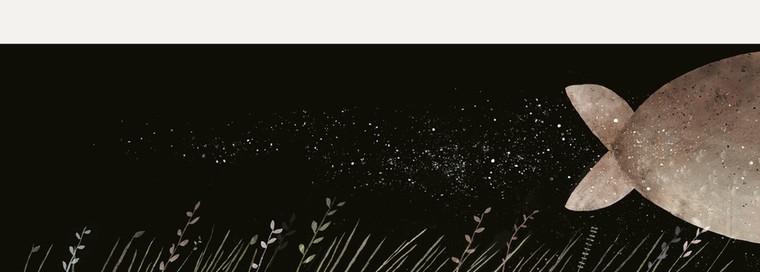
I think this page is important. Up until now it’s the little fish talking, but you’ve only actually seen the little fish once. Seeing the big fish disappear after him helps you understand this complicated idea.
Photograph: Jon Klassen, reproduced by permission of Walker Books Ltd
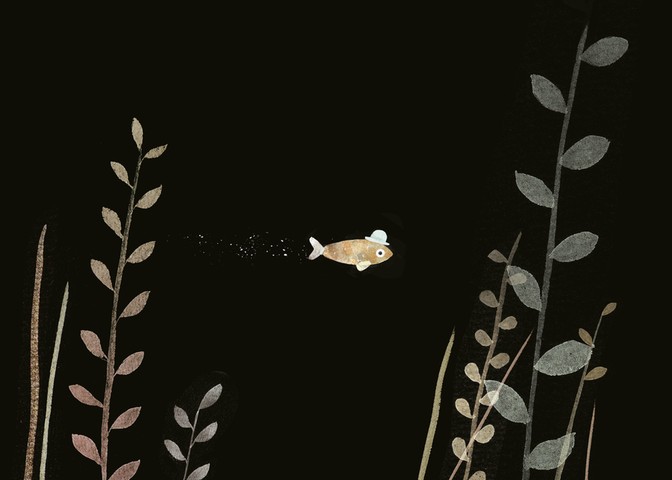
Now we see the little fish at last. Now he's looking right at us. He's getting more and more confident, he's like: "Look I'm going to talk to you guys." You know what he's feeling because the eyes are a symbol of the feeling. I don't really like drawing complicated acting as much. I was in animation for a while before I started making children’s books and I have always looked for symbols of emotion. How do you really draw someone who’s devastated or happy? I can't draw what a guilty fish actually looks like so I have to make a symbol of it.
This little guy has doubt. He's talking to the audience trying to persuade us and himself and he's all right. But we knew he was going to die as soon as the big fish opened its eyes. The ending has to happen and you have to fulfill it.
Photograph: Jon Klassen, reproduced by permission of Walker Books Ltd
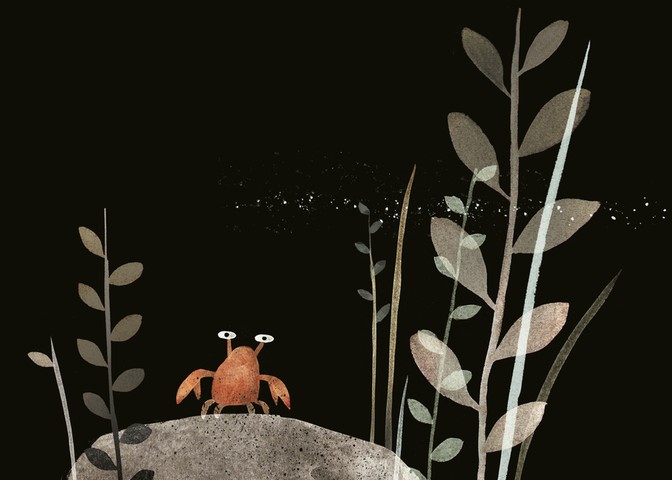
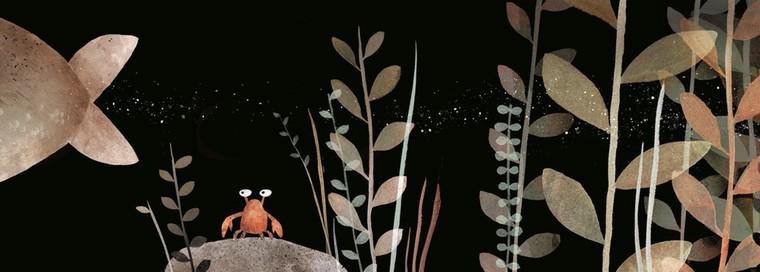
The crab is my favourite character in the book. He's not necessary to the plot. The fish is already heading in the right direction. But if the book was just the two fish and no one else saw what else happened, it's somehow too harsh and traumatic. The crab has to be there. When we first see the crab I felt he had promised to keep the secret ans wanted to. Then when you turn the page and he's changed his mind, he's falling apart. But a lot of kids think that this crab was always a traitor and was always going to pull one over on the little fish. I was sad about that, that's cynical stuff! That's even darker than I had in mind. I had this guy as our man on the ground, in certain circumstances you might fall apart just as easily.
Photograph: Jon Klassen, reproduced by permission of Walker Books Ltd
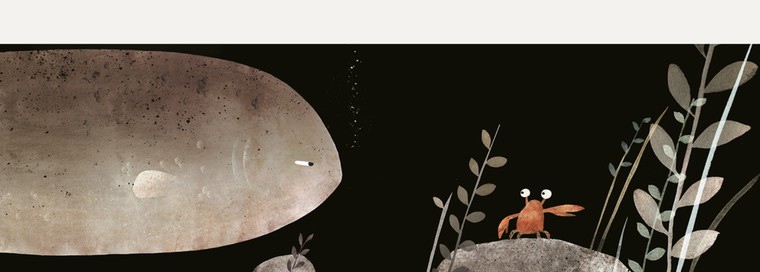
Life isn't about should happen and neither are my books. You are reacting to big fish all the time. All the crab’s philosophies might end in him pointing the other way to save the fish, but life shows up, or death shows up, and you point that way.
Photograph: Jon Klassen, reproduced by permission of Walker Books Ltd
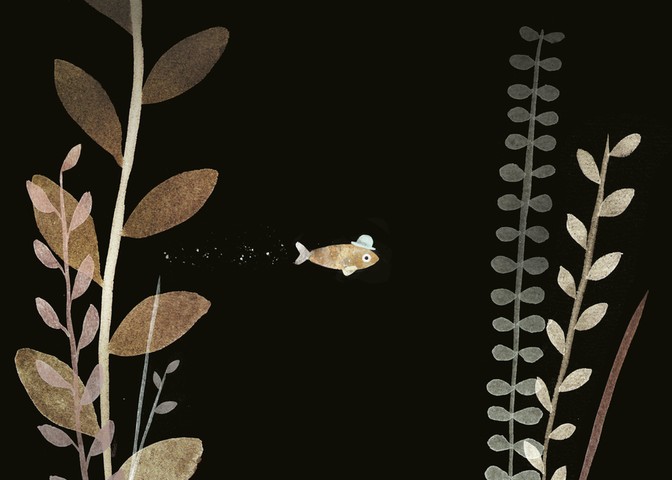
This little soliloquy is point of no return. I know it's wrong to steal a hat, I know it does not belong to me, but I am going to keep it. It was too small for him anyway. He admits he knows its wrong. This is him sealing his fate. It's actually beside the point that the hat fits him better. I initially had the little fish wondering if he went back and apologised then he wouldn’t be eaten, but I trimmed the writing down. The more I got into it I decided not to have the word "eaten" in the book at all.
Photograph: Jon Klassen, reproduced by permission of Walker Books Ltd
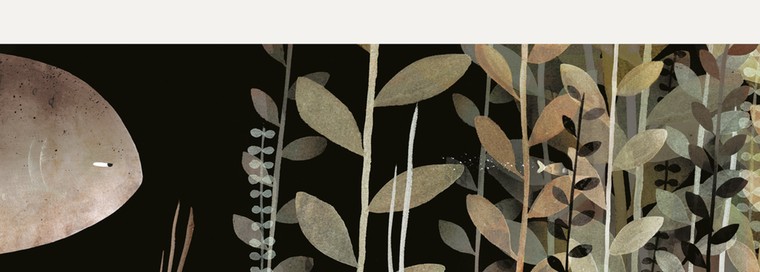
Finally the two fish are on the same page together, you don't really know how close they are through the book until this point, the physicality of it. The little fish thinks he made it! My only experience of diving was in Egypt and it was terrifying. Everything was black and I put my head down and initially focused on little cute fish and then you realise there's another level behind that and beyond that really big shapes in black. I swallowed a stomach of seawater, got out, threw up and never went diving again. You realise you are in the same water as these big shapes. The ocean scares me badly. The infinite.
Photograph: Jon Klassen, reproduced by permission of Walker Books Ltd
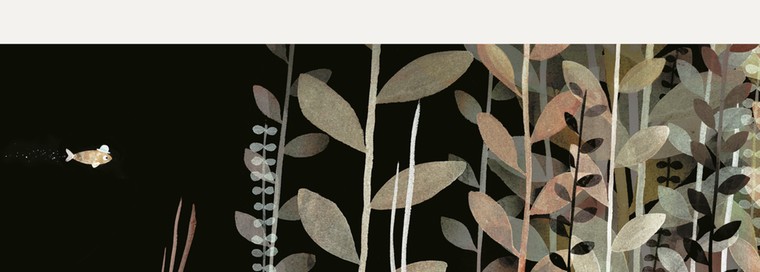
I don’t usually scale back what I’m writing though. I sit there and write like this and draw like this too. I don’t really do rough sketches and I don’t pare it down, I think before I write and draw. This is how I write, it's like opening a steel door, it's huge, it's so scary but I enjoy it because there's tension in it. I want to get it down to its very basic; picture books work because they are so restrained. You feel the tension and the careful choice of words. Because it's so careful you pay more attention to it. As an older kid I think you realise this book is consciously being put together this way. At the beginning of the book this fish says this is not my hat, I just stole it. I worried for ages about the word “stole”, I thought this is heavy word. But in the end it was the right word.
Photograph: Jon Klassen, reproduced by permission of Walker Books Ltd
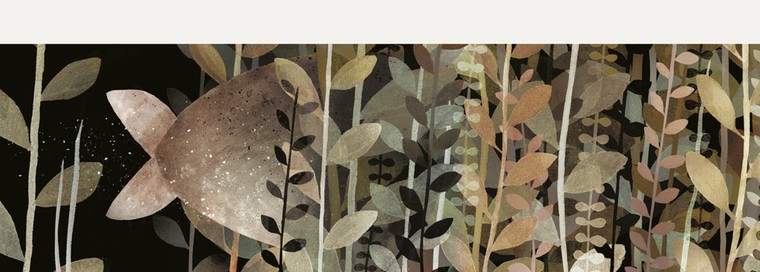
The big fish enters the reeds after the little fish. When I was about 13 my dad finally got a magnolia tree for our front lawn, just a little one that was going to grow and be beautiful. He spend all day planting. A week later at 2 am we heard kids on the front lawn and they'd devastated it, taken it apart and spread it over the front lawn. Dad woke us all up and said get in the car, we're going after these guys. We didn't know who them, they were just punks out for the night. Dad was furious.I'm thinking what are we going to do if we find these guys? What's the plan? I imagined finding them and my dad grabbing one of and was shaking them, I pictured a blank child with nothing against magnolia trees, or my dad, or us, just doing it just for this unspeakable vague reasons which is way scarier than any vendetta you might have. I think both my hat books have some roots in this.
Photograph: Jon Klassen, reproduced by permission of Walker Books Ltd
Photograph: Jon Klassen, reproduced by permission of Walker Books Ltd
Photograph: Jon Klassen, reproduced by permission of Walker Books Ltd

Photograph: Jon Klassen, reproduced by permission of Walker Books Ltd
Photograph: Jon Klassen, reproduced by permission of Walker Books Ltd
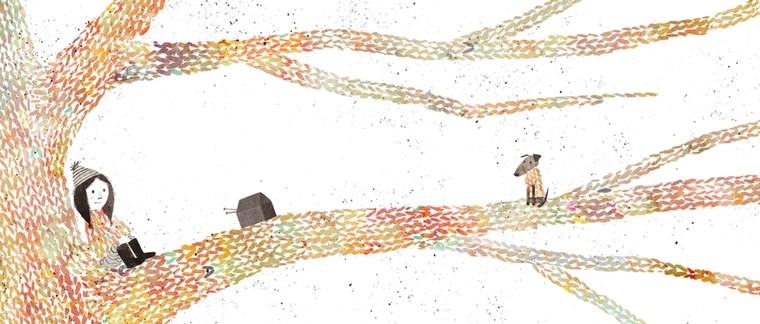
It's a weird thing doing creative work on your own. You need confidence that you are not completely insane to put this stuff out. It’s nice getting reassurance that you are at least sane enough to communicate the story and get it across and that people like it and think it's a good one. It's a big deal to be told, you know what, we think you're okay. But you worry it's not over yet. For now you've been validated but if you put something else out and people don’t like it... That's the big fear. You're up on this cliff now and you could just fall. You don't want to depend on it so much but yet you want to give it everything that you can because it's such a massive thing to be told that you are liked, that it was the best thing they saw that year.
Photograph: Jon Klassen, reproduced by permission of Walker Books Ltd
How can you not over-analyse the reaction to your work either way? Of course it's a reflection on yourself! When you get something official like The Kate Greenaway, then you think okay maybe I can begin to trust (a little bit) that it's going well. But only a bit. Because it's risky stuff. You have to hope it's good. It's really tricky. If you fall apart that's all you've. It's precarious! But there are worse fates of course. I’m loving the work I am doing.
Congratulations to Jon Klassen. Winner of the Kate Greenaway medal 2014.
Photograph: Jon Klassen,