This is a bit of a strange one. To speculate now on the identity of the player or the nature of the happening that will be adjudged after the event to be the surprise of the World Cup rather takes the surprise out of it all. It is certain, however, that somebody unexpected will shine or that something unforeseen will happen. It’s what adds a little mystery and allure to a tournament whose seven finals have been contested by five teams.
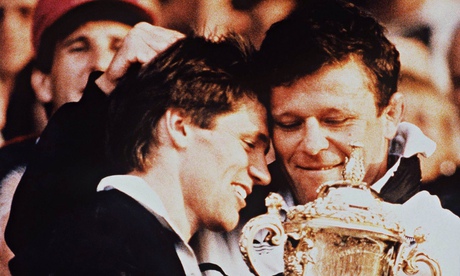
Wales very nearly broke into the elite group of finalists in 2011 and Ireland will have serious ambitions this time, but for the moment only New Zealand, Australia, South Africa, England and France know what it’s like to face the strain and the shocks of the day. Of these, the New Zealand team of 1987 stand alone as the one that barred entry to any element of surprise. At the inaugural World Cup they began as clear favourites and went on to win without being seriously challenged.
There seems to be a rule of thumb nowadays that determines that to win the tournament you have to have five or six players who are clearly the best in the world in their position. The All Blacks of 1987, from Steve McDowall and Sean Fitzpatrick at 1 and 2 to John Kirwan and John Gallagher at 14 and 15, had an entire team of the very best.
The surprise may be that the next time New Zealand hosted the World Cup, in 2011, they were in a similar position at the outset – a team of the highest quality with all the advantages of home. In the final they faced sneeringly uncontrollable France, whom they had already beaten soundly in the pool stages. Yet Thierry Dusautoir, who throughout the tournament had cut a dignified but quiet, helpless figure on the deck of the mutinous ship, gave an astonishing back-row performance in the final and his team followed his example. The All Blacks won but France’s transformation defied all prediction.
South Africa have yet to suffer defeat in a final, having won in 1995 and 2007, and – something of a surprise – have yet to score a try there. In 1995, they had to find somebody to stop Jonah Lomu and Japie Mulder, not the biggest centre in the world, stepped forward unflinchingly and cut down the sensation of the tournament time after time.
Mathew Tait nearly produced the moment of 2007, not so much in defence but attack. England had been grumblingly unimpressive for long stretches of the tournament in France. They had lost 36-0 to South Africa in the pool and the word from the camp was that they were in a permanent state of frustration, aimed at the coach, Brian Ashton. Yet they beat Australia in Marseille and France in Paris and now faced South Africa again. Mark Cueto nearly scored but it was Tait’s break and overall assuredness that almost turned the final on its head. South Africa won but a dreary final was given life by Tait’s illumination of England’s true worth.
When England were clear favourites in 2003, they had a whole array of the very best in their position, and yet success depended on two players coming off the bench and bringing clarity to a faltering mission. Mike Catt against Wales put a decidedly out-of-sorts Jonny Wilkinson back together again and Jason Leonard in the final against Australia gave the England scrum, against which the referee, André Watson, had taken a particular dislike, a jovial solidity that could offend not even the most suspicious official.
Who in the World Cup fast approaching may rise to the occasion and surprise us? The indications are that the action will flow, at least in the early stages. But will the surprise be that a kicking game of positive intent – a kick as a try-scoring opportunity – decides the later stages? Who might be the purveyor of such a crafted kick? Henry Slade, even if he has to appear, like Stephen Donald for the All Blacks in 2011 or Catt in 2003, from off-stage?
Or might it be a tackle that wins the World Cup – a tackle that stops the final from being lost? A horizontal Courtney Lawes saving the day? Presumably not. It won’t be a surprise until we haven’t seen it coming.