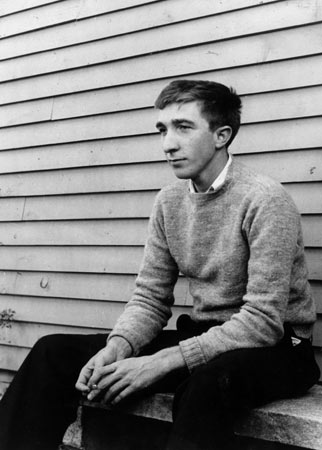
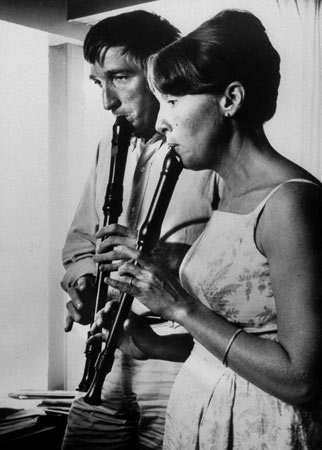
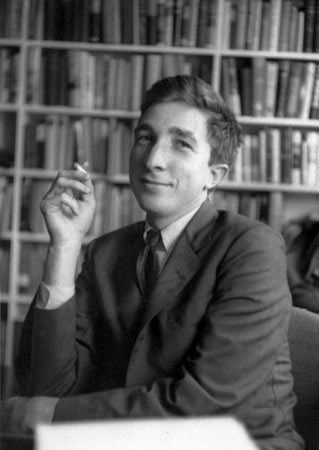
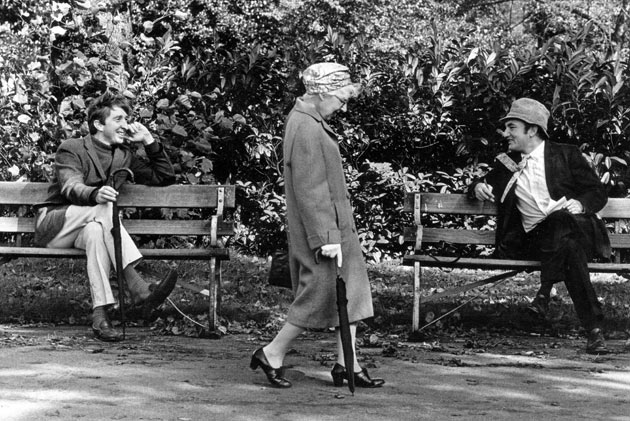
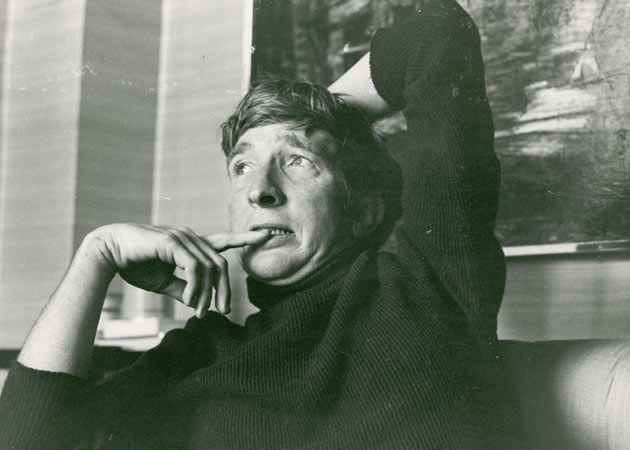
John Updike was born in Shillington, a small town in eastern Pennsylvania, the son of a maths teacher and a saleswoman. 'I loved Shillington not as one loves Capri or New York, because they are special,' he later wrote, 'but as one loves one's own body and consciousness, because they are synonymous with being'. His mother encouraged him to write, but had thwarted literary ambitions of her own; when asked about her son's fame in later years, she replied: 'I'd rather it had been me'Photograph: GettyAfter studying at Harvard - where he was turned down twice for the creative writing course - and Oxford, Updike began writing in earnest in the mid-1950s, when he took a job on the New Yorker's Talk of the Town column. He had married his first wife, Mary Pennington, a fine arts major at Radcliffe college, two years beforePhotograph: Truman Moore/GettyThe Updikes rented a small fifth-floor apartment on Riverside Drive on the Upper West Side of Manhattan, soon becoming a fixture of the New York literary establishment. When he wasn't working for the New Yorker, and discovering writers such as Proust, Joyce and Kierkegaard, Updike was writing a long manuscript about his life to the age of 16, entitled Home, which he later decided was unsuitable as a first novelPhotograph: Truman Moore/Getty
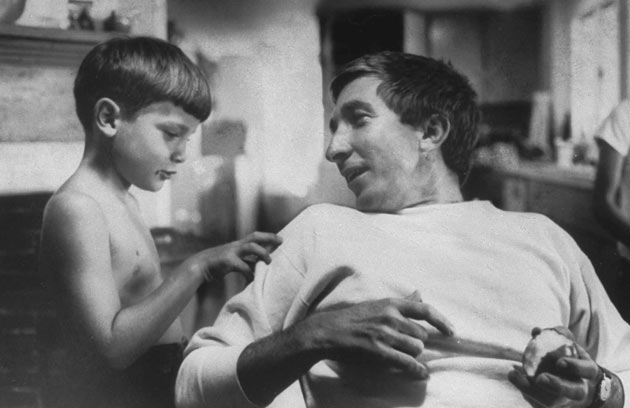
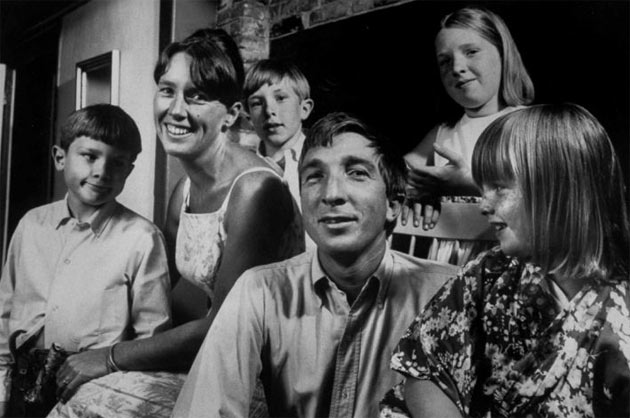
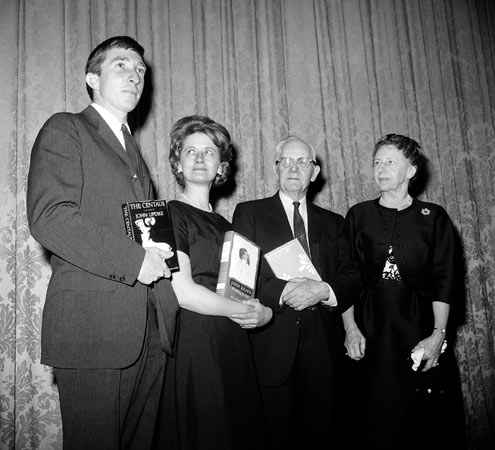
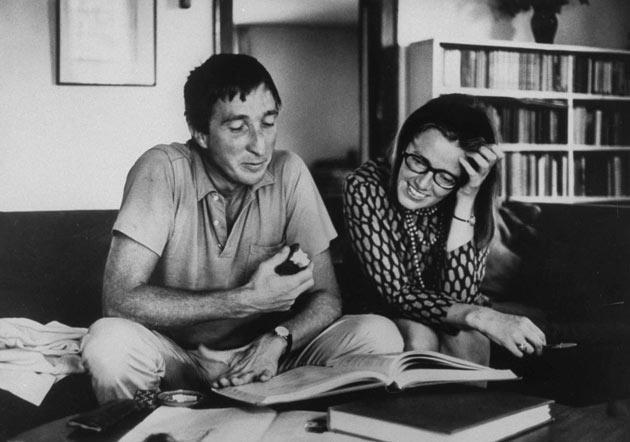
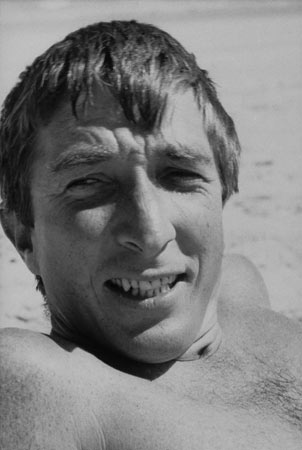
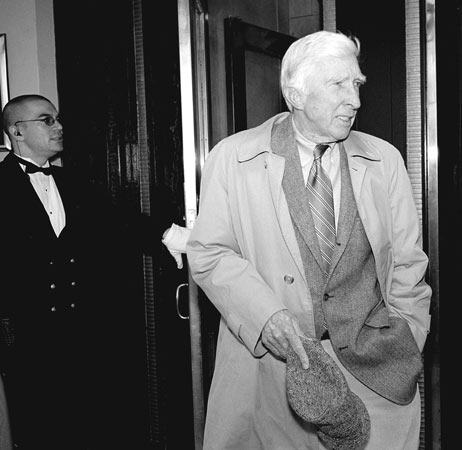
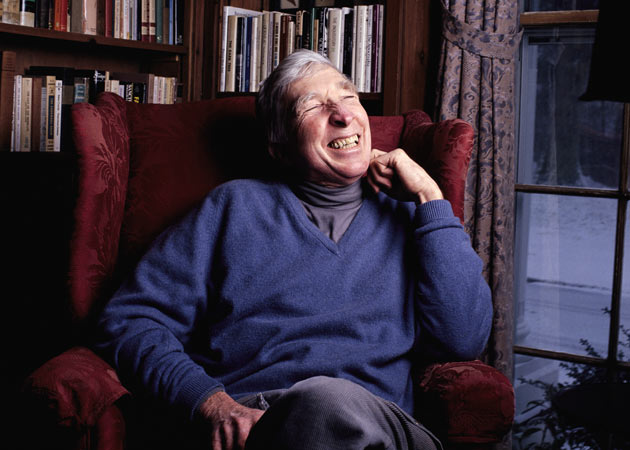
He and Mary were to have four children. The first, Elizabeth, was born in Oxford, with the other three born in Ipswich, Massachusetts, where the family moved after Updike decided that New York was too distracting. 'New York, in my 20 months of residence, had felt full of other writers and of cultural hassle, and the word game overrun with agents and wisenheimers,' he later said. 'The real America seemed to me "out there" ... Out there was where I belonged'Photograph: Truman Moore/GettyUpdike lived in Ipswich - which became the model for Tarbox in his 1968 novel Couples - for 17 years, renting a study above a restaurant where he wrote, in longhand, six mornings a week. He separated from Mary in 1974; they divorced amicably two years laterPhotograph: Truman Moore/GettyUpdike's first novel, The Poorhouse Fair, was published in 1959 to less than rapturous reviews; he later said he was trying to write a book 'which would serve, in its breadth, as a base for further novels'. His breakthrough novel was Rabbit, Run (1960), which began a four-decade-long relationship with Harry 'Rabbit' Angstrom, the irrepressibly average hero who was one of his most vivid creations. He is pictured here in a publicity shot for Alfred A. Knopf, who remained his publishers throughoutPhotograph: HO/ReutersUpdike's 1963 novel The Centaur - about the relationship between a schoolmaster and his son - won the National Book Award for Fiction. The author was to be showered with prizes throughout his career, with the Rabbit novels twice winning the Pulitzer Prize for FictionPhotograph: APUpdike photographed in Massachusetts in 1966, well on the way to literary superstardom. He continued to review books for the New Yorker and the New York Review of Books as his profile as a writer grew, saying: 'My purpose in reading has ever secretly been not to come and judge but to come and steal.' Authors who he wrote about included Philip Roth, Saul Bellow, Umberto Eco, Iris Murdoch and Isabel AllendePhotograph: Susan Wood/Getty ImagesLife reporter Jane T Howard talking with Updike in 1966. Howard was interviewing Updike around publication of his eleventh book, writing that his output 'would be respectable if achieved by an octogenarian writer and is truly phenomenal for the 34-year-old possessor of so boyish a shaggy haircut'. Updike's literary destiny, she wrote, was 'bound to be argued even more hotly as each new book appears. Will he ever write a really big, good, enduring book - a book as important as his talent?'Photograph: Truman Moore/GettyAnother image shot for Life in 1966. 'My subject,' Updike told Howard, 'is the American Protestant small-town middle class. I like middles. It is in middles that extremes clash, where ambiguity restlessly rules. Something quite intricate and fierce occurs in homes, and it seems to me without doubt worthwhile to examine what it is'Photograph: Truman Moore/GettyJohn Updike talking to British journalist Alan Brien in 1968, the same year he hit the bestseller lists (and the cover of Time) following the publication of Couples. The novel, his fifth, was a portrayal of the first post-Puritan American generation, about a group of swingers whose marriages were falling apart. Some commentators declared it, along with Philip Roth's Portnoy's Complaint, an embodiment of the decline in American moralityPhotograph: Michael Ward/Rex FeaturesUpdike, photographed for the Observer in April 1972, after publication of his second Rabbit book, Rabbit Redux, which finds the hero ten years older and somewhat fatter. A New York Times review of the book at the time said it was 'the complete Updike at last, an awesomely accomplished writer who is better, tougher, wiser and more radically human than anyone could have expected him to be'Photograph: Chris Smith/ObserverAs well as sustaining an enviably busy career as a novelist, a writer of short stories, a poet and a critic, Updike also produced an autobiography, Self-Consciousness, and a play, Buchanan Dying. His 1980s novel The Witches of Eastwick, his take on the feminism of the time, was made into a film starring Jack Nicholson; the characters in the book were later resurrected one of his last works, The Widows of EastwickPhotograph: Eamonn McCabe/GuardianUpdike in 1994. The previous year he had received the National Medal for Humanities at the White House, to add to his groaning awards cabinet, which also included the National Medal of the Arts, a handful of Pulitzers - not to mention 2008's Bad Sex in Fiction lifetime achievement award from the Literary ReviewPhotograph: Michael Brennan/CorbisVisiting the Hay festival in 2004, Updike was in reflective mood. 'But when has happiness ever been the subject of fiction? The pursuit of it is just that - a pursuit,' he wrote in the GuardianPhotograph: David Levene/Guardian
Sign up to read this article
Read news from 100’s of titles, curated specifically for you.