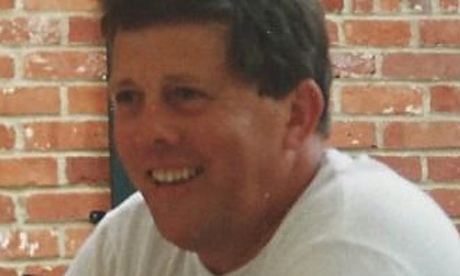
My former husband, John Howe, who has died aged 76, was a rural transport engineer who made a major contribution to the mobility and welfare of people in rural Africa and Asia.
One of 13 children, John was born in Ruislip, north-west London, to John, a bookbinder, and his wife, Dorothy (nee Franklin). Despite leaving school with few qualifications, John embarked upon life with what was to be his hallmark combination of analytical insight, hard work and professional dedication.
He did a degree in mechanical engineering at Acton Technical College (which became Brunel University), joined the government’s Transport and Road Research Laboratory in Berkshire, and was posted to Jamaica in 1961. Later work on the road network in Kenya gained him a master’s in civil engineering from the University of Nairobi, and he went on to obtain a PhD from the University of Reading.
His career began just as newly independent nation-states were emerging, with governments eager to improve the mobility of their populations. John found his niche, and over the next five decades would undertake consultancy work for the World Bank, the International Labour Office and the Asian Development Bank. Between 1972 and 1974 he established an MSc course in highway and traffic engineering for developing countries at the University of Surrey.
From the outset, John recognised that most developing countries could not adopt western modes of transport without disadvantaging the majority of their people, whose incomes and transport needs were widely different from those prevailing in the west. Running up against the interests of international motor and road lobbies, he established his own consultancy firm, IT Transport, in 1979, with the aim of finding practical solutions.
IT Transport introduced various labour-saving and low-cost, non-mechanised or low-powered wheeled vehicle designs for use in rural areas of Africa and Asia. These included a bicycle trailer capable of tripling carrying capacity on unsurfaced roads and paths, bicycle ambulances, improved wheelbarrows to reduce the burden for African women carrying water and firewood on their heads, and a simple wheel-making device. He worked in remote areas in over 35 countries.
John had a forceful personality. Whatever he decided to do, he did with great zest and thoroughness. As professor of transport engineering at the Institute of Infrastructure, Hydraulics and Environmental Engineering in Delft, the Netherlands, from 1991, he was nicknamed Turbo John and although this term is perhaps not very appropriate for a man who dedicated his professional life to non-mechanised forms of transport, it is spot on with reference to the energy he invested in his work. He published prolifically, and his books included Transport for the Poor or Poor Transport? (1996).
John was married and divorced three times and is survived by five sons – Stephen, Lawrence, Simon and Jon, from his first marriage, to Marian, and Nicholas, from his third marriage, to me – and two granddaughters, Paris and Georgia.