Paul Clarvis/Antonio Sanchez: Birdman
Long ago an opera-devoted music editor asked me incredulously: “How can you possibly write 500 words about a drummer?” His question came back to me on hearing the music of three drummers within a few days about whom you could write 500 words – and then keep on going. Two of them could have been the answers to a quiz question: “Which two jazz drummers play on the soundtracks of movies up for best picture at the 2015 Oscars?”
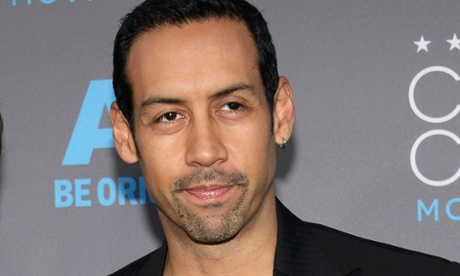
Britain’s versatile Paul Clarvis provided percussion on the music for The Grand Budapest Hotel, and I was lucky enough to catch him recently in buoyant form with Chris Batchelor’s Pigfoot. The other inspired movie percussionist was Antonio Sanchez, longtime collaborator with guitarist Pat Metheny, and creator of the hypnotic, unsettling drum score for Alejandro González Iñárritu’s Birdman. Sanchez, a film fan, improvised much of the music with Iñárritu acting in a kind of serendipitous conductor’s role. It took a player fired by the spirit of jazz improvisation to do what he did, and the results are astonishing.
Billy Hart: Sleeping Giant
My third great drums experience, hearing the 74-year-old American Billy Hart, was at a gig led by the powerful British trumpeter Damon Brown, with a typically cosmopolitan band of fellow devotees of the hard bop style. Hart, widely regarded as one of the great post-60s jazz percussionists, was guest of honour. Gags about the insensitivities of drummers abound, but Hart is the living embodiment of all the best things they do. With Brown’s band, his cymbal flurries fuelled introductions with drama and anticipation, the patter of his brushwork set soloists free, and when he swapped four-bar phrases with the others in the traditional manner of bebop finales, every cluster of whispers or eruptions had its own special character. Hart played on some Miles Davis recordings, but his most famous sustained gig was with Herbie Hancock’s experimental Mwandishi group in the early 70s.
Polar Bear: Chotpot
The last word about drummers, honest. The ever surprising Polar Bear, steered by inventive percussionist/producer Seb Rochford, turned up in several commentators’ best-of-2014 lists, and I went back to their latest release, In Each and Every One – the band’s first album in four years, and the project that put them in contention for the 2014 Mercury prize. Rochford’s desire to create music that sounds as if it is drifting in and out of a mist was evident throughout the set. The band used electronics more creatively than ever, and they balanced tight grooves and unexpected interventions (even including random noise injected by the sound engineer) with their famously whimsical flair.
Dave Douglas and Joe Lovano Soundprints Quintet: Power Ranger
It’s heartening jazz news at the start of any year to hear that Joe Lovano, a saxophonist with deep musical pockets, is due back in the UK. He is scheduled to return with his Village Rhythms band in late April, with performances at Ronnie Scott’s and the Cheltenham jazz festival. Lovano participated in one of the best gigs of last year’s London jazz festival when he and trumpeter Dave Douglas – as co-leaders of the Soundprints band – shared a double bill with Charles Lloyd in which they played dazzling written and improvised simultaneous conversations, and sounded like an earthy early-jazz group and, at the same time, a cutting-edge ensemble. Soundprints’ debut album, Live at Monterey Jazz Festival, is due in April, but here’s the same lineup in 2012, playing Douglas’s composition Power Ranger.
Loose Tubes: Triality
The reunion of the Loose Tubes big band was the hottest UK jazz story of 2014; they’re scheduled to play again at the 2015 Gateshead international jazz festival in April. But in the past few weeks, maybe because the great former Miles Davis bassist Dave Holland is in town working with student musicians, I’ve been returning to a terrific recent small-band album joining him and a couple of key Tubes members. Circularity features Holland with Tubes stalwarts Julian Arguelles (sax) and Martin France (drums), plus the formidable John Taylor on piano. It’s an international postbop superband; this is a glimpse of it.
Tim Garland’s Lighthouse: Uplift
Tim Garland must be embarking on 2015 with a spring in his step, given the admiration his ambitious Songs to the North Sky project (a collaboration of jazz improvisers and a classical strings ensemble) has attracted. Garland lives on Tyneside, and the album is inspired by the landscape and character of the region, but, as a respected regular saxophonist with pianist Chick Corea he’s deeply rooted in American jazz, too – and he’s never brought those two strands together so seamlessly before. He will be on the road this spring, with fine musicians and the strongest original compositions of his 25-year career.
Kenny Wheeler: Angel Song, with Frisell, Konitz, Dave Holland
The late Kenny Wheeler’s haunting songs can drift in and out of your psyche at unexpected times. He touched something vulnerable in human nature, and his music had a patient contemplativeness that marked it out amid jazz’s tussles and squalls. His recently released final recording, Songs for Quintet, was made just over a year ago at Abbey Road for the ECM label. Its delicacy and fragility brought the words “angel song” to mind – the title of a Wheeler piece from the 20-year-old album of the same name, which featured a drummerless all-star chamber group comprising Lee Konitz on alto sax, Bill Frisell on guitar, and Dave Holland on bass.
Alice Zawadzki: Ring of Fire
Two talented young women with very different takes on the arts of vocal jazz also left distinct impressions in 2014, and it will be interesting to follow the journeys of Alice Zawadzki and Zara McFarlane this year. Zawadzki, who often performs with members of London’s Chaos Collective including Laura Jurd and Phil Meadows, is an improvising violinist as well as a singer-songwriter, and her China Lane album drew imaginatively on jazz and classical music as well as her Polish roots.
Zara McFarlane: Blossom Tree
On the surface, Zara McFarlane sounds like a mainstream soul, R&B and jazz singer with the kind of popular appeal that Gilles Peterson – a significant mentor, and her label boss – is good at spotting. But those traditional skills aren’t easy to acquire, and McFarlane excels at all of them. Abbey Lincoln and Nina Simone are influences, and McFarlane applies their methods to emotional personal songs and to reflections on British urban life.
Tigran Hamasyan: Mockroot
To wind up, here’s a teaser from Mockroot, the new album by young Armenian pianist Tigran Hamasyan, due out next week. Hamasyan’s flat-out, high-energy shows can leave you feeling as if you’ve been hauled through a workout in a gym staffed by maniacs, but he’s a phenomenal piano player, an irrepressible entertainer, a promising experimenter with hi-tech gizmology and a creative world-music composer. Mockroot plays vivaciously to all those strengths.