‘The Royal Navy is still, without doubt, the best in the world,” said Labour MP Stephen Pound to rousing grunts of approval from the Conservative benches. “How then is the minister planning to celebrate Trafalgar Day?” Junior minister Philip Dunne pushed his crutches out of harm’s way and struggled on to his one good foot; the other is wrapped in a plastic cast, having been presumably hit by a stray cannon ball in a battle re-enactment at the weekend. “Kiss me, Poundy,” he sobbed as the morphine wore off, before adding his thanks to the navy for saving us from the French in 1805.
Defence questions are like a game of poker in which both sides know they are bluffing, but have come to a gentleman’s agreement that their hands are full of aces. One day a defence secretary may be caught off guard after a psychotherapy session and say: “You know what? We’ve got little global influence, less money and our combat troops barely run into double figures. I can barely keep the Red Arrows in the air, so what you expect me to do about Ukraine, Isis and Ebola, I have no idea.”
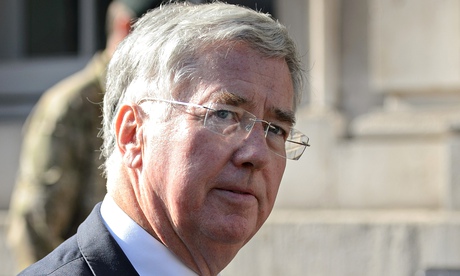
Until then, though, the Commons is stuck in a Trafalgar past where the future of the world is dependent on the British armed services for its continued wellbeing. Was Britain paying enough attention to hostile activity in northern waters? Indeed it was, replied defence secretary Michael Fallon, a slightly more menacing doppelgänger of Geoffrey Howe. “I will be going to a conference in Oslo next month,” he said. The Russian submarine lurking off Stockholm immediately took flight.
Though only for the time being as Rory Stewart, the Mick Jagger of the Commons, with the hair of an 18-year old and the face of a corpse, exclusively revealed that Russia was planning a major war in 2018 or 2019. He didn’t say who the Russians would be fighting, though, or even if the Russians knew about it, but if it’s in Ukraine we can all rest easy as Fallon had that situation fully under control. “We will be sending four Typhoons there next year,” he said. “And we will also be setting up a brigade HQ.” Just as soon as he had cleared it with Captain Darling.
All this activity was sufficiently hectic for the shadow defence secretary, Vernon ‘Big Vern’ Coaker, to remain almost silent throughout, and the rest of the session degenerated into an Airfix model development meeting. “We need more modalities,” said Fallon. Everyone nodded. “We also need greater granularity in the programme,” Dunne added. “The new Type 26 will be modular.”
There was even time for Julian Brazier to make his ministerial debut after a mere 27 years on the backbenches. It would be hard to find a more suitable minister for the reserves. They also serve who only stand and wait. “I thank my honourable friend for his kind welcoming of my unexpected mobilisation,” he said, before answering a swerve ball from Barry Sheerman about whether the government would meet its target number of army reservists. It would indeed. “I should tell him that these targets are extremely low,” he confided. There was a shocked silence. Brazier had made the schoolboy error of telling the truth about defence. A full military reprimand was in order.