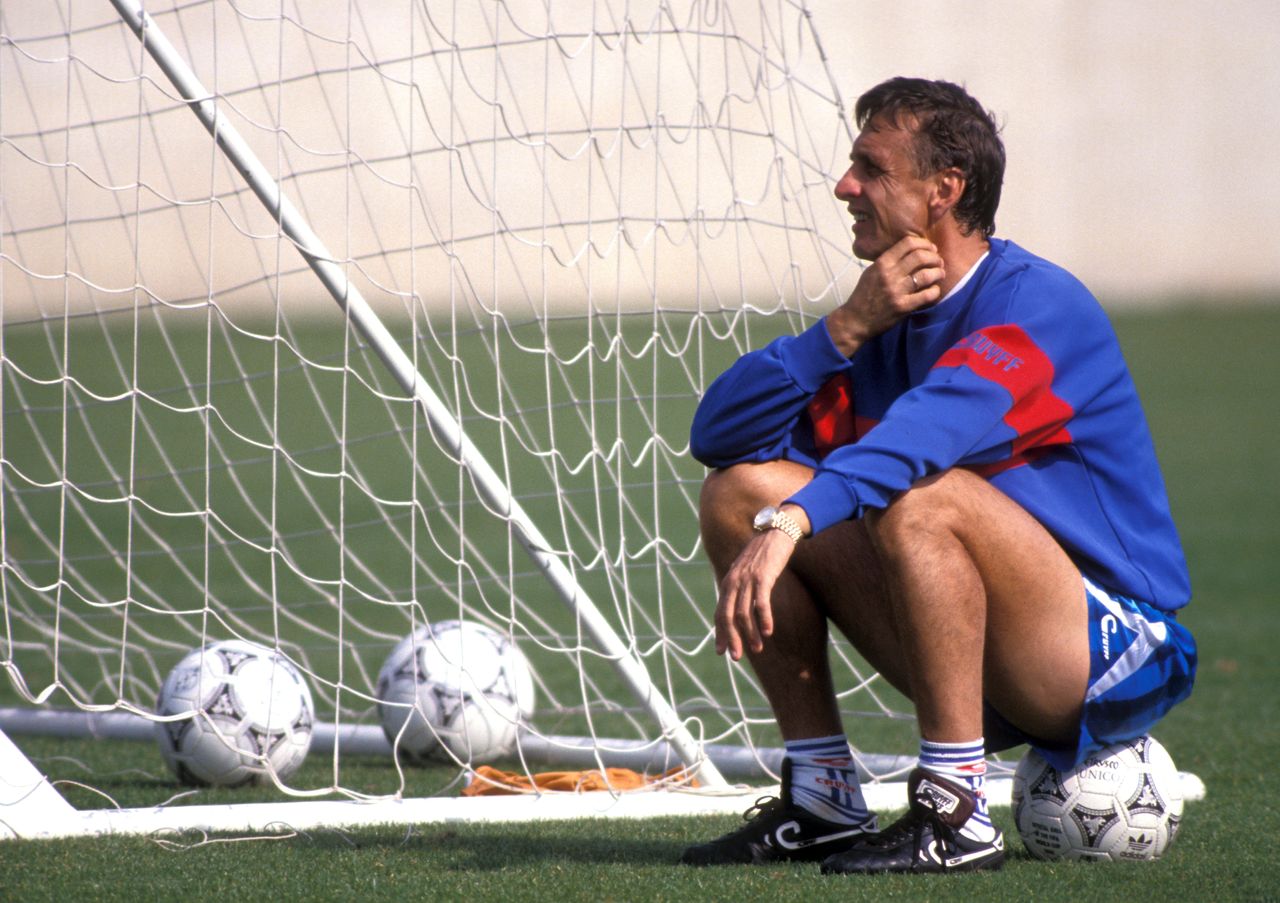
When Michael Laudrup swapped Serie A for the Camp Nou in 1989, he joined a Barcelona side that was at a turning point in the club’s history.
The Catalan side was not yet the global colossus that it would become, but Johan Cruyff’s arrival as manager 12 months earlier had set the team on its way.
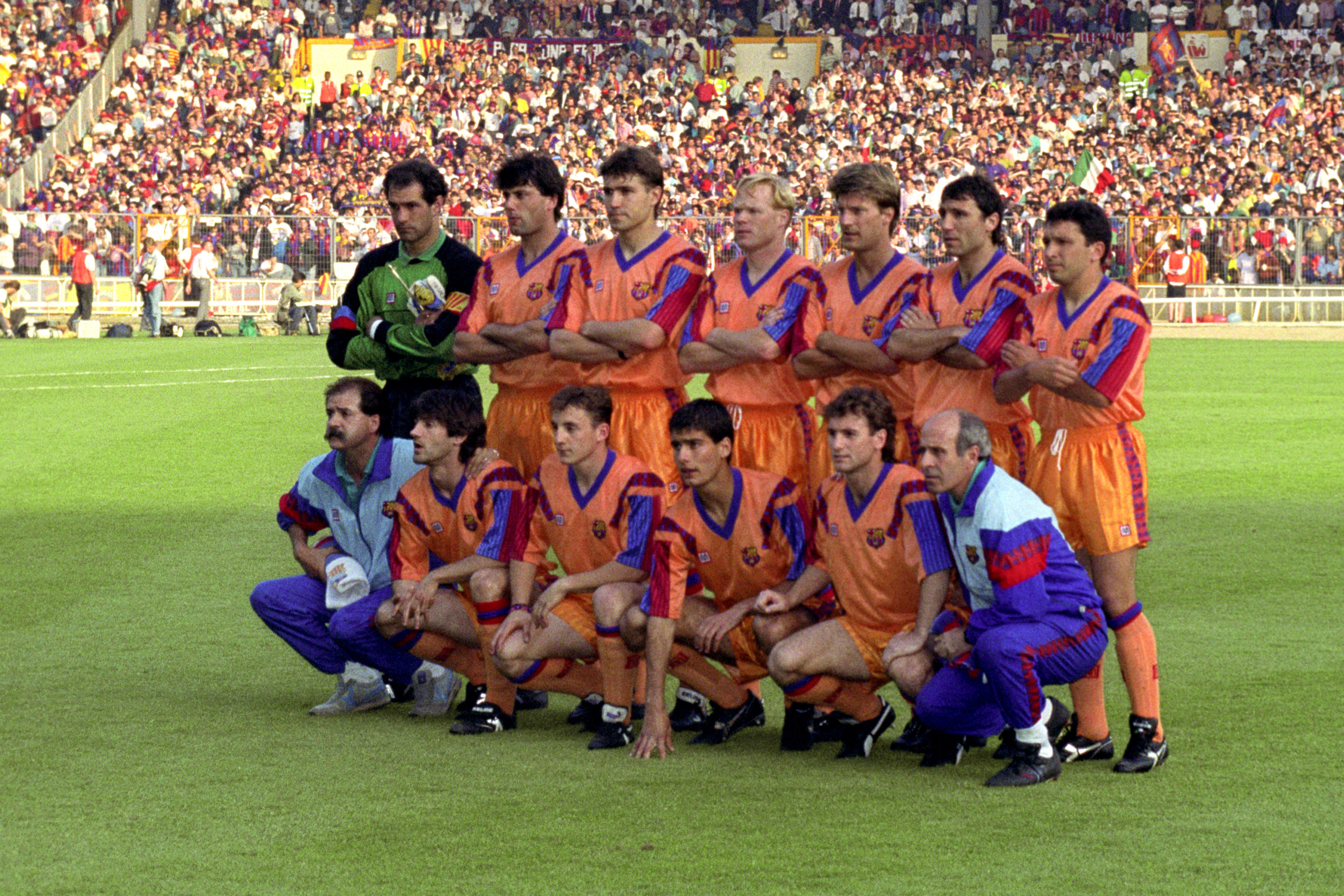
Laudrup had grown up idolising the Dutch genius and after six years in Italy with Lazio and then Juventus, he made the move to Barca and soon became one of the pillars of their ‘Dream Team’, who claimed the club’s first-ever European Cup in 1992.
Laudrup on his time at Barcelona
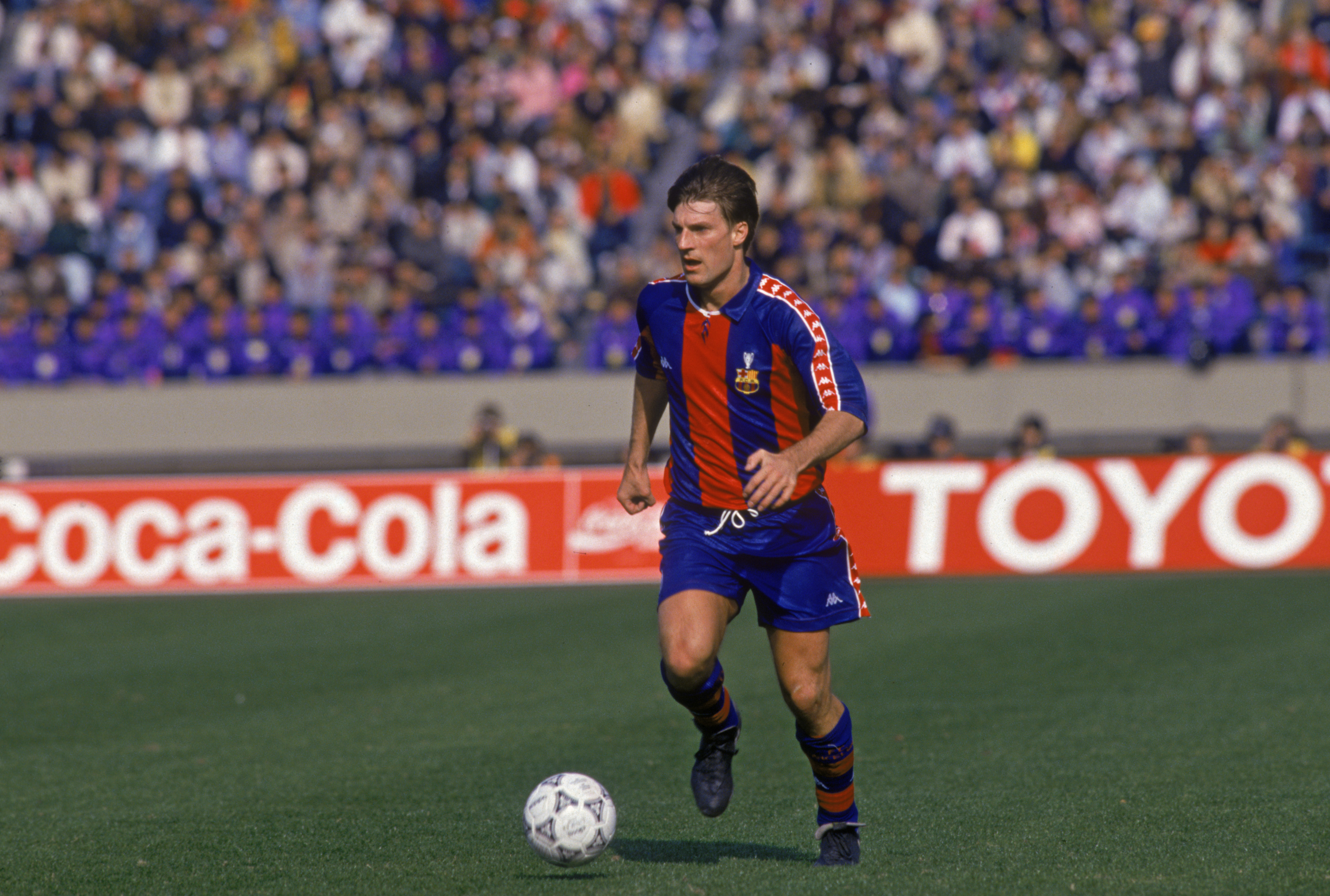
“During my time at Juventus, the number of foreign players allowed went up from two to three,” Laudrup tells FourFourTwo when asked how his move to Barcelona came about. “Platini retired, Ian Rush came in, and then one season later they also signed Rui Barros and Oleksandr Zavarov.
“That made four, and since I’d been there the longest, I thought that I’d be the one they’d let go. I was a little disappointed, but PSV were interested and had just won the European Cup. I wasn’t sure about leaving, but if I was going, I at least wanted the same wages as at Juve, which they may have had to compensate for if I joined PSV. In the end, Juventus president Giampiero Boniperti said, “Michael stays!”
“The next day, Rush wasn’t there – he went back to Liverpool, he’d missed everything at home. I think Boniperti was looking for a reason for me to stay. If I’d gone to PSV, maybe I would never have joined Barcelona a year later. They’d watched me in an anniversary tournament with the Danish national team, where we beat the Brazilian Olympic team 4-0.
“I scored twice and remember Pele was watching that game, saying how impressed he was with us. Quite a few clubs were interested but I preferred Barcelona because of Johan Cruyff. If he hadn’t been there, I’m not sure I’d have gone, because it wasn’t the Barça people know today.
“They’d won La Liga in 1985 under Terry Venables, but the previous title was when Cruyff was a player in 1974. I’d watched them during Cruyff’s first year as manager and felt their approach could suit my game.”
Laudrup was quickly proved right, so what was it like being part of Cruyff’s Dream Team?
“It was a completely different way of playing,” he continues. “Cruyff told me, “Michael, you don’t need to drop so deep – I want you to play in the final 30 metres, otherwise you’ll get tired.” I had the freedom to express myself and we had a brilliant understanding as a team. I came from Italy, where it was important not to concede and many said the best result was a 1-0 win. Then I arrived somewhere that valued a 4-3 win over a 1-0. I really enjoyed the games and training.”
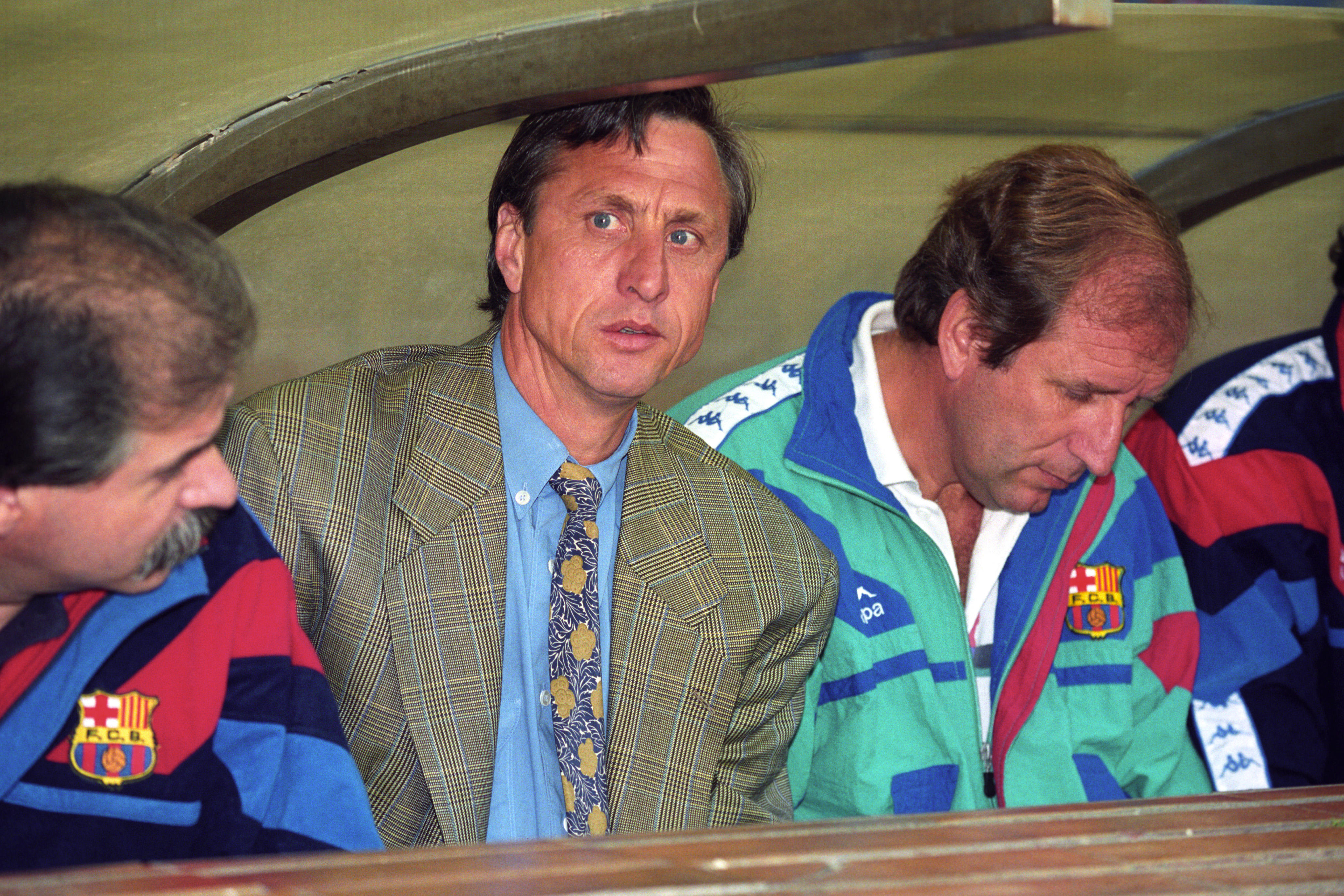
The Dane also admits that Cruyff was a huge influence on how he thought about the game.
“What was great was that the ball was involved in every exercise,” he adds. “I wasn’t used to that – in Italy there was more focus on physical training. Barça’s positional sessions were one or two touches and constant movement, which everyone learned from. Today, many teams play according to that principle, but back then, even Spanish football was much more physical than now. I adopted the same style for the teams I managed.
“Of course, they weren’t Barcelona or Real Madrid, but even players who aren’t at the top level can become very good at positional play if you train a lot and find players who are able to execute it. Cruyff inspired many managers – you’ve seen in the past 10 to 15 years that even the smaller teams have started playing that attacking brand of football.”