The Turnbull government launched its Prepare, Train and Hire (PaTH) internship program on Monday despite the legislation for its full implementation being stuck in the Senate.
Implementing the internships without legislation could cost workers up to $42 a fortnight, because the $200 a fortnight they receive for taking on work placements will count as income that reduces their other social security payments.
The Coalition has urged Labor, the Greens and One Nation to pass the PaTH bill but says the program will stand on its merits even if the bill is blocked.
Under the PaTH scheme, first announced in the 2016 budget, the government will pay businesses $1,000 to take on young, unemployed people as interns for up to 12 weeks. The young jobseekers working as interns would receive $200 on top of their fortnightly welfare payments.
Businesses that employ people full-time at the end of their internships will be eligible for a youth bonus wage subsidy of between $6,500 and $10,000.
The scheme is opposed by Labor, the Greens and unions, who fear employers will use it to churn through free workers rather than creating real jobs.
One Nation has also opposed the bill, with senator Malcolm Roberts labelling it “a subsidy to make work, and not a fulfilling job”.
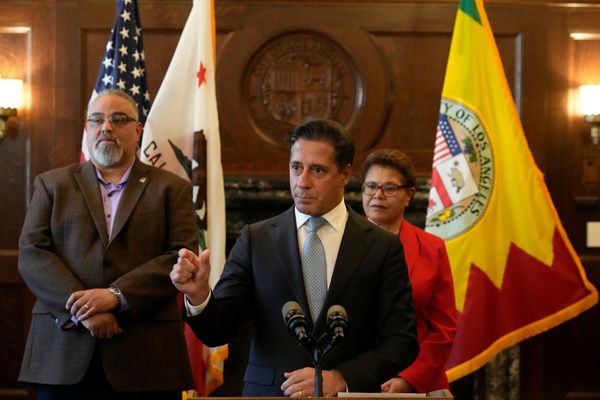
On Monday the treasurer, Scott Morrison, the employment minister, Michaelia Cash, and the Liberal MP David Coleman launched the PaTH program, meaning employers and jobseekers can now register to take part.
“A common concern held by many young Australians is that they do not have the required experience to enter the workforce, yet that experience can only be gained by being employed – the PaTH program addresses this problem,” Cash said in a statement.
A spokesman for the employment minister said it was “not ideal” to launch the program without legislation but the government was “confident the program stands on its own merits and helps jobseekers get a foot in the door”.
“At the very most the financial impact [of counting PaTH payments as income] is about $42 a fortnight.”
The government “is still urging the parliament to pass [the bill]” because it wanted interns to get the full benefit of the $200 a fortnight without welfare deductions.
The bill also provides that if a person is employed after their internship but then loses the job within the first 26 weeks through no fault of their own, they will be reconnected with social security immediately rather than face a further waiting period.
A spokesman for the One Nation leader, Pauline Hanson, said she was “still not sold” on the PaTH program. Cash had lobbied the party to pass the bill but One Nation will seek further details before any possible reconsideration of the issue.
Hanson has developed her own – as yet uncosted – proposal for the government to pay 75% of apprentices’ wages in the first year of employment, stepping down to 50% in the second year and 25% in the third.
According to Hanson’s spokesman, business has reacted favourably to the plan because it would overcome the difficulty of apprentices costing more to supervise than they produce in their first years on the job.
One Nation will seek to have the policy costed and may lobby the government to trial the wage subsidy with a small group of apprentices as a proof of concept.
There is no sign Labor or the Greens will reconsider their opposition to the PaTH bill.
Labor’s employment services spokesman, Ed Husic, warned that a government-subsidised jobs program in the private sector could lead to exploitation and depress wages by putting young people into “internships that may otherwise have gone to a new hire”.
“Instead of listening to those concerns and dealing with them in a meaningful way, the government has pushed ahead for the sake of a headline – putting those young jobseekers in a worse position,” he said.
The Greens welfare spokesman, Rachel Siewert, said her party opposes the legislation because it “[does] not support the broader scheme”.
“The government is attempting to bypass the concerns of the Senate. The scheme should have been put before parliament as a whole.”
Siewert said the government pushing ahead with the program without legislation would lead to young people reconsidering “the attractiveness or otherwise of the scheme as it currently stands”.
The Australian Council of Trade Unions president, Ged Kearney, said the government should be investing in Tafe and apprenticeships rather than “tearing the bottom out of the labour market by flooding it with workers who not only don’t make a dent in your payroll, but actually bring in $1,000 every time you hire one”.
Kearney warned that the PaTH program created “a perverse incentive for employers to churn through as many young people as possible in order to keep the free labour and government hand-outs rolling in”.
Cash’s spokesman said the program included safeguards including the ability of the employment department to bar employers who used it to “churn” through interns.