
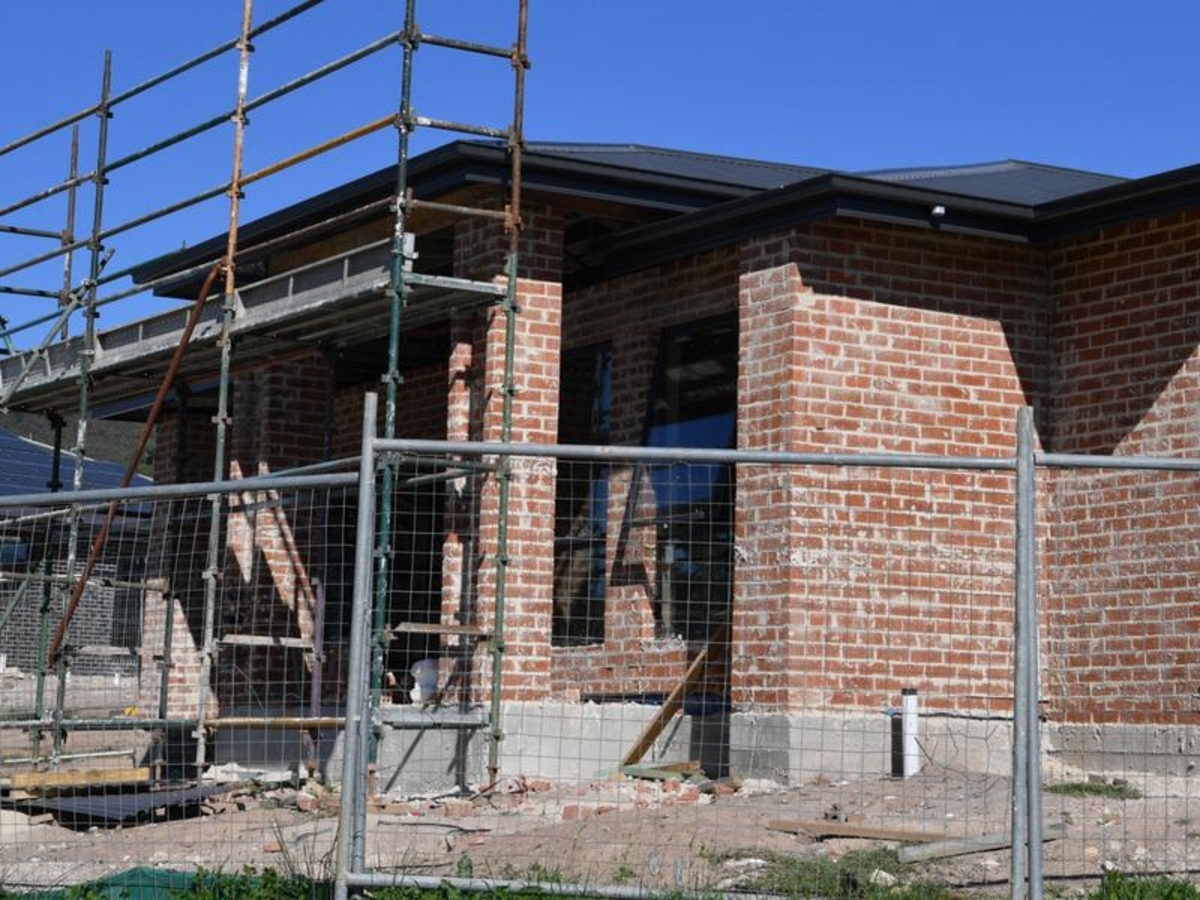
Approvals to build private sector houses jumped 15.1 per cent to a record high in February, exceeding the previous peak set in December last year.
In total, 13,939 houses were approved after declining to 12,491 in January, the Australian Bureau of Statistics said.
"Since the introduction of the HomeBuilder grant in June 2020, private house approvals have risen by almost 70 per cent," ABS director of construction statistics Bill Becker said.
Overall, building approvals rose 21.5 per cent with the more volatile 'private sector dwellings excluding houses' category surging 45.3 per cent in February.
Such strength adds to the current buoyancy in the housing market, which has seen the biggest rise in house prices since 2009 and demand for mortgages at a record high.
The Reserve Bank's monthly credit data, also released on Wednesday, showed a steady climb in owner-occupier loans.
In February, this grew by 0.6 per cent to an annual rise of 5.9 per cent, the highest since January 2019.
Overall credit across housing, business and personal finance rose by a more modest 0.2 per cent in the month for a yearly rate of just 1.6 per cent.
Meanwhile, a new analysis predicts at least 5000 businesses are likely set for closure in the next three months following the end of the JobKeeper wage subsidy and as rules around trading while insolvent return to normal.
Credit reporting agency CreditorWatch chief executive Patrick Coghlan says he is not expecting the tsunami of insolvencies that was talked about last year, but argues companies need to be allowed to fail.
"It means companies that shouldn't be operating aren't pulling down the rest of the economy," Mr Coghlan said.
"We need to get back to at least pre-COVID administration levels and away from the synthetic environment we've lived in for the past 12 months."
Australian Securities and Investments Commission figures show 8000 businesses are normally placed in administration each year, but during 2020 only 5000 firms were forced to close.
It means 3000 businesses that should have become insolvent last year are due to fail this year.
On top of that, an analysis by CreditorWatch and McGrathNicol calculates an additional 2000 are likely to be insolvent as a result of the pandemic.
They say the temporary moratorium on insolvent trading the federal government introduced in 2020, as well as the JobKeeper provision, artificially supported some businesses to continue trading that would have otherwise failed, creating so called 'zombie companies'.