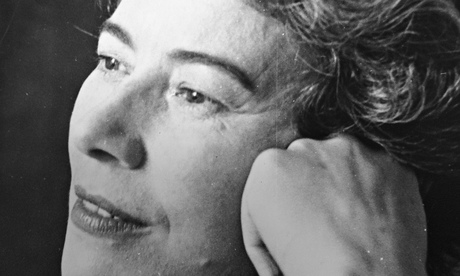
My second cousin, Joan Rimmer, who has died aged 96, was a pioneer of ethnomusicology who put on record songs and sounds that might otherwise have been lost. At the BBC, where she freelanced for 30 years, she initially made music manuals and records, including one with Spike Milligan. But by 1955, having become a self-taught expert on early and obscure musical instruments, she was presenting programmes on historical musicology including a programme on Chinese instruments with the strapline “A programme of uninhibited music from many lands, played on unusual instruments”. This epitomised her approach to her work and life – uninhibited and unusual.
Shortly after the second world war, when travel was still difficult, Bunty – as she was known – went to Asturias, Spain, to record music-making at shepherds’ festivals, which she made into a BBC programme. And in 1961 she restrung with brass wire a medieval Irish harp known as the Brian Boru harp, in Trinity College’s collection, so reviving a sound unheard for centuries.
In 1949 she married James McGillivray, then an oboist in the Royal Philharmonic Orchestra; they divorced in 1962. In 1965, in Los Angeles, she married Frank Harrison, a musicologist at Oxford.
In the 1960s, accompanying Frank on teaching sabbaticals in the US at Yale, Princeton and Stanford, where they began a 20-year friendship with Frank Zappa, Bunty spurred her husband’s interest in ethnomusicology by driving the two of them through the mountains of Mexico, Central and South America and making early tape to tape recordings of the music-making of indigenous people, especially during festivals and in various stages of trance and inebriation. Together they wrote on Spanish elements in Mayan music in the Chiapas, Mexico, which was typical of Bunty’s interest in tracing the diffusion of musical elements across time and space.
They later moved to the Netherlands, where Bunty researched folk music and dance in northern Europe, and returned to England in 1976.
Bunty was born in Battersea, south London, the daughter of Marion (nee Layzell), a bookkeeper, and Edmund Rimmer, a musician. When the house was bombed in the second world war, the family moved to Kensington, and Bunty won a junior scholarship to the Royal College of Music, where she later studied piano and flute, graduating from there and receiving the Hopkinson gold medal for piano.
Underscoring her broadcasting and academic work was a forensic approach that included understanding the context of early music making. Her renowned book on the Irish harp was republished repeatedly between 1965 and 1988 and continues to be cited.
Just as Bunty was a forerunner in the study of ethnomusicology, in her 70s she was breaking new ground in the study of historical dance by discovering the exhilarating rhythms of medieval dance. Her work was described by the National Early Music Association as “laying to rest for ever those tedious inventions so beloved of many exponents of early dance”. At 80 Bunty was still publishing articles.
Frank died in 1987. She is also survived by her cousins Janet, Julia, Naomi, Adrian, Benedict and Dominic.