When President Trump's military forces swept into Caracas on the morning of January 3, 2026, capturing Venezuelan President Nicolás Maduro and his wife in what officials codenamed Operation Absolute Resolve, few predicted that the aftermath would unfold quite like this.
Four days later, as the ramifications of one of the most consequential military operations in recent American history continued to ripple across the globe, late-night host Jimmy Kimmel seized on the moment to skewer the administration's framing of the mission. Yet beneath the comedy lay serious questions about American power, international law, and what comes next.
The operation itself was tactically extraordinary. Delta Force operatives, supported by over 150 aircraft from bases across the Western Hemisphere, struck multiple military targets in Caracas whilst special forces helicopters descended on Maduro's fortified compound at Fuerte Tiuna, Venezuela's largest military installation.
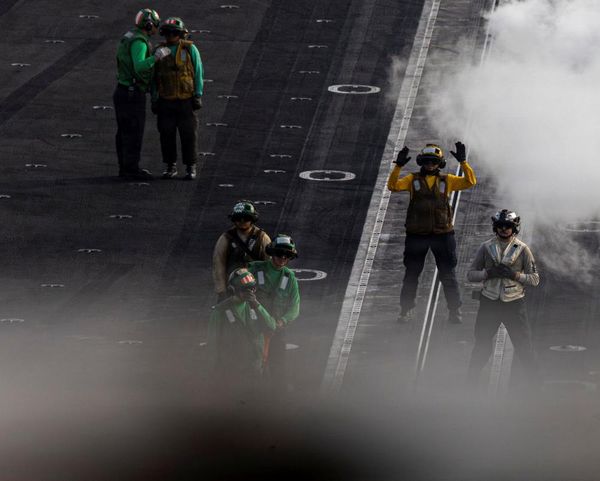
After months of buildup—with the USS Gerald R. Ford carrier group positioned in the Caribbean and the CIA cultivating sources inside the regime—the raid succeeded with minimal American casualties and no fatalities.
Maduro and his wife, Cilia Flores, were extracted and flown to New York, where they were held at the Metropolitan Detention Center in Brooklyn to face federal charges stemming from a decades-old indictment for narco-terrorism, cocaine trafficking, and working with gangs designated as terrorist organisations.
The Maduro Operation and Its Controversial Framing: Operation Absolute Resolve's Role in Global Concern
What distinguished Operation Absolute Resolve from routine military action, however, was not merely its success but its explicit agenda and the questions it raised about constitutional authority and international law.
President Trump announced in a Saturday press conference that the United States would temporarily 'run' Venezuela, manage its oil infrastructure, and tap its reserves—the world's largest proven deposits. This statement alone triggered immediate international alarm and domestic constitutional concerns.
By Thursday, January 7, when Jimmy Kimmel delivered his monologue on the American late-night stage, the operation had already become a flashpoint for geopolitical anxiety.
'This mission was called Operation Absolute Resolve, which is a title that was definitely generated by Chat GPT,' Kimmel joked, ridiculing the operation's military nomenclature whilst taking a wider swipe at the administration's decision-making.
He continued sardonically: 'President Trump said his New Year's resolution this year is peace on Earth, and that lasted for just under two days.'
Kimmel's humour reflected a deeper unease. The operation, whilst tactically brilliant, posed unprecedented legal and strategic questions. It was conducted without congressional authorisation, contrary to international law as codified in the UN Charter, and absent any clear long-term plan for governing Venezuela or transitioning it to a legitimate successor government.
Geopolitical Fallout and Expert Warnings: Operation Absolute Resolve Triggers Wider Concerns About International Stability
The concern was not merely constitutional. Professor Anthony Glees, a security and defence specialist from the University of Buckingham, issued stark warnings about the operation's global implications.
'Trump's given up on the Peace Prize. Today, he's Mars,' Glees told The Mirror, referencing the Roman god of war. 'And that's awful for all of us in Europe let alone South America. But Trump's colonial ambitions are as every serious person argues simply unacceptable and a green light to the world's bullies and a recipe for repression everywhere'.
Glees's concern centred on what he termed a 'definitive break' with the rules-based international order established after the Second World War by Presidents Roosevelt and Churchill. The traditional system, Glees argued, had prevented nuclear war since 1945 and allowed America to dominate global politics. Yet Operation Absolute Resolve appeared to discard these foundational principles.
'The same rules-based order that a US president, Roosevelt, established together with his British ally Churchill. This system, based on respect for sovereignty and lawfulness, has not only prevented a nuclear armageddon since 1945, but has also projected American power globally, allowing the USA to effectively win the Cold War and dominate world politics,' Glees explained.
'There's no going back,' he continued grimly. 'Trump has thrown it all away, and it'll take another 80 years to restore reason to world affairs, if ever'.
The international reaction was sharply divided. Whilst Israeli Prime Minister Benjamin Netanyahu lauded the operation as 'strong action,' and Republican senators praised American military excellence, other voices sounded alarms.
UN Secretary-General António Guterres called it 'a dangerous precedent,' while Democratic Senator Chuck Schumer warned, 'You don't treat lawlessness with other lawlessness.'
The Pope issued a statement expressing concern for Venezuelan sovereignty. China and Russia condemned the operation as a violation of international law. Cuba claimed 32 of its military personnel were killed in the operation.
The broader implication was crystalline: Trump had established a precedent for unilateral military action against neighbouring states without congressional approval, UN authorisation, or demonstrated immediate threat to American lives. And that precedent would not remain confined to Venezuela.
Within days, Trump was threatening military action against Colombia and renewed his long-standing ambitions regarding Greenland.
Kimmel's quip about Operation Absolute Resolve being 'generated by Chat GPT' was, in essence, a critique not merely of nomenclature but of an entire approach to governance and decision-making that seemed untethered to traditional constraints, democratic process, or international norms.