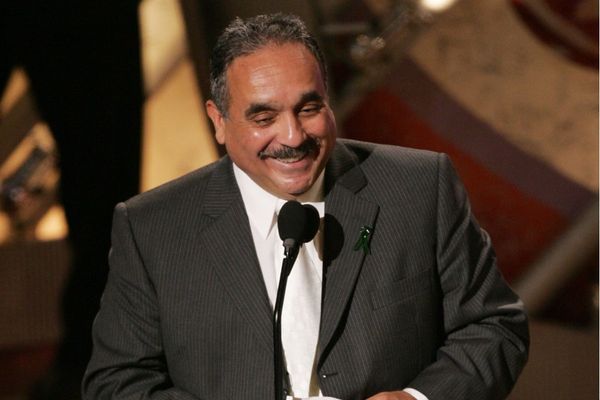
Seeing my old friend Paul Allott the other day reminded me of our time in Durban a good few years back. It was late after dinner and we went to the hotel bar. “Fancy a brandy, Walt?” he asked me. “OK Walt” (to explain, we both have Walter as a middle name). Between us we drank a whole bottle of Rémy Martin. Neither of us felt good the next morning. He told me he didn’t like brandy and was only drinking it because of me. I told him I didn’t like it either and was just drinking it to keep him happy. The point is collectively we made a decision neither would have made as individuals. A camel, they say, is a horse designed by a committee.
In the buildup to the Lord’s Test last week there was a bit of a selectorial hiatus involving, in particular, Jimmy Anderson, who had been sidelined with injury but was back practising with the team anyway despite not having been named in the squad of 12. The day before the match it was evident Trevor Bayliss, who is a selector, and Alastair Cook, who is not, were understandably keen to get Anderson into the England team, given his full-on performance in practice. The other selectors were not sold on it at all. The collective view of the four-man panel, led by the national selector James Whitaker, who chairs it, prevailed and Anderson did not play, turning out for Lancashire instead.
The fitness or otherwise of Anderson is not the main concern here (although several weeks previously he had told me the nature of the problem and was confident of being fully fit) but rather the selection process itself and spheres of influence within. The process is not fit for purpose so it is no surprise that Andrew Strauss, the ECB’s director of cricket, is considering its future.
In this case, it seems clear the majority of the selectors argued that on all the advice they were given, particularly medical, they foresaw a risk in adding him to the squad, which in effect would be putting him in the team. We have already given you a squad, Cook would have been told, and you must pick your 11 from that.
I have some sympathy for Whitaker here. His job is to choose and rubber-stamp a group of players after a consultation process and he did this. If he can then get overruled by the England captain there is little sense in his position existing and the captain and coach might as well pick the squad in the first place.
However, I do wonder whether it is time to reassess the selection process. The Durban bar is a flippant example of what can happen when more than one person is involved in making a decision. There is enough evidence, based on social experiments, to show the more people involved in making a decision, the less likely they are to arrive at something definite as opposed to a consensus. There are always trade-offs or disagreements. The fact Bayliss, a selector, clearly wanted Anderson and the other three – Whitaker, along with Angus Fraser and Mick Newell – did not illustrates this. Bayliss, presumably reluctantly, had to accept the majority verdict.
In a way, although Whitaker has the title of national selector and, in theory, as chief executive, ought to be completely accountable as a result, in practice he is merely the front for a group decision. This hardly seems right, particularly if he then has to publicly justify something of which he himself might disapprove but was voted down: maybe, for example, if he had wanted Anderson included and the other three did not. Putting on a united front is not the same as being accountable.
Today’s selection process is an anachronism. It relies on finding people with the time and financial security to tour the counties watching cricket and talking to coaches, players and umpires; cricket knowledge and observational and interpersonal skills, to be selectors. What we have is Whitaker, which is fine, and two directors of cricket at their respective counties (as was Ashley Giles, a previous selector) which, while their integrity is beyond reproach, is inappropriate (as a small example, the last England squad contained Jake Ball, from Newell’s Nottinghamshire, vying for a place with Toby Roland-Jones from Fraser’s Middlesex). Then there is Bayliss, whose knowledge of county cricket is anecdotal at best and slender anyway.
It needs to be streamlined. So here is how it should work. The coach and the captain decide their strategy for a given match, based on the information available to them. Then they tell the national selector precisely the sort of players they require and balance of the squad. It is out of their hands then. The national selector has an advisory panel, much as it is now but without executive power, who will supply him with detailed information. Finally, on the basis of all this, the national selector, and he alone, makes a decision on who should be in the squad. So no consensus, no trade-offs. The squad is then handed over to the coach and captain. Thus, the accountability is clear and a decision unequivocal. Black and white in other words, with no grey area. A national selector alone might have decided Anderson was not yet fit for purpose and in doing so he might have been right to listen to the medical staff and wrong not to listen to a vastly experienced bowler who knows his own body. But at least it would have been one man’s decision.