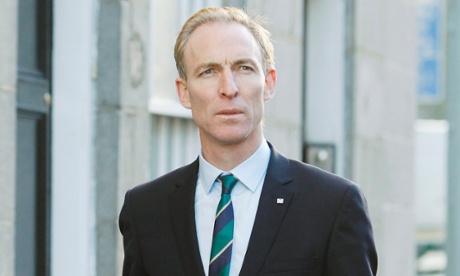
Reading in today’s Guardian that London Labour MPs and wannabe mayors had joined rabble-rousing forces with Boris Johnson to denounce their Scottish colleague, Jim Murphy, over shares of the proposed mansion tax gave me another uneasy feeling. To redress such polarisation, might we need electoral reform after all?
Murphy, who is Labour’s new leader in Scotland (and the first mayor league player the party has had there for a decade), had excited the election-minded Tory press in London by pointing out that Scotland’s share of the mansion tax – inside the UK – would finance 1,000 more NHS nurses in Scotland, where the health budget has been cut by Holyrood.
It’s a blindingly obvious point to make, assuming – as I don’t – that Labour would rapidly generate the promised £1.2bn from the tax if elected on 7 May. As Murphy explains today – speaking from oil-rich Aberdeen as it happens – resource-sharing is what happens every day in any state, though few such arrangements are quite as centralised as Britain’s became during the Thatcher era.
But the mansion tax is a special one because everyone knows that most of it will be raised in London and the south-east, more specifically five inner London boroughs – 20% of it from Kensington & Chelsea alone as against an estimated £15m in revenue from the whole of Scotland, where castles remain a bargain for Edinburgh investment bankers.
That doesn’t bother most people. Why should it, despite assorted downsiders much discussed by the upwardly mobile and entrepreneurial Brits rather than the footloose global super-rich who can afford such gnat bites? The politics are risky too, but Labour – always accused of timidity from the left – is prepared to risk it.
But there is also some high-risk geography in the mansion tax, as evident in the Boris-led cries of outrage at such a narrow frame target as Kensington & Chelsea.
Geography has always been tricky in the British Isles, sometimes at the top of the agenda – as in the war between the three kingdoms: England (and Wales), Scotland and Ireland in the mid-17th century, again in 20th century Ireland. It’s near the top now because of the Scottish National party surge, which took it to an unexpected (by the SNP) 45% share of the independence referendum on 18 September last year. David Cameron unwisely encouraged an English backlash, which we’re still dealing with.
Indeed it was a geographical tax – those on North Sea oil revenues – which gave the SNP impetus in the 1970s to move from the political fringe to centre stage: “ It’s Scotland’s oil,” was the cry, as human a cry as Mayor Boris’s similar bleats about all those taxes the City generates. As with oil – now trading at half last year’s price – the City has its downside (all those rescues we are reminded of by the Bank of England’s confessions today) and the wider tax economy steps in to balance things out.
But that’s not how many people see it in the over-sour mood of our times. On Twitter Ukip supporters, many of them more enthusiastic than expected, have been all over Murphy’s suggestion. “Labour has shot itself in the foot,” etc. This is the voice of self-styled “commonsense” English nationalism, neither leftwing nor rightwing in the opinion of its advocates, though actually rather rightwing. As in France where the National Front is actively courting disillusioned ex-François Hollande voters, the attractions of a closed economy transcend party lines. So does revulsion from it: Ukip is slipping in the polls.
So it’s another bit of centrifugal pressure at a time of considerable fragility for the still-United Kingdom. As Guardian numbers guru, Alberto Nardelli, pointed out here Britain now has what may be called a six-party system ( from Ukip to the Greens via the three main parties and assorted Celtic nationalists) in which support varies on geographical lines among others.
You may say it always did, since the north-south divide reflected the traditional Labour and Tory heartlands. But regional polarisation has been getting worse, as pollsters are now saying with regularity. Labour does worse in the south outside London, the Tories have been driven out of midland and northern cities they once dominated. It raises the prospect that, while no one is expected to win an overall Commons majority on 7 May, different parties will win regional ones.
This can’t be healthy. It was always a lurking problem, but it was masked by the old Lab-Con duopoly, now so eroded. The regional polarisation also seems to be growing: Ukip challenges the Tories in towns of eastern England where European migration is especially resented, Labour and the Nats will fight it out in Scotland and Wales, Ukip plans raiding parties on Labour heartland seats.
King’s College’s professor Vernon Bogdanor suggested this week that all this reflects a weakening of national blocks, based on occupations, class and industry, and its replacement by a “more fluid and individualistic society”, with fluctuating allegiances and less amenable to first-past-the-post (FPTP) politics. Bogdanor has long been a supporter of proportional representation (a version of PR voters rejected in the 2011 referendum), so that is his remedy for a new era with new needs.
Reading “Jim Murphy under fire from north London” makes even a diehard FPTP supporter like me – I mistrust constitutional panaceas as much as other kinds – wonder if he’s right and PR is the only way forward. Might it not cement rather than assuage regional differences? Not if all competing parties got a fair voice in the regional parliament.
Either way the implication of this is surely a federal Britain? Indeed Bogdanor, the veteran constitutional expert, used a Guardian column to repudiate David Cameron’s tentative remedy of “English MPs for English laws”. Another cerebral columnist, Timothy Garton Ash also demanded a coherent and logical answer to the constitutional question this week. Read it here.
His solution is a federal Britain too, ie English regional government between UK and city/local tiers. It would sit within a looser confederal Europe, by implication Britain in an outer ring beyond the eurozone, which will integrate further with or without the Greeks. Garton Ash cites no less an improbable figure than that arch-traditional Tory, Lord Salisbury (a former leader of the Lords) advocating another radical model: the Commons as the “English parliament” with defence, foreign policy and the budget reserved to an elected all-UK upper house where the prime minister would sit.
This is high-risk stuff and Murphy’s Nurses could prove even more potent than Tam Dalyell’s more abstract West Lothian question – why should West Lothian’s Scottish MP vote on issues affecting West Brom but not vice versa? – a generation ago. It also serves to remind everyone that Cameron’s current answer, like Nigel Farage’s simplistic Brexit elixir, is inadequate, but more appealing than Labour vagueness.
Will the promise of a constitutional convention shift many votes, Ed?