Jim Chalmers says this week’s federal budget will be Labor’s most ambitious yet, helping manage disruption from the war in Iran and improving intergenerational equity in Australia.
The long sell for the treasurer’s fifth budget package means we know a lot of what to expect on Tuesday night.
Here’s a summary so far:
Broken promises
Labor is preparing to make changes to negative gearing and the 50% capital gains tax discount for property investors, despite the prime minister, Anthony Albanese, repeatedly denying Labor would change the rules during the 2025 election campaign.
Negative gearing rules could be limited to newly built properties and the capital gains tax discount wound back for future transactions. The moves are designed to rebalance the property market away from investors and towards first home buyers.
Albanese was challenged over broken election promises on Monday.
“If we do change our position on any policy, we will explain why it is that that is occurring,” he said.
“We know people are under pressure. And the easy path is to say, ‘Oh, well, we’ll just sit back and watch that occur.’ The difficult decision but the right decision is to do the right thing with the right policies to deliver.”
Tax
Less generous rules for trusts are also expected, due to raise about $2bn a year. This is another change Labor ruled out before the last election.
A tax rebate for working Australians is also expected and the government will make the $20,000 instant asset write-off for small business permanent.
Defence
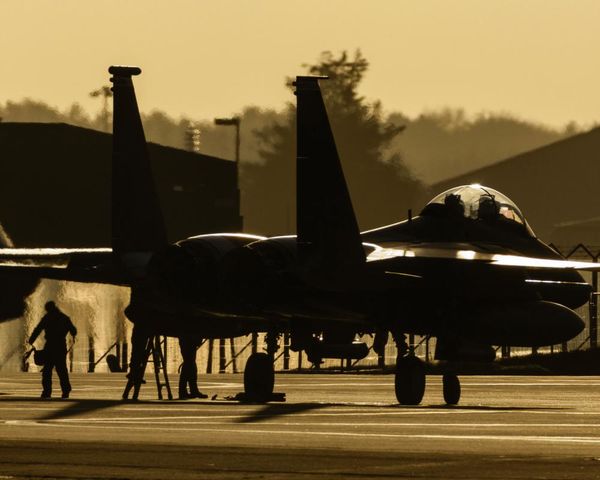
Labor will spend an extra $53bn on defence over the next decade, including $14bn more over the next four years. Australia is under pressure from the Trump administration to lift defence spending and has used the new national defence strategy to increase spending on drones and projects associated with the Aukus nuclear submarine plan.
Another $74m will be spent over two years to establish a new national centre to fight terrorism and online threats.
NDIS
Currently on track to cost more than $70bn by the end of the decade, the government is dramatically reducing growth in the national disability insurance scheme. About 160,000 people will be removed and the growth rate brought down from more than 10% to about 2% per year.
Labor also wound back some of its aged care reforms and said Australians aged over 65 will have to pay about $240 more a year from changes to the Medicare levy.
Public service
Cuts to federal department budgets are expected, with planned spending redirected to new priorities and more than $2bn in further savings made from spending on consultants and outsourcing. Redundancies are already being rolled out.
Chalmers and the finance minister, Katy Gallagher, said savings and “reprioritisations” in the budget would be worth a combined $64bn. But it is unclear how much of these savings will be banked, as opposed to being spent elsewhere in the budget.
Fuel
Labor is spending $2.55bn to cut the fuel excise and heavy road user charge for three months, a cost-of-living measure to help households and businesses hit by the global energy shock.
Sign up for the Breaking News Australia emailA new $10bn fuel security package will increase the national stockpiles to 50 days, create extra storage facilities and consider how to expand refinery capability.
Housing
An additional $2bn will be spent on enabling infrastructure for housing developments around the country, including water and sewerage pipes, helping deliver an estimated 65,000 new homes over the decade.
Labor is under pressure on its promise to build 1.2m new homes by 2029 and has already spent $4bn on housing infrastructure.
Productivity
Changes to make it quicker to recognise the skills of migrant workers are part of a big package of productivity-boosting measures designed to grow the economy by $13bn per year.
CSIRO
The national scientific agency will receive an extra $387.4m in funding but says it will still persist with plans to cut up to 350 jobs.
Infrastructure
Labor will contribute nearly $4bn extra on Melbourne’s Suburban Rail Loop project, bringing total federal funding to more than $6bn.
The controversial and costly 90km public transport project is designed to tie together Melbourne’s public transport network between Cheltenham and Werribee.
Inland rail, the massive Morrison-era project championed by the Nationals, will be scaled back, abandoning plans to connect country New South Wales and Queensland by rail as the price tag blows out to more than $45bn.
The federal government will spend $50m to upgrade the Canberra to Sydney rail line, with the ACT and NSW governments each promising $25m. The upgrades are aimed at getting journeys on the ageing line to less than four hours.
Electric vehicles
Labor has opted to retain the EV fringe benefits tax discount in full for another year but has announced changes to the scheme as Australians rush to buy petrol-free models. The current policy is being extended until the end of March 2027, with the full FBT discount then only applying to vehicles costing under $75,000 until the start of April 2029.
Environment laws
The budget will include $500m for speed up approvals for housing, energy and critical minerals projects, part of last year’s reform of the Environment Protection and Biodiversity Conservation Act.
The bottom line
The budget forecasts will show higher inflation and unemployment due to the war in Iran. Growth will be slower than expected over the coming four years.