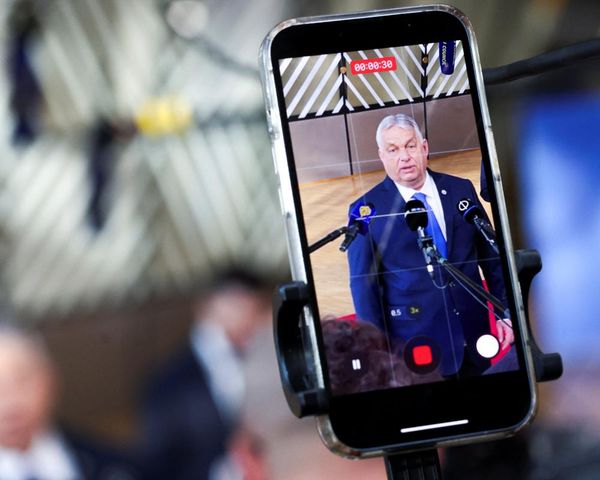
Nov. 13--A U.S. drone strike targeted the knife-wielding Islamic State militant known as "Jihadi John," who came to personify the brutality of the extremist group by appearing in several gruesome beheading videos.
Mohammed Emwazi, a 27-year-old university-educated British citizen seen in videos wearing a black balaclava and speaking in British-accented English, was believed to be hit Thursday while in a vehicle with another militant inside the Islamic State stronghold of Raqqah, Syria, U.S. officials said.
"We are assessing the results of tonight's operation and will provide additional information as, and where, appropriate," Pentagon spokesman Peter Cook said in a statement.
See the most-read stories this hour >>
Appearing outside 10 Downing Street, British Prime Minister David Cameron said Friday morning that it was not yet clear whether Emwazi had been killed but that Britain had been working "hand in glove" with the U.S. to hunt down and target the militant."We have been working with the United States literally around the clock to track him down," he said. "This was a combined effort, and the contribution of both our countries was essential. Emwazi is a barbaric murderer."A U.S. military official, who was not authorized to speak publicly on the operation, said the Pentagon is "reasonably certain" that Emwazi was killed in the strike.
Western officials allege that in August 2014 Emwazi began appearing in the videos showing the murders of U.S. journalists James Foley and Steven Sotloff, U.S. aid worker Abdul-Rahman Kassig, British aid workers David Haines and Alan Henning, Japanese journalist Kenji Goto, and a number of other hostages.
As a high-profile figure, Emwazi's death would represent a symbolic boost for the U.S.-led military campaign against the Islamic State, which has been at a stalemate in Iraq and Syria for more than a year. But even if he was killed, it is unlikely to have any strategic effect on the battlefield.
Emwazi is not known to be a militant commander; rather he's one of four of Islamic State captors that kept kidnapped foreign hostages. They were dubbed "the Beatles" because of their British accents, which is how Emwazi picked up the moniker "John."
He had been on the radar of British intelligence officials since at least 2009, five years before he is believed to have appeared in videos as the masked executioner of American and British hostages.
Before becoming the menacing figure featured in the beheading videos, Emwazi was born in Kuwait and grew up in west London as a soccer-loving schoolboy who earned a computer programming degree at the University of Westminster.
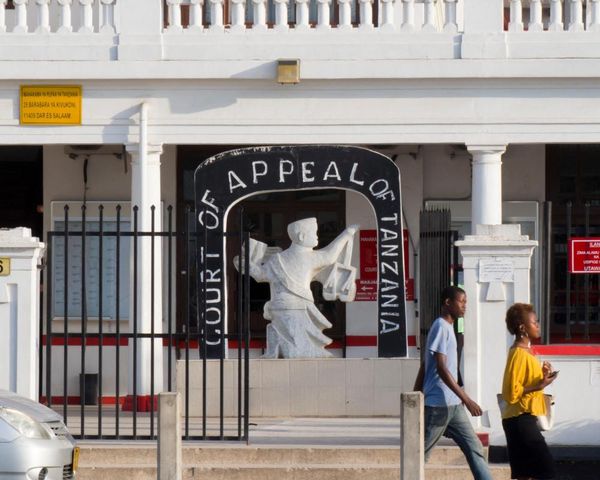
His transformation appears to have begun in the summer of 2009 when he was detained in Tanzania on what he said was a vacation with two friends.
Asim Qureshi, who worked with Emwazi as research director for CAGE, a London-based advocacy organization with an Islamic focus, told reporters in February that Emwazi was suspected of attempting to join the Somali militant group Shabab.
Qureshi said Emwazi was repeatedly questioned by British security officers, who on one occasion, he alleged, threw Emwazi against a wall, grabbed at his beard and choked him. Emwazi was ultimately sent back to Britain.
The attention of the British authorities later prevented Emwazi from moving to Kuwait, where he said he had a job waiting, and cost him two fiancees, Qureshi said.
Court documents obtained by the BBC suggested that Emwazi may already have been associating with suspected radicals at the time. The documents filed in 2011 allege that Emwazi was part of a group known as the North London Boys, which had been funneling equipment, funds and fighters to the Shabab.
In what Qureshi described as a final desperate attempt to get back to Kuwait, Emwazi legally changed his name in 2013 to Mohammed al-Ayan and bought another ticket. He was again barred from traveling and was questioned by security services.
How Emwazi was later able to travel to Syria around that time remains unclear. "Jihadi John" first appeared in a video showing the beheading of Foley, the American journalist, in August 2014.
Investigators interviewed former hostages and used voice analysis to help identify the man in the beheading videos as Emwazi.
ALSO:
Aung San Suu Kyi's party wins a historic majority in Myanmar parliament
In India, Mumbai's mountains of imported coal pose health hazard
Seven years on, deeper U.S. commitment to Asia eludes Obama





.jpg?w=600)