The Royal Bangkok Symphony Orchestra under the Royal Patronage of Her Royal Highness Princess Sirivannavari Nariratana has recently focused on a number of Russian works. For its next concert in the Main Hall of the Thailand Cultural Centre on 29 March, it returns to that country with a concert featuring three popular classics from the Russian canon. The concert is dedicated to His Majesty King Maha Vajiralongkorn Bodindradebayavarangkun.
Mikhail Glinka, Sergei Prokofiev and Pyotr Ilych Tchaikovsky each mark different eras of Russian music. They were also three very different personalities. All died relatively young.
The programme opens with one of the most melodic of all overtures. Born in 1804, Glinka was a sickly child. In his mid-20s he was sent to Italy and spent several years travelling continental Europe, absorbing the works of composers and local folk music. He eventually returned to St Petersburg, where he essentially became the father of Russian music.
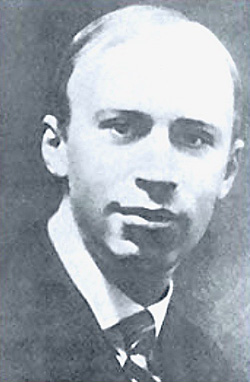
Sergei Prokofiev.
Glinka was the first Russian composer to gain renown within his own country. The second of his two operas, Russlan And Ludmilla, written in 1842, was not especially popular when first performed, only entering the standard repertoire of many companies after his death, aged 53.
In the concert hall, though, the opera's exuberant overture has become a regular concert prelude. Its toe-tapping melodies are now bread and butter for orchestras worldwide. Near its end, listen carefully for the first-ever use in opera of a descending six-note whole tone scale played four times -- by the basses, the woodwinds and then the trombones. The contrast with the much more usual seven-note scale, comprising five tones and two semitones, is striking.
Sergei Prokofiev's Third Piano Concerto, which follows, has become one of the most performed concertos written in the last century. A giant of 20th century music, Prokofiev started working on the concerto in 1917, eventually completing it in 1921.
The composer himself gave the first performance of the work, not in his native St Petersburg, but in the US with the Chicago Symphony Orchestra. After the Russian Revolution, Prokofiev left the new Soviet Union, spending time in the US and Germany, before settling down in Paris. But the pull of Russia never left him. He finally returned to live in Moscow in 1936.
Eleven years after its first performance, Prokofiev made his first gramophone record in 1932, as soloist on the Third Concerto. The recording was made at the famous Abbey Road Studios. (That fame derives less from the huge number of classical recordings made there over the decades, and more from The Beatles who recorded there and named one of their albums after the studio.)
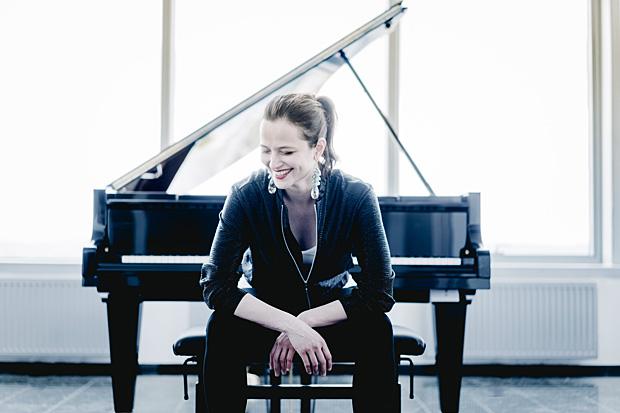
Although she will be making her debut with the RBSO for the Third Concerto, Bulgarian pianist Dora Deliyska is far from an unknown in Bangkok. For several years she has taken part in the city's Bösendorfer Festival.
After studying piano in her native country, she moved to the University of Music and the Performing Arts in Vienna, graduating with a Master's degree in 2010. In demand as a concert pianist throughout Europe, she is especially acclaimed for her virtuoso performances of works by composer Franz Liszt, who features on the first of her many recordings.
With a wide-ranging repertoire from Bach to Ligeti, how does Deliyska go about learning a new piece?
"I approach a piece through the scores," she says. "It is very important not to listen to different recordings, even though I admire all the pianists who have recorded already these pieces. I think it is very important to start by trying to understand what the composer wanted when he was composing the piece."
Tchaikovsky unquestionably had the most complex personality and most troubled life of the three composers. This was a man who dominated the world of Russian music during the second half of the 19th century, writing some of the greatest melodies known today and remaining one of the world's most popular composers.
Despite creating some of the most beautiful music in history, he was a deeply unhappy man. At the age of 12, his military father sent him 1,300km away from the family home in Votkinsk to study in St Petersburg. The separation from his mother resulted in an emotional trauma that lasted his whole life.
He also struggled throughout his life to accept his homosexuality. At the age of 37, he tried to settle down by marrying one of his former students, Antonina Millukova. For Tchaikovsky, it was a psychological and sexual disaster. The couple separated after only two-and-a-half months.
Yet, it was another woman who helped stabilise his emotions and see him through the rest of his career. Nadezhda von Meck, the wealthy widow of a railway magnate, became both a close friend and his patron. With financial worries banished, he was finally able to focus entirely on composition.
The concert concludes with Tchaikovsky's mighty Sixth Symphony. Its subtitle, the Pathétique, is often wrongly translated as "morose"; in Russian, the term is more akin to "passionate" or "emotional". Apart from its boisterous rousing Third Movement march, many listeners feel, with its abundance of hauntingly beautiful melodies, this is one of Tchaikovsky's most deeply personal works.
Some have even suggested it is essentially Tchaikovsky's last will and testament. Nine days after he conducted its premiere in St Petersburg, he died at the same age as Glinka -- just 53. His death was attributed to cholera as a result of drinking unboiled water.
Yet conspiracy theorists quickly tied the Sixth Symphony to this early death, ascribing it to suicide. The final movement of most symphonies written up to that point most often end on a rousing, positive note. But the tempo marking for the Pathétique's fourth movement is adagio lamentoso, literally meaning "slow and mournful".
The truth about the death of this most popular of composers is unlikely ever to be known. Equally, we can only speculate if in writing the Pathétique, Tchaikovsky had a premonition of the fate about to befall him. All we can do is marvel at and enjoy the magnificence of his compositions.
Conducted by RBSO music director Michel Tilkin, the concert will be held on March 29 at 8pm at Thailand Cultural Centre. Tickets are 400 to 2,000 baht, available at http://thaiticketmajor.com.