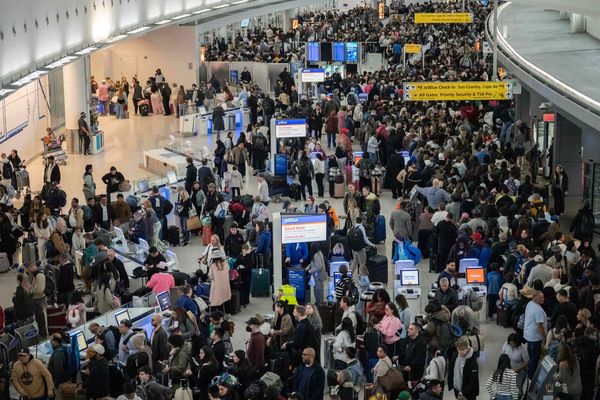
A jet fuel shortage at Melbourne airport is expected to ease, with supplies resuming from the affected fuel terminals.
Qantas and Virgin Australia said their flight schedules were unaffected on Saturday, after fuel restrictions were put in place on Thursday night for flights leaving Melbourne airport.
The situation led to delays for airline passengers as some international flights were forced to make refuelling stops at other Australian cities.
ExxonMobil, which manages the fuel supply at the airport on behalf of all suppliers, said the issue arose after disruptions to jet fuel deliveries from terminals across Melbourne in recent weeks.
While the issue has still not yet been resolved, supplies were starting to move back to normal.
“Supply has started to resume from some of the impacted terminals which may help bolster supply at the airport and soon alleviate the need for customer allocations,” the company said in a statement.
The shortage had sent thousands of travel plans into chaos and planes had been delayed across the network.
Airlines on domestic and short-haul international routes have been tankering fuel, and planes have been taking a considerably larger load of fuel into Melbourne so only a small top-up is required before they depart the airport.
Melbourne airport said the shortage was due to “upstream supply issues” and the state energy minister, Lily D’Ambrosio, had blamed the poor quality of the fuel being delivered to the airport.
The fuel rationing has raised questions about the vulnerability of Australia’s fuel supply, which is heavily dependent on imports after the closure of several refineries. Two fuel shortages prompted rationing at the airport in 2015.
The number of refineries operating across the country has fallen from seven to four over the past decade as Australian refineries faced competition from direct fuel imports from lower-cost operations across Asia. Australia sources 85% of its refined fuel from Asia according to the Australian Institute of Petroleum.
The board of Airline Representatives of Australia blamed the lack of urgency to increase the capacity of the fuel supply chain from refineries and seaports through to the aircraft at the airport.
“You need some headroom and some redundancy in the system to handle unforeseen or unplanned events,” executive director Barry Abrams said on Friday.
“Unfortunately, as demand has grown so close to supply, we don’t have that level of redundancy that we need.”
• Australian Associated Press contributed to this report