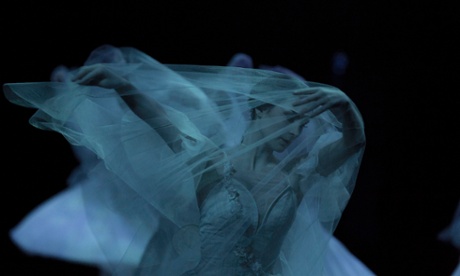
For Jessica Fyfe, it’s a dream come true. The Australian Ballet coryphée has been awarded the Walter Bourke prize, which will see her dancing with the Stuttgart Ballet and the English National Ballet in 2015 and 2016.
Brisbane-born Fyfe joined the company in 2010 as a member of the corps de ballet and danced the role of Olga in John Cranko’s Onegin in 2012, in Graeme Murphy’s The Narrative of Nothing in 2012 and appeared as Clara in The Nutcracker in 2014. She discusses the search for perfection, grimacing through the lactic acid and the perennial pink thread problem.
Congratulations on winning the Walter Bourke prize. How do you feel about it?
I still can’t believe that it’s happening and that it’s me. It’s pretty much a dream come true to be performing with the Australian Ballet, and then to be given this prize to dance with companies I would have wanted to experience without having that risk of having to leave somewhere that I love – it’s the best of both worlds.
What will you be doing?
In Stuttgart I’ll be taking class every day, doing rehearsals, getting coaching on certain things if they have the time, but I might not get to perform. With the English National Ballet, because I am there for a longer time over their busy Christmas period, I’ll definitely be used and Tamara Rojo can’t wait to have an extra girl.
Which ballets have you seen from each of those companies?
I saw Stuttgart Ballet do Don Quixote on New Year’s Eve and we’ve had a few guest artists from Stuttgart visit us. I haven’t seen English National Ballet perform live, but last year [ballerina] Alina Cojocaru, who is my idol, did Manon with us. I can’t wait to work next to her at the barre.
Which dancers do you enjoy to watch?
I love watching Madeleine Eastoe and I’m still in denial that she’s retiring. She does everything beautifully but [I love watching her as] Odette in Graeme Murphy’s Swan Lake.
There are great male dancers at the Australian Ballet. Who do you enjoy dancing with?
I loved dancing with Daniel Gaudiello when I did Clara [in The Nutcracker] last year. We only had about two rehearsals on the pas de deux and then we were thrown on for the dress rehearsal that night. We fitted together well; it’s really good to work with someone when it’s really natural.
What makes a great dancer?
Honesty. In their dancing, acting and their technique. You can’t cheat anything if you’re honest. You can’t fake being honest if you are going to turn your leg in to get your leg higher in a step. A real dancer is humble, honest, hard working and passionate about what they do.
Any environment that is physical would have some competitiveness. How do you deal with it?
It is an elite athletes’ sport so there’s that component of competing against each other, but ballet is an art form as well. There can never be someone who is better or best – it’s a very personal opinion. When I was young, my mum and dad were very against [me being a dancer] because they said, ‘It’s such a hard life; it’s lonely and very competitive,’ because none of them dance. But I really wanted to do it and my mum said, ‘You’re only as good as you were the last time you danced; you can only be better than yourself.’ So we’re all adults, we’re all professionals and we’re all very happy when people get promoted or when someone gets to debut in a role. As much as you want to reach your goals, it doesn’t come at the price of others.
Which part of the training do you love and which do you loathe?
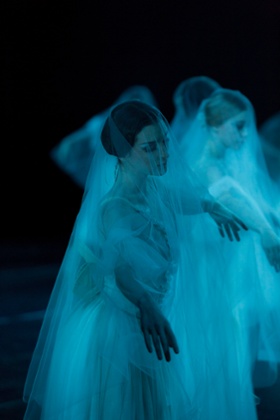
I love centre class, but I have always loathed barre. You are stuck in the same position, you can’t move anywhere, you are attached to this barre. But you can’t do the centre work until you’ve done barre. And stands. When you’re in Swan Lake or Giselle in the corps de ballet, you stand on the side for 10 minutes not moving, and that is harder than the dancing.
Why?
Before you hold that position, you’ve been jumping around, so you’ve got all this lactic acid building up and your legs start to cramp. If you move, you get a note about it, so if you ask any corps de ballet dancer, they will all say the worst part is standing on the side. It looks like the easiest part but it’s the one that we’re like aaargh, we’re cramping.
Have there been any costume change dramas behind the scenes?
There have been many costume dramas behind the scenes and on stage. Long skirts get tripped on all the time or you put your pointe shoe through a net of tulle and it winds around your leg. There have been a few things but usually, surprisingly, it goes pretty smoothly. We’ll be really stressed at the first show, as we’ll have a minute and 17 seconds to change, but by the end of the season, we’re having chats, getting a bottle of water. You get really quick because you’re doing it over and over.
You’re one of the dancers featured in a video looking how ballerinas prep their pointe shoes. What’s your routine?
I have a thick elastic at the back of my heel and I have my ribbons that are sewn all the way to the sole to hold the shoe to my arch, where my foot bends. I have quite bendy feet which is great for ballet, so that gives me feedback when I’m on pointe if my feet are going to go too far over my shoe. I’m always sewing, on my day off, or in rehearsal. My boyfriend rips me off about it, that there’s pink thread left all over the house all the time.
Will you continue to modify what you do?
You’re always working out the latest tricks. A guest dancer will come in and she might have two crossed elastics at the bottom of the shoe and you’ll think that looks really good, I’ll try that, and then it completely won’t work for you or it will. You’re always fiddling around with it, searching for perfection
That must be your life motto?
Yes, to a point. You’ll go crazy because perfection really doesn’t exist and that’s why each dancer is beautiful in their own way, but there is that sense of always wanting to be better.
Jessica Fyfe will appear in Giselle at Sydney Opera House from 2 to 22 April, then in The Dream in Sydney, Melbourne and Adelaide