That’s all from us today. We’ll be back tomorrow with live coverage of the second day at the Nuffield Trust Health Policy Summit where speakers include Sara Riggare, a patient activist in Sweden; Chris Ham, chief executive of the King’s Fund; and Roy Lilley, healthcare commentator.
The role of the patient is an important one, Hunt goes on to say.
I think patients are ready to take on the challenge. We need to give them the chance to sit in the driving seat – they are absolutely up for that challenge ... We can’t solve this on our own.
He says technology can also help and that it has changed the way we lead our lives in other areas, so why not healthcare?
He labels the new proposals in Manchester “really exciting” and says that it is one of the most interesting steps forward anywhere in the country. He says that every clinical commissioning group will be reporting on their progress using the same set of metrics that matter to patients everywhere.
He ends by saying that there is now less political involvement in the NHS and that any reconfigurations should be clinically led.
Updated
Culture change in the NHS is essential, says Hunt.
If you don’t get culture right, all those other things won’t have the impact we need them to have.
He cites the second Robert Francis review on whistleblowing that was recently published. He says that the UK is going to be the first country in the world to focus minds on the safety agenda.
He goes on to cite the example of the airline industry where they have managed to change the culture. Over the last 30 years the number of deaths across the world has halved from 692 while air travel has increased nine times. This was because mistakes were depersonalised and the pilot was made to be part of the solution.
He adds:
We need to change the cultural relationship between doctors and patients from master and servant to partners. What we don’t do is send the right signals down to doctors to encourage them to take as much interest in this as possible. We have to become better at measuring outcomes. When we start doing that, we’ll start to see much more interest in the system.
Hunt continues by talking about the need for new models of care and transforming out of hospital community care. He brings up the £200m that is being used to fund pioneer sites.
He adds:
The vision of the forward view was not that it would balkanise the NHS. We will continue to have national policies and measurements, and hold every area to account.
He continues that the vision of integrated care will be based around the person, and that it will be different in different parts of the country.
Because we will be the first country that is going to try and transform care, we are right not to prescribe how we do it. What we will be prescribing is what we expect to see in terms of standards. That is a good way we can harness the national vision of the NHS.
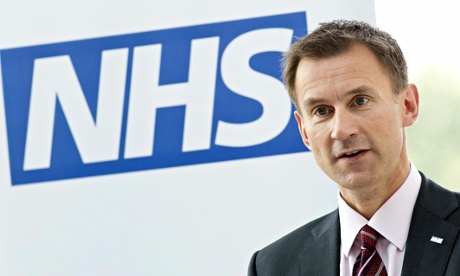
Jeremy Hunt begins by reiterating his support for the Five Year Forward View. He says a strong NHS needs a strong economy and highlights the £2bn extra budget that “is not enough but an encouraging start.” He says that conversations are ongoing as to the need for extra resources and what government can realistically be expected to deliver.
In a panel session on how providers can accelerate improvements following the Five Year Forward View, Suzie Bailey, development director at Monitor, Samantha Jones, director for new models of care at NHS England and Hugh McCaughey, chief executive of south eastern health and social care trust in Northern Ireland, agreed that leaders at the top need to go outside their organisation and see what others are doing. They should be scanning the rest of the country and the world as the NHS tends to resemble a silo at times. The panel also said that patients should be included as part of the improvement team and that top leaders could help in doing this.
In order to enact improvements, the national bodies must work together to ensure a consistent message.
In a question and answer session, Simon Stevens said:
- Care needs to be more anticipatory rather than reactive – and, big data can help
- There are different ways of supporting improvement and different parts of the country should be able to chart a destiny.
- Clinical commissioning has made GPs feel more engaged than was the case previously but the rate of change has got to accelerate.
- There need to be more permanent posts in nursing.
- It is difficult to navigate care options for the public. NHS 111 is not the serving the public or the NHS well.
- Time is against the health service. Providers have to be helped to deal with their costs. It is the responsibility of all leaders to manage health within the resources they have.
Updated
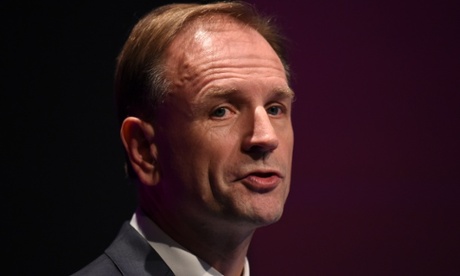
Simon Stevens, chief executive of NHS England, praises the health service and the staff who he says “have done incredibly well” to maintain standards. But, he says the pressures on the NHS are real and “there are a set of things we are going to have to get right for providers. We have to kick off a fundamental service redesign.”
Updated
In a breakout session on technology innovation for supporting patients at home, Dr Geraldine Strathdee, national clinical director for mental health for NHS England, starts by saying:
If we don’t get mental health right then the whole idea of homecare is semi delusional.
She points out that mental health is an umbrella term for 16 pathways including eating disorders, perinatal depression anxiety, autistic spectrum conditions and ADHD.
One third of daily consultations in primary care present with a mental health problem; depression and anxiety are common, as are people with eating disorders who all go to their GP first. Sixty per cent of four-hour waiting hour target breaches are mental health patients which staff are not trained to treat. Forty per cent of patients on acute wards are admitted with mental health problems and 80% of people in pain clinics have mental health problems. Forty per cent of people with cardiovascular diseases and diabetes who are unable to keep up with their medication will have a mental health problem.
She says that if people are to be cared for at home, they need to have information to understand their condition better, a choice of treatments and they need to know where to go for treatment.
We need to use the digital world to help people access the information they need to be in control. We have to be able to do the basics by Skype. If we’re serious about out of hospital care, we need to go through a week in the life of someone who wants to live at home but for whom we are failing to do the basics in digital technology.
On the topic of funding the health service, Philip Hunt says that post election there will have to be a spending review looking at different priorities.
We are committed to dealing with a deficit. We’ve made a start with our time to care fund. We need up front investment and that is the £2.5bn fund we’ve identified.
He labels the challenge “formidable” but says it needs to be done through system efficiencies. He says integration will lead to some savings and highlights procurement as an area that can drive further savings.
He says it is “very unlikely” that there will be a ringfenced social care budget. On the topic of integration he says that authorities are more likely to get local authority buy in if they are given more influence.
He continues that health and wellbeing boards have made a slow start and that this is not surpirsing. He says:
The way to get them effective is to make them accountable.
He continues by saying that the Oldham commission sets out what Labour wants to achieve on person centred care with one service dealing with all aspects of care. He says the path to integration will be a 10 year journey and will embrace existing bodies rather than re-organising NHS structures. He emphasises the importance of working out needs on a local level and not imposing one model on everyone.
He ends by saying that the Five Year Forward View stated that a tax funded NHS is sustainable long term. He says that Labour endorses this and that whole person care is the way to ensure it.
Lord Philip Hunt, shadow health minister and labour deputy leader in the House of Lords, takes the stage to talk about the Labour party’s vision for the NHS and social care. He says the current system does not encourage the integration of health and social care.
The Nuffield Trust is live streaming all the sessions at the summit.
In advance of the summit, Guardian journalist David Brindle interviewed Nigel Edwards, chief executive of the Nuffield Trust. On the topic of the NHS Five Year Forward View, Edwards said:
The NHS is very good at writing bids, it’s fantastic at it. But execution has always been a problem. It’s like eight-year-olds playing football: everyone chases the ball.”
Morris goes on to list the challenges surrounding big data:
- The need to integrate patient records
- The UK is not as digitally mature as it should be
- Gaining and maintaining public trust
Morris goes on to list the advantages of big data to healthcare. He says data can revolutionise the clinical trial business and has already done so over the last two years.
It can also inform policy. Regarding smoking legislation in Scotland, data has shown that before the ban, there was a 5.2% increase per annum of smokers whereas after the ban there was an 18.2% decrease per annum.
He continues:
Data allows us to defragment. The NHS is a silo health system that we can try to defragment using information.
He asks: “Why are health systems unsustainable?” and points out that in Scotland, more people have two or more chronic diseases than one and this presents a challenge. He adds that public finances are also a challenge. He says:
We need to embrace data.
Prof Andrew Morris, professor of medicine at the University of Edinburgh, starts his talk on the impact of big data on the future of healthcare by saying that “healthcare is the last major industry not to be transformed by the digital age.”
Updated
You can follow the summit on Twitter by following #ntsummit
Good morning and welcome to our live coverage from the Nuffield Trust Health Policy Summit.
Today sees Jeremy Hunt talking about the challenges facing the NHS and Simon Stevens addressing an audience of senior healthcare leaders.
Jeremy Hunt, the health secretary, is due to speak at 4.05; and Simon Stevens, the NHS chief executive, will address delegates at 1.55.