Samuel Barton began his journey from the Marshall Islands to the corridors of power in Canberra by enraging a schoolteacher.
As a student on the island nation, he gave a speech in class about the legacy of US nuclear tests in the region, in front of his then-teacher, an American, and his wife.
"The wife was visibly upset, you could see the frown on her face," he told AAP.
"I went to their office and the wife was telling me all sorts of stuff: 'Why did you say that about the Americans? Why did you do that speech?'"
The Marshall Islands were where the US conducted the first peace-time nuclear test, on Bikini Atoll.
But that historic event was absent from Mr Barton's American-led education.
"I didn't see one page (in the textbook) that specifically talks about nuclear legacy in the Marshalls," the local student association president said.
Bikini Atoll's residents were forcibly relocated prior to the tests and told the mushroom clouds were "God's will", Mr Barton added.
Islander women later reported giving birth to "jellyfish babies", infants whose contorted bodies were so transparent their organs were visible.
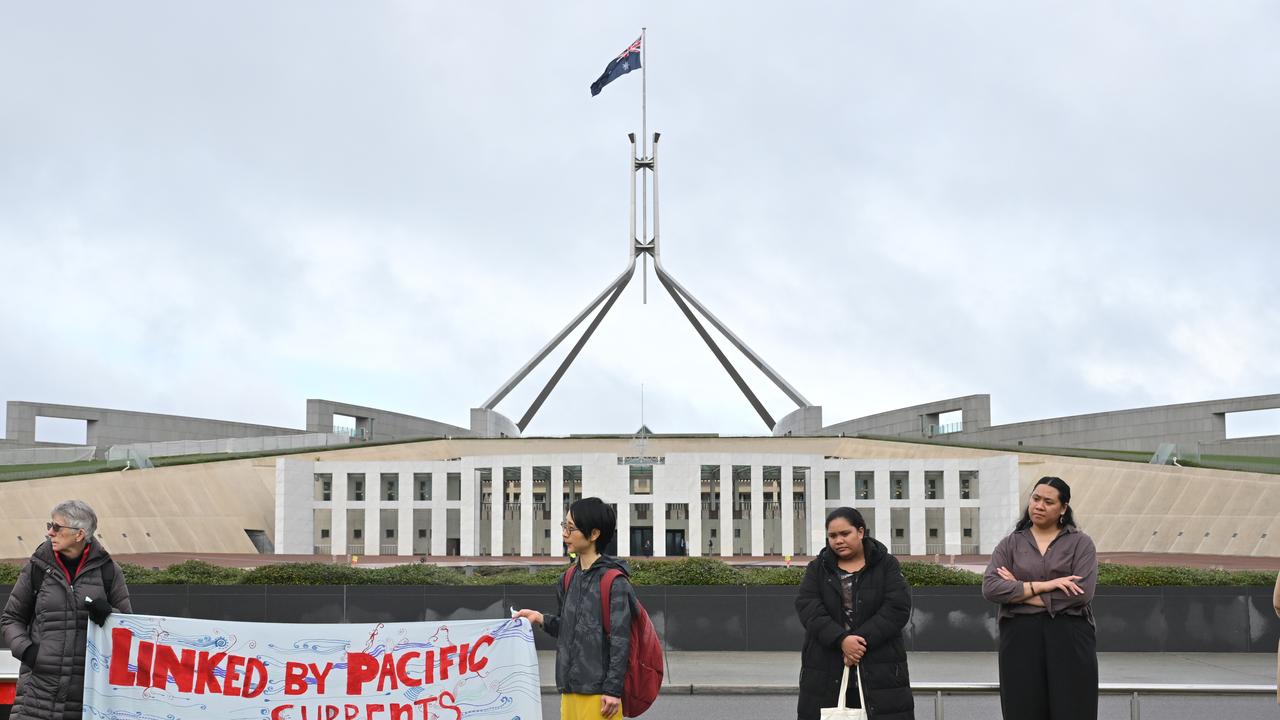
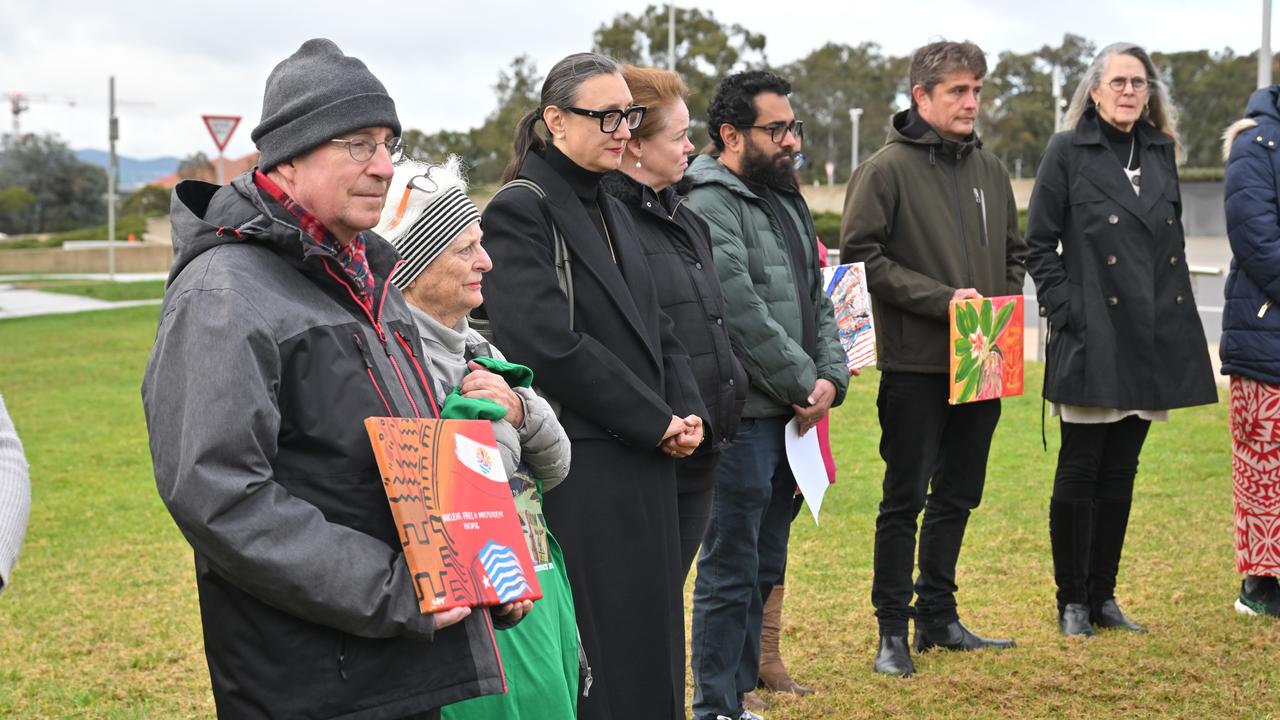
On Wednesday, the 80th anniversary of the first nuclear tests on the atoll, Mr Barton is in Australia with the Pacific Peace Pilgrimage calling on the federal government to sign a treaty prohibiting nuclear weapons.
Labor unanimously agreed to sign and ratify the treaty in its party platform in 2018, but is yet to do so.
Since coming to power, the party has been hedging its commitment over a range of concerns, including that it was yet to be signed by any states that held nuclear weapons.
Defence Minister Richard Marles told Question Time the government wanted to ensure the ban could be enforced and that it didn't clash with existing disarmament treaties.
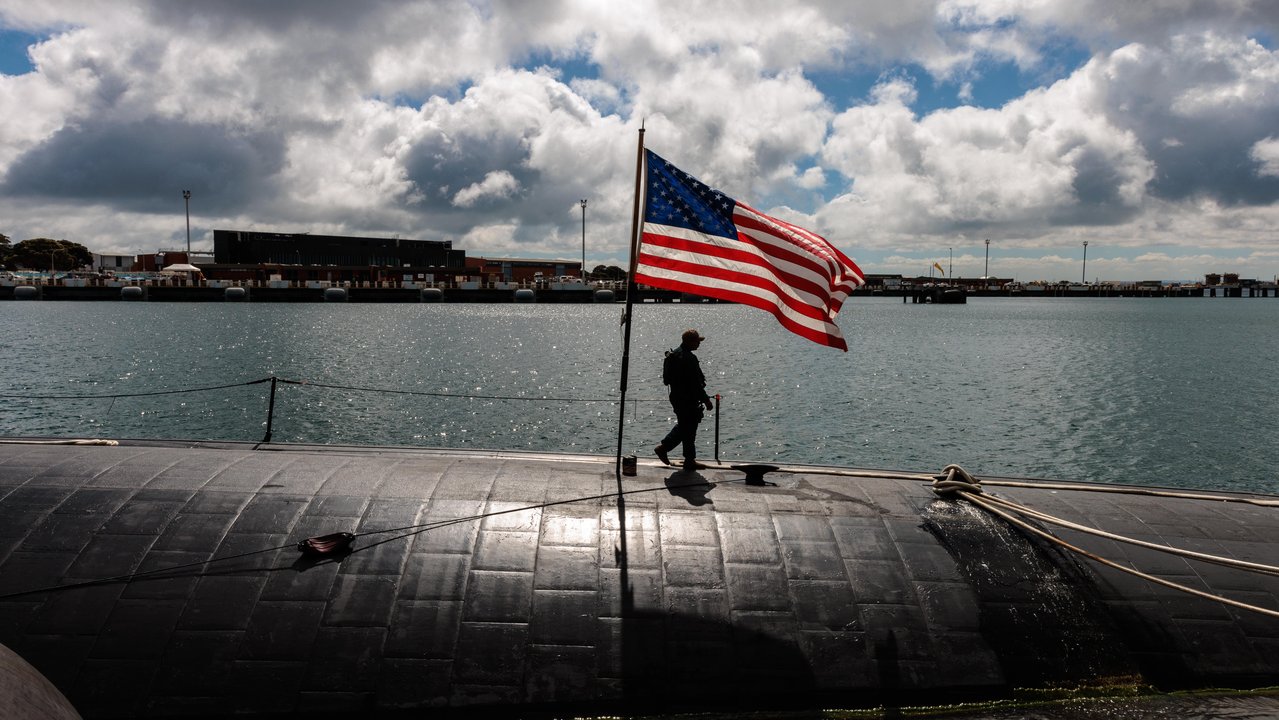
The US has not revealed if B-52 bombers and submarines rotating through Australian bases carry nuclear weapons.
But Fijian James Bhagwan said carpeting the region with nuclear armaments would only put a target on the back of Australia and its neighbours.
"If the United States can use it as an excuse to go into Iran, what is holding China back?" he said.
"These chains of islands are being used as protective buffer zones. We are not somebody's buffer zones, we are custodians of the ocean."
The treaty is partly the brainchild of the International Campaign to Abolish Nuclear Weapons (ICAN), an Australian advocacy group that won the Nobel Peace Prize in 2017.
Prime Minister Anthony Albanese, who brandished ICAN's Nobel Prize at the party conference where he moved the adoption of the treaty, is one of 117 federal politicians who have pledged to work towards signing and ratifying it.
They include 91 Labor MPs and senators.
The treaty's state parties include Pacific neighbours Tonga, Palau, Vanuatu, Tuvalu, Kiribati, the Solomon Islands and Mr Bhagwan's native Fiji.
"As a citizen of Fiji, which has a relationship with Australia, that's called a 'vuvale' partnership ... houses with the same spirit", Mr Bhagwan said.
"'Join us' is the invitation. As we join you, join us."