
The 1970 Range Rover may be widely regarded as the original luxury SUV, but Jeep fans will argue that the Jeep Super Wagoneer beat it to the punch by four years. Although it was a short-lived offering, lasting from 1966 until 1969, it did predict the future. The segment eventually took off in the 1990s, when the Lexus LX, Cadillac Escalade, Lincoln Navigator, Mercedes ML-Class, and BMW X5 arrived.
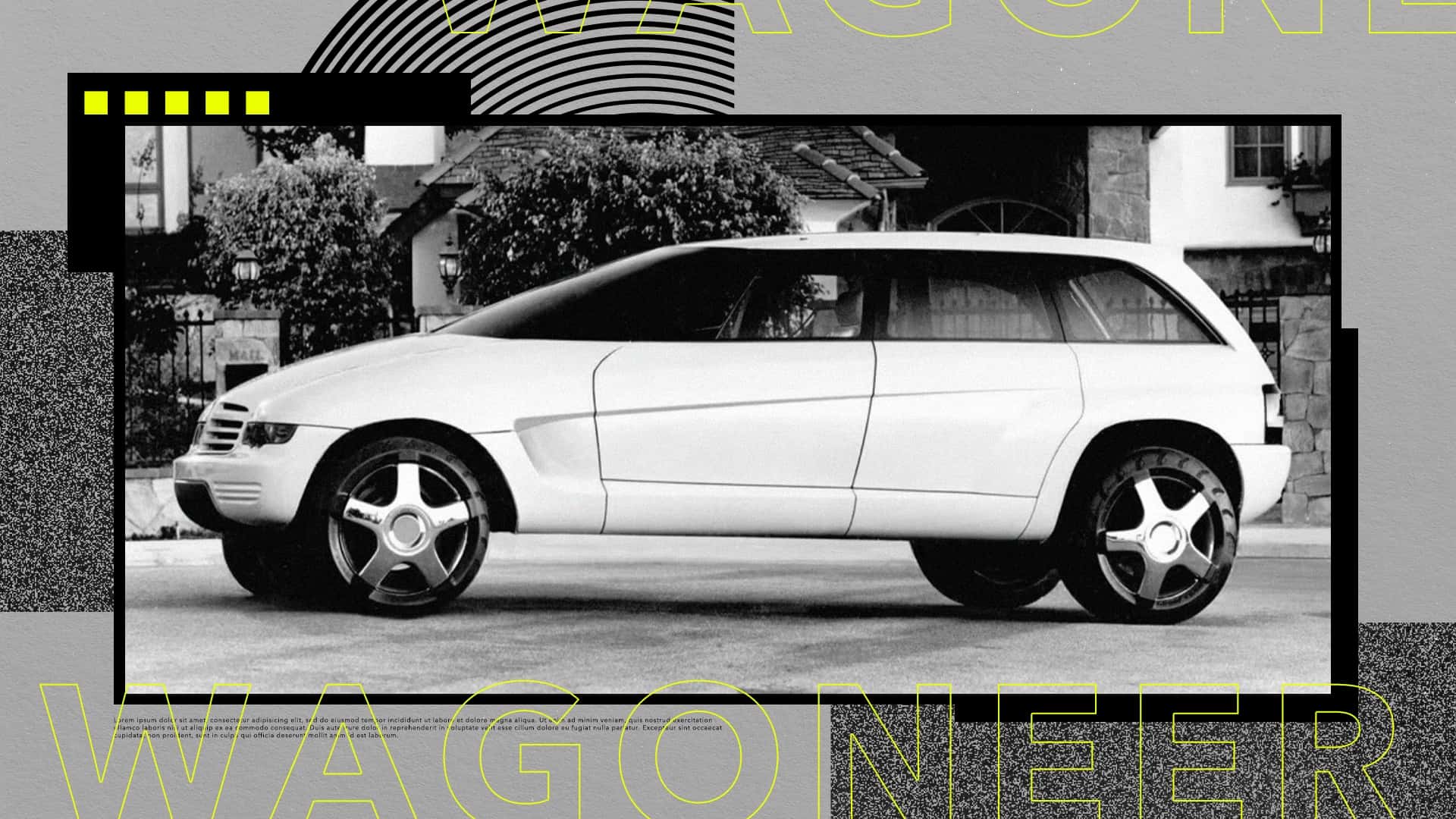
Following a nearly three-decade run, Jeep retired the Wagoneer in 1991, just before luxobarges were ready for the limelight. Mere months before pulling the plug on the long-running model, a highly unusual concept attempted to imagine what the future might look like at the turn of the century. Unveiled at the 1991 Detroit Auto Show, the Wagoneer 2000 was a conceptual luxury SUV with a design unlike anything before it.
Back in the day, Jeep said the one-off had a "dramatic shape," which isn’t exactly how we’d describe its body. It was more of a peculiar mix between a minivan and a wagon, with an unusually sad-looking face that made the vehicle seem deeply depressed. Its silhouette brings to mind the nearly forgotten Mercedes R-Class launched more than a decade later.
The brochure that accompanied the Wagoneer 2000 claimed that the styling was inspired by "20th-century luxury trains." Most of the official images were sadly lost to time, and Jeep could only provide us with the lead photo. However, digging through the corners of the Internet turned up an official interior shot showing a screen mounted dangerously low on the center console.

The concept’s cabin accommodated six people in a 2+2+2 layout with individual swivel captain’s chairs. Alternatively, Jeep envisioned benches for the second- and third-row seats. Opening the tailgate provided access to removable stadium seats for a tailgate party, much like what you’d find today in a Rolls-Royce Cullinan.
Other features included a pop-up roof rack that sat flush with the body when not in use, along with a movable entertainment center featuring a TV/VCR/CD player. Electrically deployable side steps and a built-in trailer hitch were also included. The baffling design hails from a time when wood was the ultimate sign of luxury, so Jeep made generous use of it throughout the cabin.
The concept also stood out thanks to its imposing size. It measured 198.1 inches long, 80.3 inches wide, and 67.5 inches tall. It was far larger than the regular Wagoneer, further suggesting it was meant to sit in a superior class of SUVs. Jeep fitted it with stately 20-inch wheels featuring polished spokes, wrapped in chunky 355/35 R20 front and 395/40 R20 rear tires.
By shortening the front and rear overhangs as much as possible, Jeep was able to stretch the wheelbase to a gargantuan 138 inches, unlocking an abundance of interior space. It’s easier for automakers to achieve these proportions today with bespoke EVs and their superior packaging, but the Wagoneer 2000 was a combustion-engine concept.
Hiding underneath the arched hood was a 5.2-liter V-8 with 220 horsepower, sending power to both axles through a four-speed automatic transmission. Jeep engineered the oddball SUV with disc brakes all around and an independent suspension featuring front and rear torsion bars.
Jeep Wagoneer 2000, concept vehicle published in 1990.
byu/ItsMylesNotMiles inJeep
Although Jeep thankfully never followed up with a production version sporting this unorthodox styling, it did resurrect the Wagoneer name for a flagship Grand Cherokee (ZJ) trim a couple of years later. The moniker returned again in 2022 for a standalone model with gas engines, and since 2024, Stellantis has also been selling a fully electric Wagoneer S.
I think we can all safely agree it’s a good thing Jeeps of the 2000s didn’t end up looking like this. The idea behind the 1991 Wagoneer as a plush SUV was solid, especially given how the segment blossomed only a few years later. It’s just that the execution of the design left a lot to be desired.