Iranian academic Mohammad Marandi, widely regarded as an informal conduit for Tehran's strategic messaging, has publicly advised JD Vance not to travel to Pakistan for negotiations, saying that 'with the current delusional and unrealistic demands and the continued naval blockade, no one in Tehran is willing to negotiate with him.' The remarks were posted on X as Vance weighs a potential trip to Islamabad aimed at reviving stalled Iran war talks.
Despite the public hostility, Reuters reported that Tehran is 'positively reviewing' participation in another round of talks, potentially led by parliamentary speaker Mohammad Bagher Ghalibaf, emphasising the dual-track nature of Iran's current diplomatic posture.
Marandi's Warning Signals Deepening Diplomatic Rift
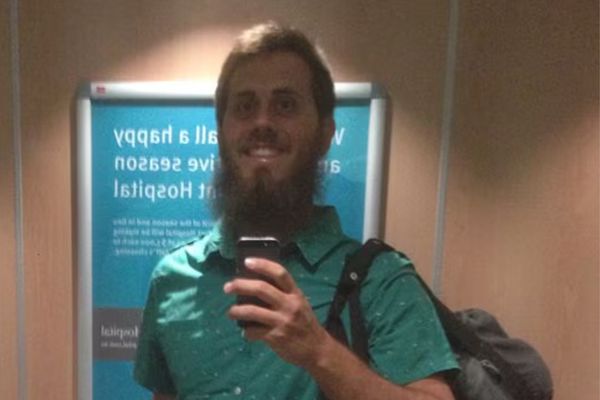
The controversial statement originated from Mohammad Marandi, an Iranian academic and media commentator known for defending the Islamic Republic's positions in English-language discourse. In a post on X, he advised Vance not to travel, arguing that 'with the current delusional and unrealistic demands and the continued naval blockade, no one in Tehran is willing to negotiate with him.'
I advise US Vice President JD Vance to unpack his suitcases and not to head to Islamabad. With the current delusional and unrealistic demands and the continued naval blockade, no one in Tehran is willing to negotiate with him.
— Seyed Mohammad Marandi (@s_m_marandi) April 20, 2026
Marandi's intervention is significant not merely for its tone but for what it reveals about prevailing sentiment among influential Iranian voices. Long associated with Iran's negotiating circles, he has frequently acted as an informal conduit for the country's strategic messaging to Western audiences.
His remarks align with broader criticism from Tehran, where officials have accused the United States of sending 'contradictory signals' and pursuing what they perceive as coercive diplomacy. Iranian President Masoud Pezeshkian recently warned of a 'deep historical mistrust' of the US, insisting that 'Iranians do not submit to force.'
Conflicting Signals from Tehran Keep Talks Alive
Despite the harsh rhetoric, there are indications that diplomacy may still proceed. A senior Iranian official told Reuters that Tehran is 'positively reviewing' participation in talks expected to take place in Islamabad, potentially led by parliamentary speaker Mohammad Bagher Ghalibaf.
The planned meeting hinges on whether both sides can agree to resume negotiations before the expiry of a fragile ceasefire. The current pause in hostilities — linked to a conflict triggered by US and Israeli military action earlier this year — has created a narrow window for dialogue.
However, expectations remain low. Previous talks, led by Vance, collapsed after marathon discussions failed to bridge fundamental disagreements. Iran refused to halt uranium enrichment or relinquish its stockpile of highly enriched material, while the US maintained its insistence on strict nuclear limitations.
Strait of Hormuz Blockade Fuels Tensions
A central sticking point remains the escalating maritime confrontation in the Strait of Hormuz, a critical artery for global energy supplies. Tehran has demanded the lifting of a US-imposed naval blockade, while Washington has responded with aggressive enforcement measures.
The situation has already disrupted global shipping, with tanker traffic sharply reduced and oil prices surging above $95 (£74) per barrel. Recent incidents — including the seizure of an Iranian-flagged vessel and attacks on commercial ships — have heightened fears of further escalation.
These developments complicate diplomatic efforts, as economic pressure and military posturing continue to overshadow negotiations. For Tehran, the blockade is seen as an act of economic warfare; for Washington, it is a tool to counter Iran's attempts to control the waterway.
Trump's Mixed Messaging Adds Uncertainty
Further complicating matters are mixed signals from US President Donald Trump, who has alternated between hardline warnings and openness to direct talks. While reiterating that Iran must never acquire nuclear weapons, he has also suggested a willingness to meet Iranian leaders personally.
At the same time, Trump has extended the ceasefire deadline by 24 hours to allow for potential negotiations, though he warned it is 'highly unlikely' he would prolong it further. 'I'm not going to be rushed into making a bad deal,' he said, even as he hinted that military action could resume if talks fail.
Earlier confusion over Vance's travel plans — after Trump prematurely announced his departure — has only added to perceptions of disarray within the US approach.
Islamabad Prepares Amid Rising Stakes
In Islamabad, authorities have begun preparing for the possibility of hosting negotiations. Security measures have been tightened, public transport suspended, and contingency plans implemented to ensure uninterrupted power supply during the talks.
The choice of venue reflects Pakistan's role as a neutral intermediary, though the success of any meeting will depend on whether both sides are willing to compromise — an outcome that remains uncertain.
Who Is Mohammad Marandi?

Born in 1966 and affiliated with the University of Tehran, Marandi is widely regarded as a staunch defender of the Islamic Republic in Western media. Often presenting his views as analytical, he has consistently criticised Western policies while promoting Iran's strategic narrative. His rhetoric frequently emphasises the strength of the so-called 'Axis of Resistance' and warns of severe consequences for any escalation against Iran.
His commentary has been criticised for omitting key complexities, particularly regarding human rights issues and internal dissent within Iran. Nevertheless, his visibility and connections have made him an influential voice in shaping international perceptions of Tehran's stance.
For now, the prospect of diplomacy hangs in the balance—caught between public hostility and cautious backchannel engagement. Whether Vance boards that flight to Islamabad may ultimately depend less on logistics than on whether either side is willing to shift its stance in a conflict defined by mistrust.