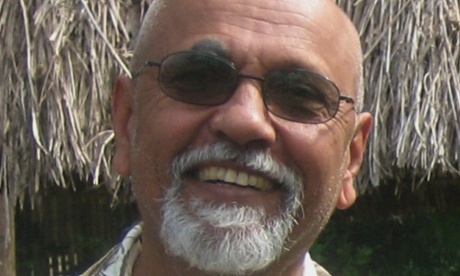
Jayant Prakash, who has died aged 62, was a champion of multiracialism whose professional life and friendships demonstrated a great love for the people of his native Fiji. He made his mark with groundbreaking judgments as a high court judge and magistrate after serving in Fiji’s Reserve Bank, the civil service and the Sugar Cane Growers Council.
His legacy of judgments, predicated on a commitment to human rights, gender equality and non-violence, stand out as his significant achievements.
The son of Ram Jas, a grocer, and his wife, Dharam Raji, Jayant was educated at Xavier college in Ba, a town closely connected to Fiji’s sugar industry. Graduating from the University of the South Pacific, he did a master’s in development studies at the University of Tanzania, later completing a law degree at the University of New South Wales while his wife, Shabnam, studied for a master’s in medicine.
A close friend to many of Fiji’s feminists, in 1999 he won acclaim for his landmark judgment in State v Prabha Wati, allowing the phenomenon of battered women’s syndrome to be used as a defence against a charge of murder of a persistently violent husband or partner.
Jayant was also hailed for outlawing the use of corporal punishment in schools, in Naushad Ali v State (2002), which has been cited by children’s rights organisations including Save the Children, and used in Australian parliamentary submissions.
His fellow high court judge and friend, Ratu Joni Madraiwiwi, now chief justice of Nauru, recalls his approachability and ease off the bench. This quality helped in Jayant’s seminal judgment on prison conditions in Lautoka city in Fiji: he visited prisons to discover for himself how the inmates lived and how prison life could be changed.
Jayant was known for his calm, principled demeanour and steady intellectual approach to social problems. He loved books, and many friends recall his habit of passing them on, always with a thoughtful inscription.
After leaving the judiciary, he moved with his family to New Zealand, later returning to Fiji, his experience of relocation mirroring that of many families torn from Fiji since its several coups. He suffered from depression, and ended hiw own life.
Jayant is survived by Shabnam and his two daughters, his brothers, Rakesh, Mukesh and Rajesh, and his sister, Asha.