In a world seeking cleaner energy, reduced waste, and more efficient industrial processes, Dr. Jaya Singh is pioneering a new frontier where microbes are programmable systems driving sustainability. From the depths of biochemical stress responses to plastic conversion and interkingdom networks, Singh's scientific journey reveals what happens when rigorous molecular science meets the scale of global challenges.
Spanning three continents and multiple sectors, her research is unified by one principle: biology, when engineered with precision and purpose, becomes a tool for transformation.
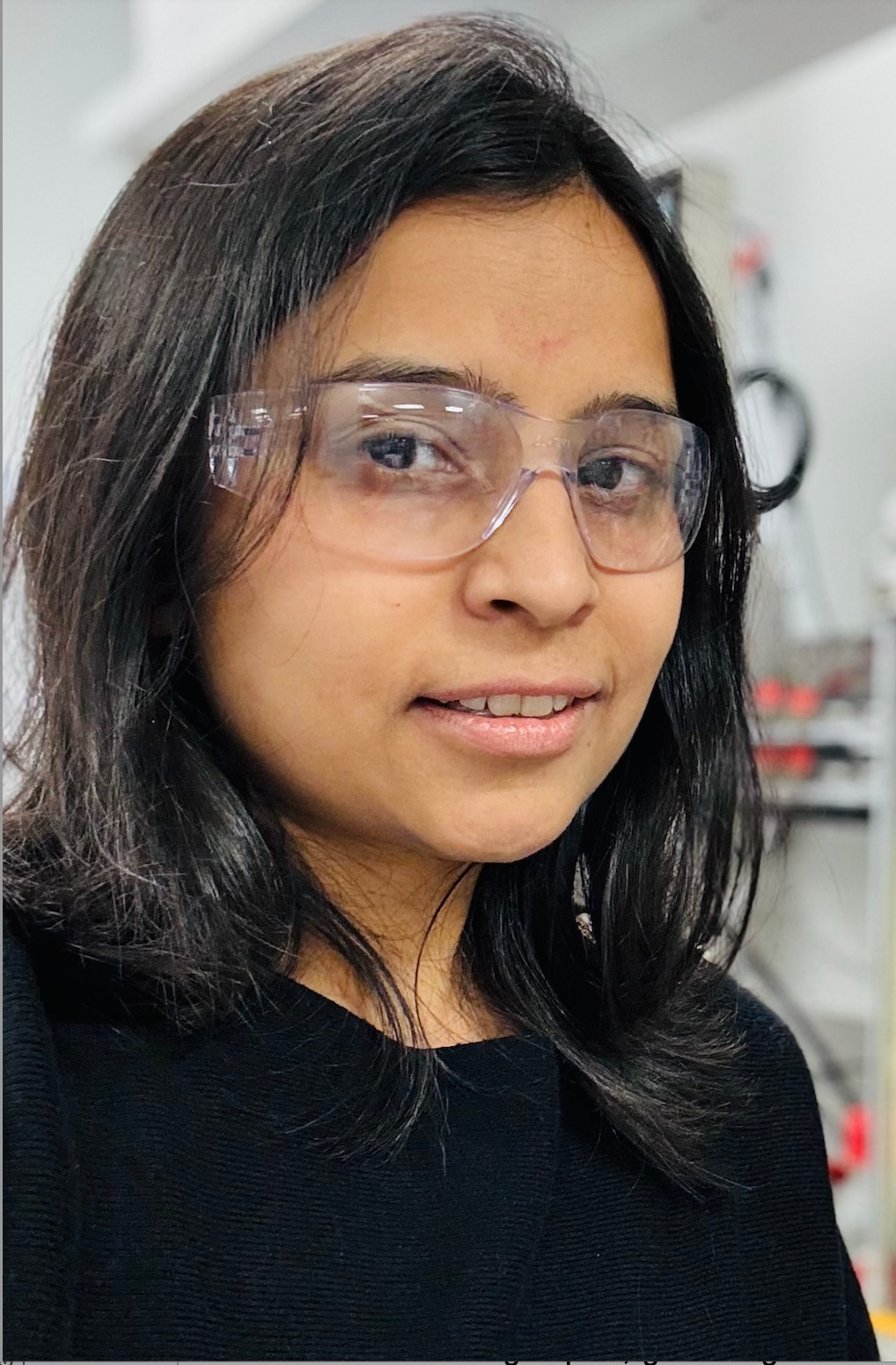
From Curiosity to Accomplishment: A Scientist’s Path
Singh’s fascination with the microscopic world began early. What started as curiosity about enzymes and DNA quickly grew into a full-fledged pursuit of biochemical mastery. She pursued her undergraduate and master’s degrees in biochemistry, then earned a PhD in biotechnology.
As part of her master’s degree, Singh joined the Tiger Project at LACONES, India, where she contributed to tiger population tracking at the Pench Tiger Reserve using non-invasive methods. For three months, she and her team operated within a strategically mapped core zone of the forest, collecting carnivore fecal samples. These samples were preserved for species identification through molecular techniques in the lab. Singh recalls, “The thrill of collecting tiger feces near fresh kill sites—just feet away from a possible ambush—was unmatched.” This experience, though far removed from the lab, sharpened her skills in field biology, logistics, and molecular diagnostics under pressure.
Her doctoral work tackled a central problem in the clean-energy space: microbial tolerance to isobutanol, a next-generation biofuel with superior energy density compared to ethanol. Using adaptive laboratory evolution in a continuous stirred-tank reactor, Singh trained Lactococcus lactis to grow in increasingly harsh chemical environments, raising isobutanol tolerance levels fivefold.
This work demonstrated her early strength as both a systems biologist and a practical problem-solver: two qualities that would define her future roles.
Engineering Microbial Efficiency for Biotherapeutics
Following her PhD, Singh transitioned into industrial biotechnology through her first postdoctoral role, where she focused on a key inefficiency in pharmaceutical production: the metabolic stress E. coli experiences while producing recombinant proteins.
“You can have a perfect gene construct,” she explains, “but if the host cell is overwhelmed, the yield crashes.”
Singh dove into omics-based approaches to profile microbial stress responses. She analyzed differential gene expression during the production of complex biologics and validated her findings. Then, rather than simply documenting the problem, she engineered solutions with her team: co-expressing selected gene targets and designing media feeds that relieved metabolic burden and improved E. coli growth and production efficiency.
The results were clear: significantly improved recombinant protein yields and a replicable strategy for stabilizing biopharmaceutical production pipelines.
Building Tools for the Bioeconomy
Singh's next chapter brought her into the world of non-model microbial platforms, organisms that hold immense promise for producing valuable chemicals, but are notoriously difficult to engineer.
Undeterred by a lack of genomic tools or prior literature, Singh started from scratch. She developed transformation protocols to modify industrially relevant microbe genetically, then created a genome-wide CRISPR knockout library to identify mutants with enhanced-lysis traits: an essential feature for cost-effective extraction of intracellular products like oils and metabolites.
Her work didn’t stop at development. She revealed a gene attenuation system using short hairpin expression, enabling less deleterious effects than knockouts in organisms previously considered too unwieldy for fine-tuned engineering.
Together, these tools and collaborative efforts intended to slash downstream processing costs are a leap forward for the economics of sustainable biomanufacturing.
Waste to Value Conversion
Pushing the boundaries of microbial utility even further, Singh contributed to an ambitious collaborative project rooted in circularity: turning plastic waste into value-added products. By leveraging an evolved microbial platform capable of metabolizing oxidized plastic, she developed genome manipulation tools and introduced a beta-carotene biosynthetic pathway directly into its genome.
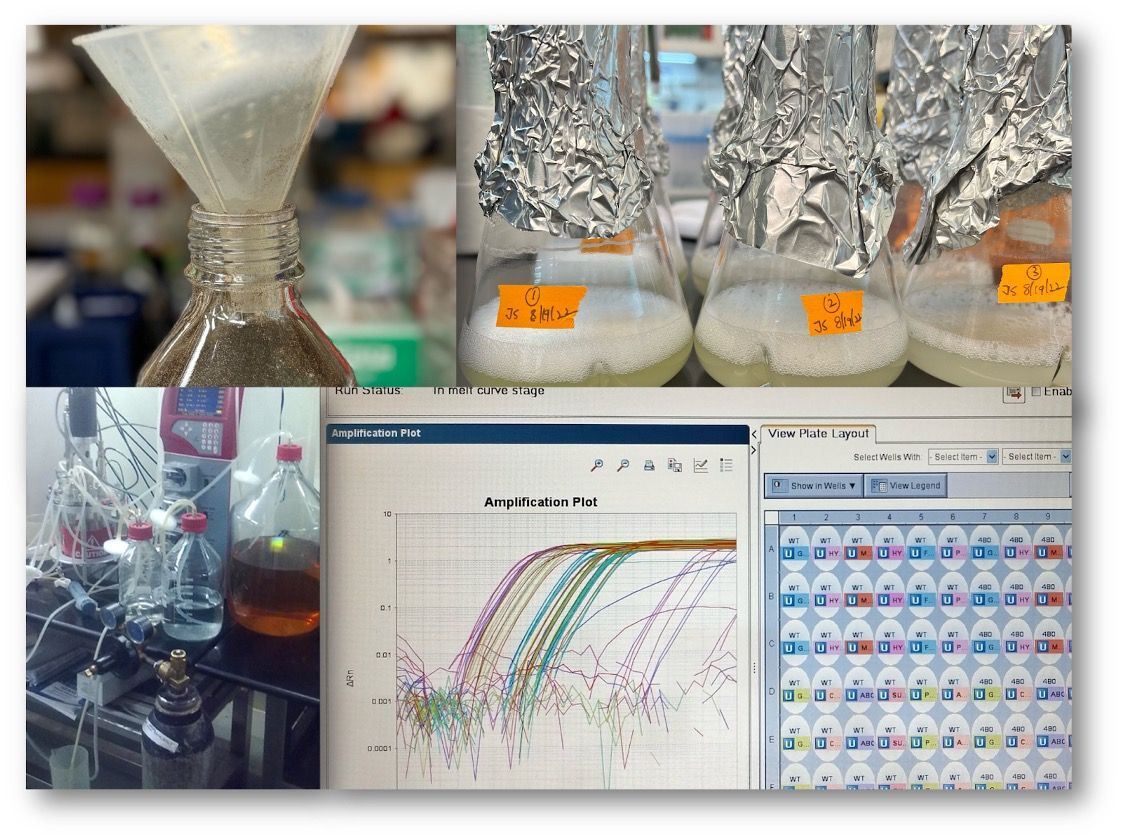
The result was a system that not only broke down a pollutant but produced a high-demand antioxidant in return. “It was a moment of microbial alchemy,” Singh reflects. “To take something toxic and persistent and turn it into something that benefits human health, that was unforgettable.”
This proof-of-concept stood as a testament to her belief that sustainability doesn't have to mean sacrifice; it can mean transformation.
Gene Circuits and Biosensing in Soil
Currently in her third postdoctoral role, Singh’s focus has gone subterranean. She's now working at the intersection of synthetic biology and environmental sensing, exploring how rhizomicrobial communities can be engineered to communicate more effectively in soil ecosystems.
Her project centers on using fungal networks as “molecular highways” to transport diverse organic compounds, such as quorum-sensing molecules, and measuring output as a result of microbial sensing. The overall goal is to facilitate biosensor responses using fungal networks to detect contaminants. This endeavor lays the foundation for engineering interkingdom biosensors through collaborative efforts that can be deployed in real world sites.
“Soil is alive,” she says. “The challenge is helping microbes speak and then listening.”
In parallel, she’s optimizing transformation protocols for robust, thermotolerant microbial strain that can function under extreme environmental conditions and tuned to produce valuable chemicals.
Debug First, Build Second
Across every research endeavor, Singh follows a consistent guiding principle: identify and fix the bottleneck before attempting to scale.
“I like addressing the blocks first; it prevents panic later,” she says with a smile.
Whether it’s improving chemical tolerance, reducing metabolic stress, or enhancing phenotypic traits, Singh’s approach is always strategic. She doesn’t chase novelty for its own sake but solves foundational issues so that innovations can succeed in the real world.
This methodical mindset, equal parts curiosity, discipline, and foresight, has made her a standout in both academic and applied circles. Singh is more than a researcher; she’s a systems thinker and a builder of robust biological solutions.
What’s Next?
With over five years of postdoctoral research experience and a diverse track record of high-impact contributions, Singh is now preparing to transition into industry. Her goal is clear: to help companies bring sustainable biotechnologies to scale. “I want to help companies build cleaner fuels, safer products, smarter sensors,” she says. “As long as the mission is grounded in science and sustainability, I’m open.”
With interests ranging from biopharma and clean tech to industrial fermentation and food innovation. The only non-negotiable? The work must matter.
“At the end of the day,” she adds, “I want to build systems that don’t just work in theory but also the real world.”
A Playbook for Purpose-Driven Biology
Singh doesn’t enter a project to follow trends; she enters to remove roadblocks. Her career is a quiet but powerful demonstration of what happens when science is practiced with patience, precision, and purpose.
Whether transforming plastic into antioxidants or enabling microbial communication in soil, Singh’s research is about innovation and implementation. She shows us that the smallest organisms, when thoughtfully engineered, can become the biggest drivers of sustainable progress.